Mexican artist Circe Irasema transforms eyeshadow, blush, acrylic nails, and wood into paintings and sculptures that challenge beauty, material history, and the politics of seeing.
In Circe Irasema’s work, painting does not stay obediently on the wall, nor does it remain faithful to the noble materials that art history has long privileged. Instead, it slips into the language of the body, the vanity table, the domestic interior, and the small rituals of self-fashioning. Eyeshadow, blush, acrylic nails, polished wood, gouache, and mannequin limbs become the raw matter of a practice that is as sensuous as it is conceptually sharp. Based in Mexico City, Irasema has built a body of work that reflects on representation in Western painting while opening that tradition to other materials, other genealogies, and other ways of seeing.
As Circe Irasema drags a sliver of crushed plum shadow across a white panel, she invites every eye trained by studios or bathroom mirrors alike to witness the instant when makeup stops reflecting a face and starts rewriting the timeline of painting.
What makes her work so compelling is that cosmetics are not used as novelty materials or ironic props. They operate as painting itself. Pressed powders become fields of color. Makeup palettes function like pigment reservoirs. Artificial nails extend the body into ornament, performance, and sculpture. From a distance, some works read like crisp geometric paintings or carefully composed reliefs. Up close, they reveal themselves as unstable hybrids, part painting, part object, part social critique. That shift in perception is central to Irasema’s achievement: she asks viewers to reconsider what counts as a legitimate artistic medium and who gets to define it.
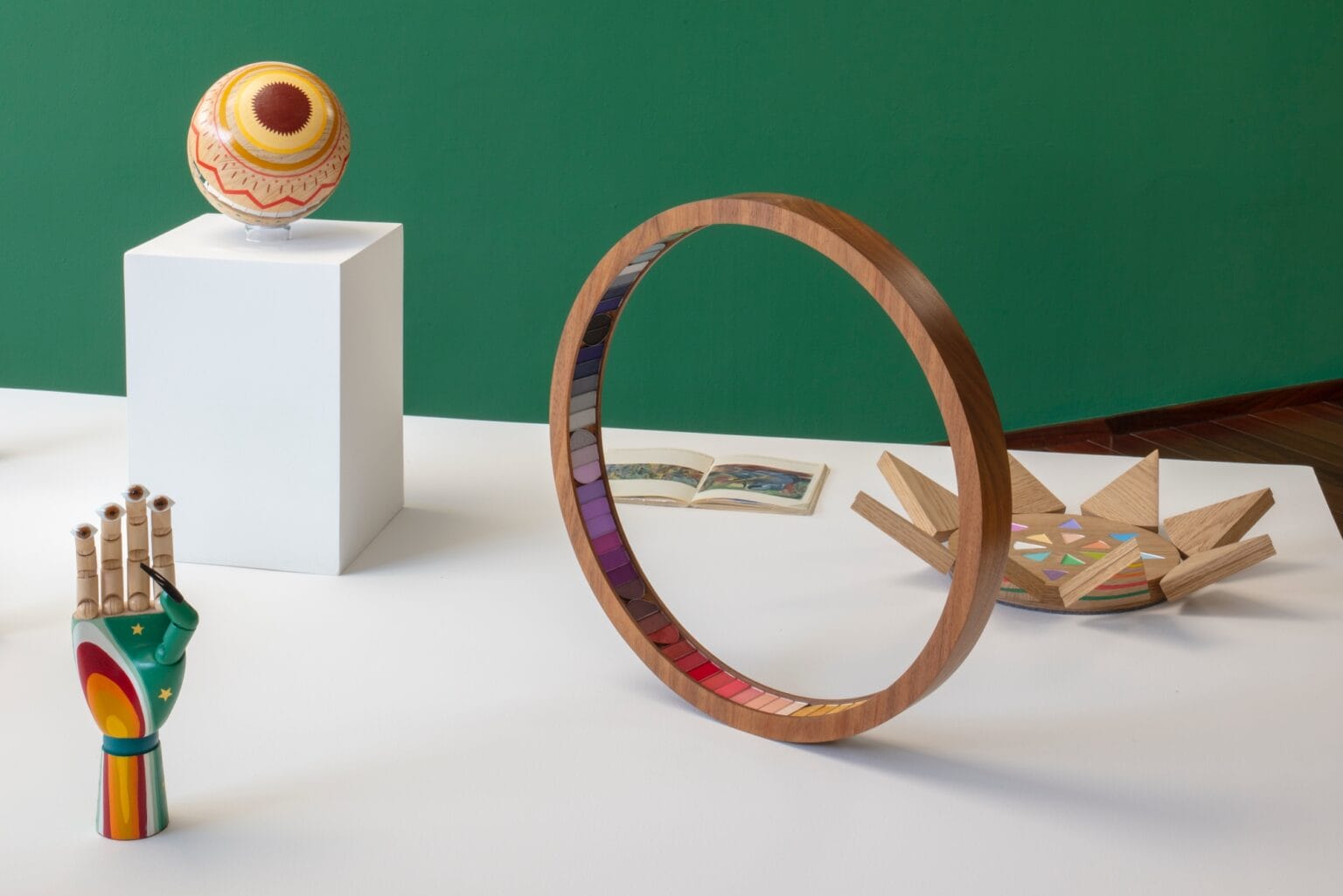
In Irasema's universe, sacred geometry gets a full makeover. Here, a collection of her cosmetic sculptures feels less like a gallery display and more like a celestial vanity table. A hand adorned with pristine acrylic nails gestures towards a sun-shaped artifact, while a ring inlaid with a gradient of eyeshadows becomes a portal to another dimension. This is the artist’s “Cosmic Painting” series in its most tangible form, where she builds an alternative canon of beauty, one where the tools of self-adornment are given the same reverence as a classical painter’s oils.
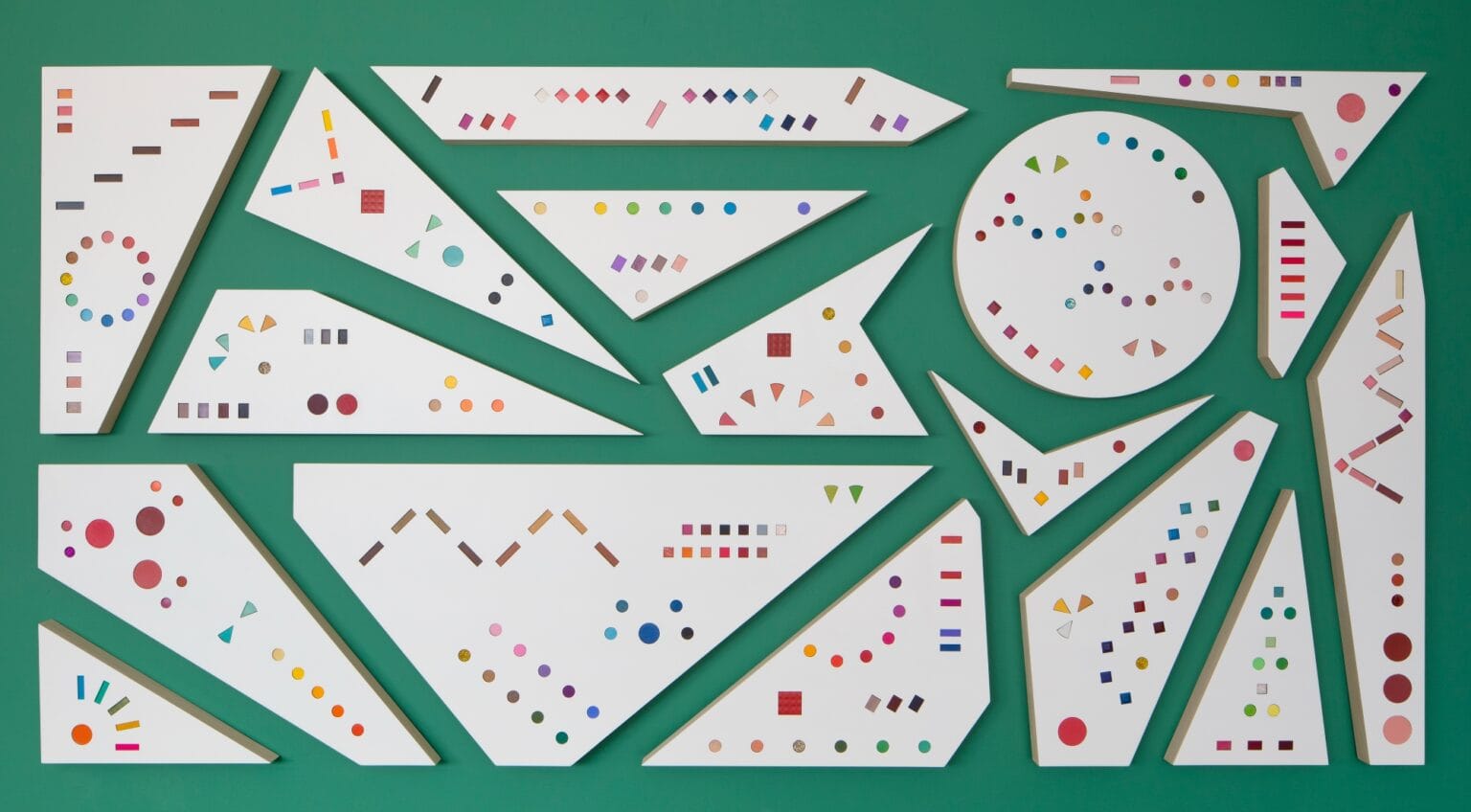
At first glance, it’s a lesson in high-minded geometry. But lean closer, and you’ll see the rebellious wink. For this series, which has graced venues like Art Basel Miami, Irasema subverts the rigid, masculine-coded world of Renaissance principles with the most feminized of materials. Each eyeshadow-filled polygon is a small act of defiance, reclaiming the “order” of the cosmos from dusty textbooks and infusing it with the vibrant, often dismissed, world of cosmetics. It’s as if Pythagoras stopped by a Sephora and realized he’d been missing the point all along.
Consider the small, sharp grief of a shattered eyeshadow palette, that vibrant dust destined for the trash, and you might begin to understand how an entire history of art can be built, and dismantled, by what we decide is worth saving.
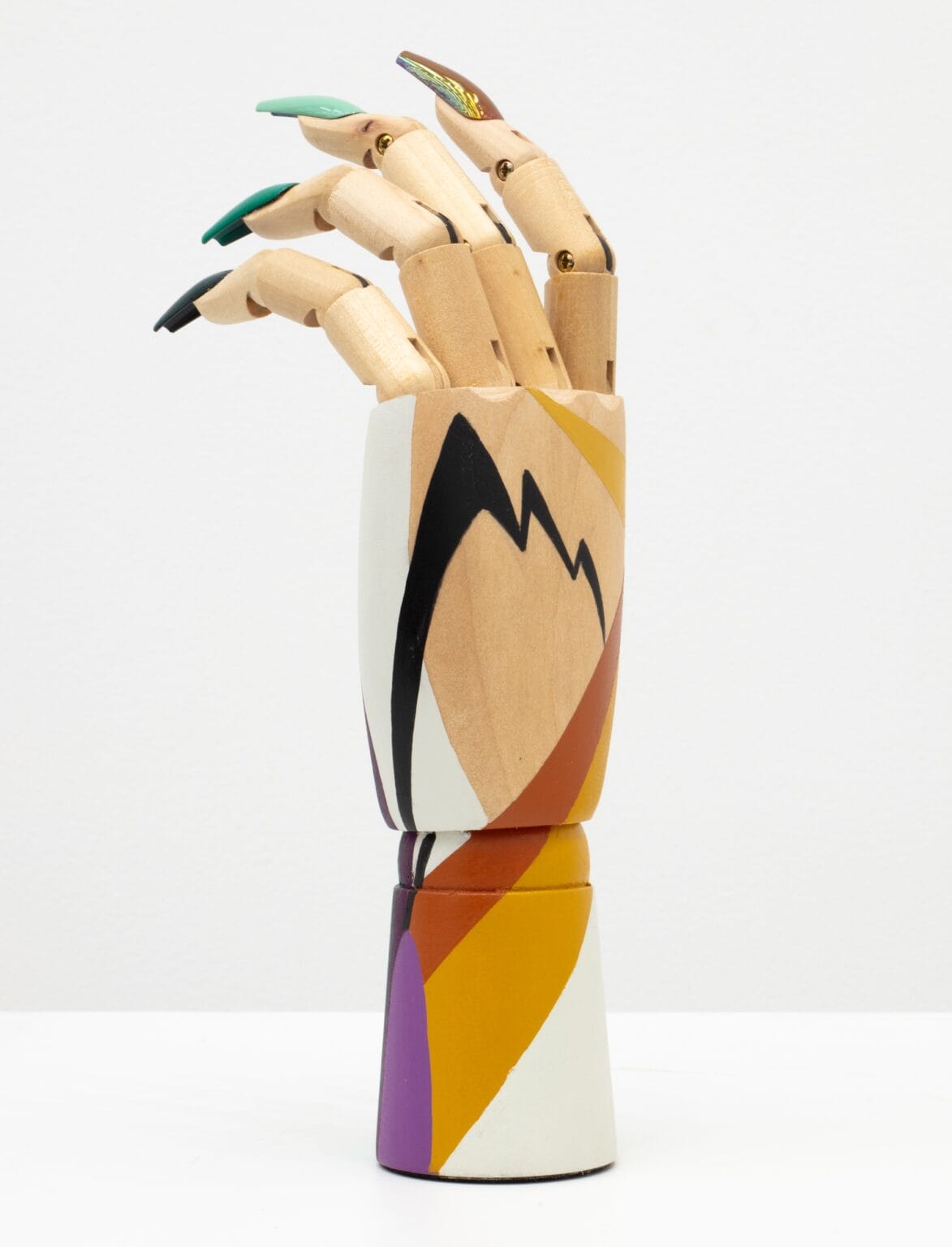
Part sacred relic, part salon-fresh statement piece, this cosmetic sculpture perfectly captures Irasema’s blend of wit and reverence. The anatomical wooden hand, a classic artist’s tool, is transformed by the addition of immaculate, shimmering acrylic nails. It's a gesture that’s both performative and powerful, suggesting that the history of feminine expression, often relegated to the “frivolous”, holds its own profound rituals. This mixed-media makeup art doesn't just sit on a pedestal; it holds a conversation about what we consider timeless art versus temporary beauty.
The cosmic dimension of the series gives the work another layer of richness. In the exhibition text, the word “cosmos” is linked to ideas of ornament, harmony, order, and beauty, all concepts that echo through the history of art from Renaissance geometry to modern abstraction. Irasema folds that lineage back into the world of cosmetics, suggesting that beauty culture and the grand tradition of pictorial order are not opposites, but estranged relatives. In this sense, her work becomes a subtle philosophical device: it asks whether the canon of beauty might be reconfigured from materials that art history once dismissed as trivial, decorative, or too close to everyday life.
Specific works make this argument tangible. In pieces such as Hecha a mano, Pintar II, and Los brazos de Morfeo, anatomical wooden mannequins are transformed into vivid sculptural presences through gouache, acrylic, and polished artificial nails. Elsewhere, works like Flor estrella and the cartographic wall assemblages press cosmetics into wood to produce compositions that feel at once celestial, decorative, and diagrammatic. Hands and feet become stand-ins for labor, gesture, performance, and embodiment. Geometric forms suggest maps, stars, portals, or altarpieces. Across the work, the bodily and the cosmic are never far apart.
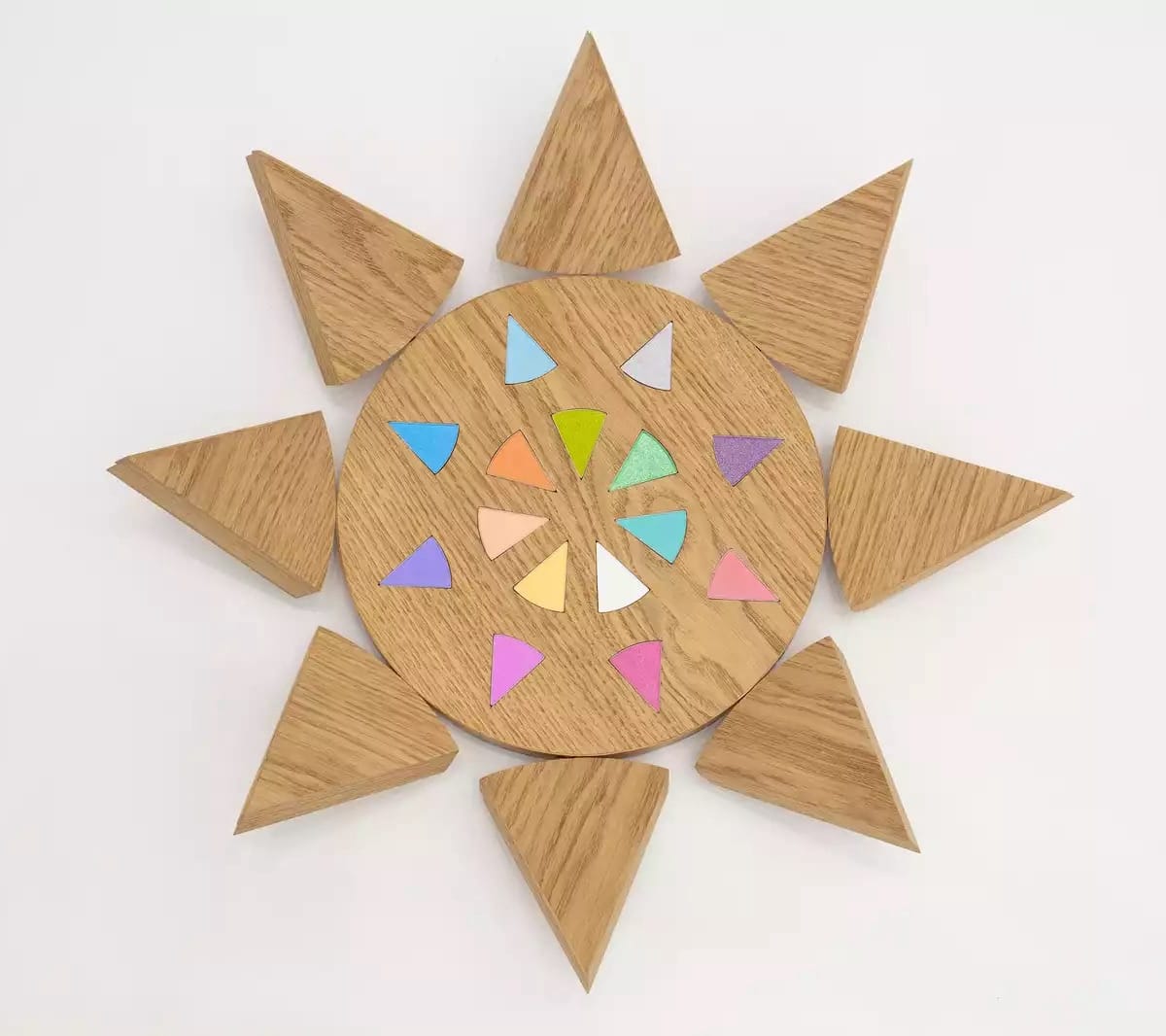
Here, a sunburst sculpture radiates with the playful energy of a perfectly curated eyeshadow palette. Each triangular ray is meticulously filled with pigmented powder, transforming a symbol of cosmic power into an object of intimate, domestic beauty. This piece of contemporary Mexican cosmetic art embodies the artist’s core idea: that the shared root of “cosmos” and “cosmetics” points to a universal search for harmony and order. It’s a beautiful, humorous reminder that for many, creating order in the universe begins right at the makeup counter.
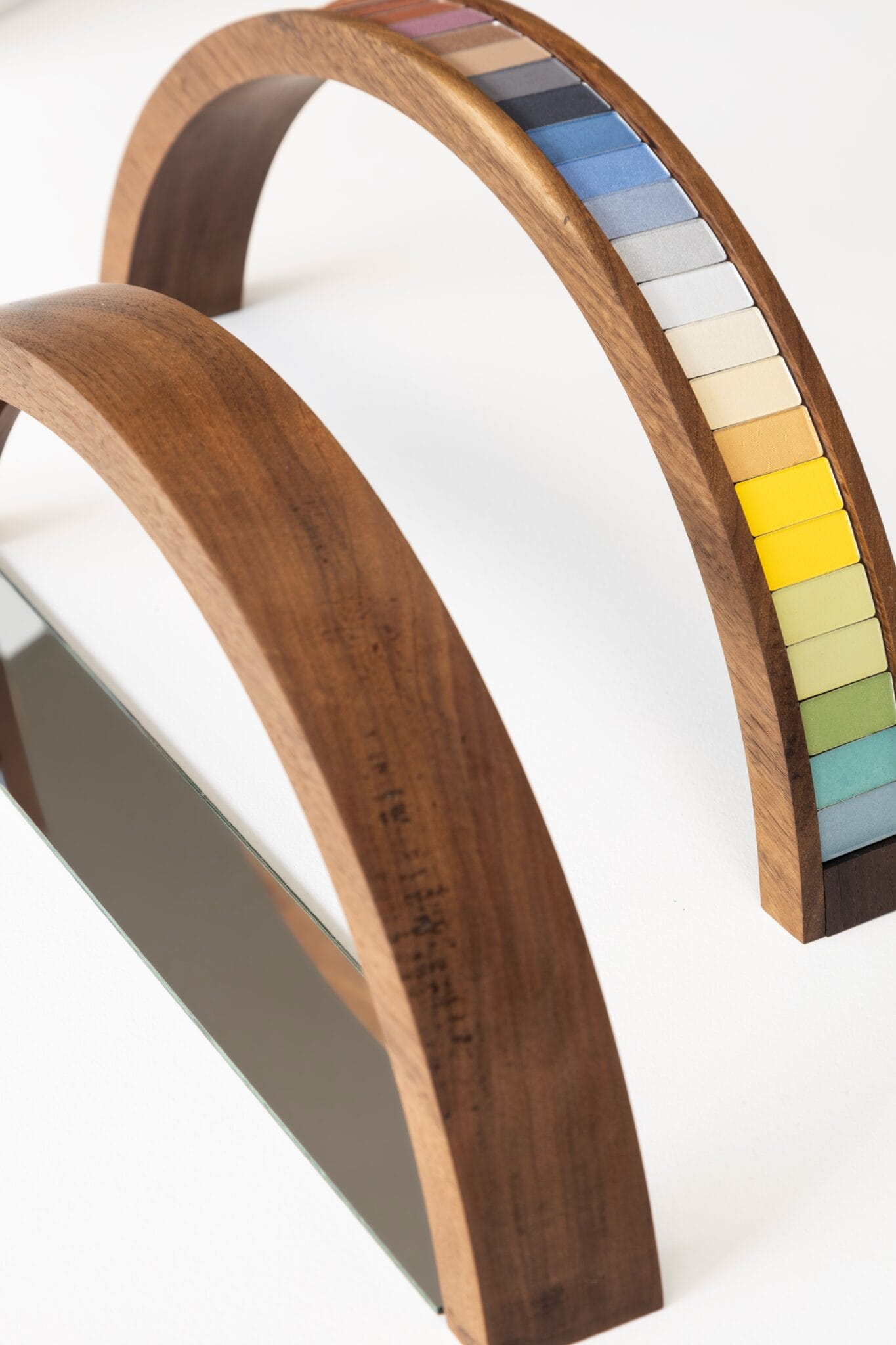
In this elegant composition, two wooden arches create a minimalist landscape, but it’s the details that tell the story. One arch is pure form, while its partner is inlaid with a spectrum of cosmetic powders, from soft peach to deep indigo. A mirror placed between them does more than just reflect; it implicates us. As we look, our own image is caught in the space between traditional art and beauty rituals, forcing a quiet contemplation on the female gaze. It’s a masterful piece of cosmetic art that asks us where we see ourselves in the history of beauty.
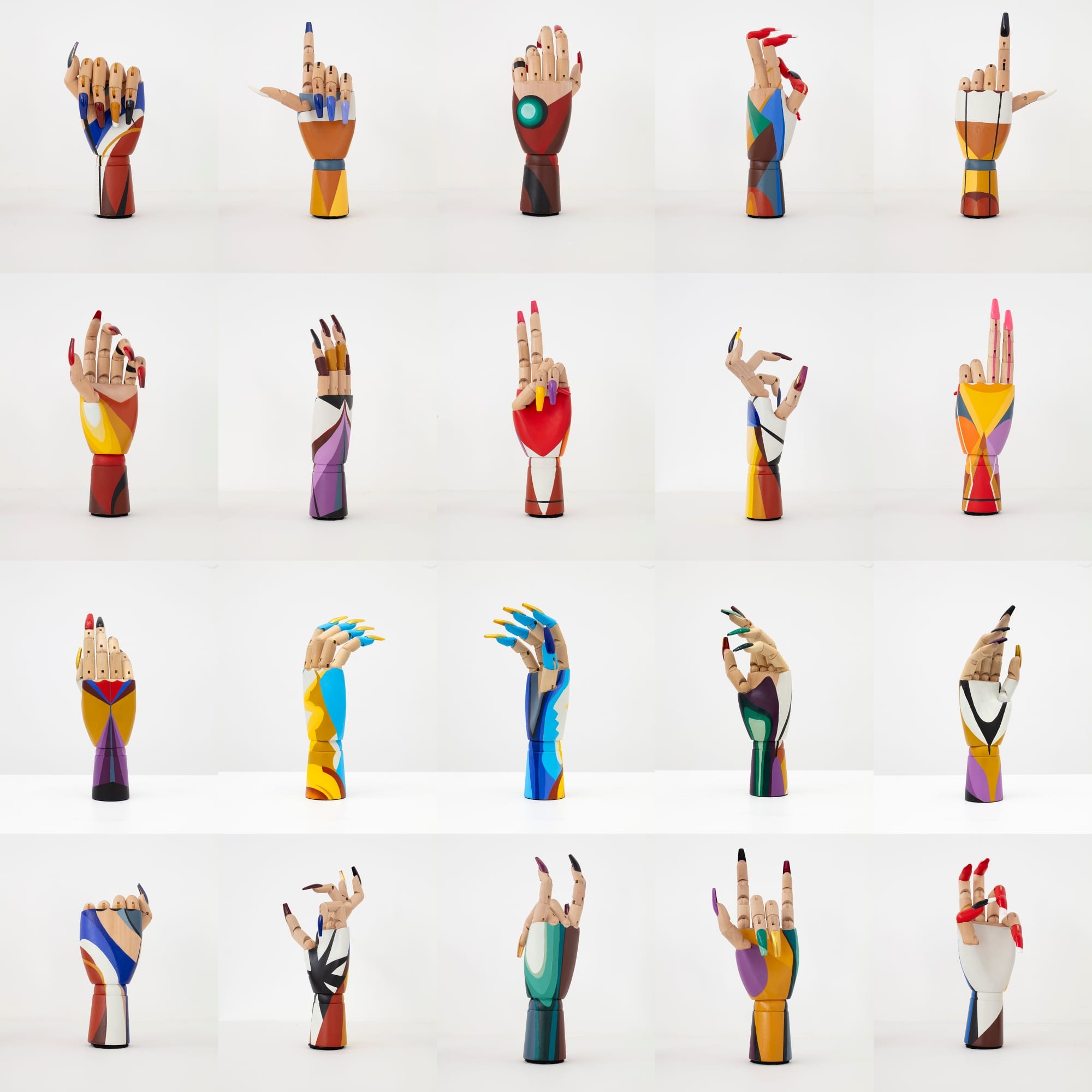
Like a sacred archive for a new kind of history, this grid of wooden hands creates a powerful feminist art installation. Each hand is unique, adorned with glossy acrylics and striking a pose that feels both ancient and utterly contemporary. By arranging these symbols of gesture and adornment with such formal precision, Irasema elevates the daily rituals of femininity into a language of their own. It’s a visual manifesto that reframes the female gaze not as a subject to be painted, but as an active, creative force with its own stories to tell.
Fragility is essential to the meaning of the work. Makeup compacts can crack, crumble, and powder away. Their vulnerability is not an obstacle to the work’s seriousness, but one of its deepest propositions. In Irasema’s hands, impermanence becomes a critical tool. The medium carries the memory of touch, handling, routine, and disappearance. It resists the fantasy that painting must endure unchanged in order to matter. For art lovers, this is one of the most rewarding aspects of her practice: it proposes that ephemerality can be a form of intelligence, and that delicacy can carry as much conceptual weight as monumentality.
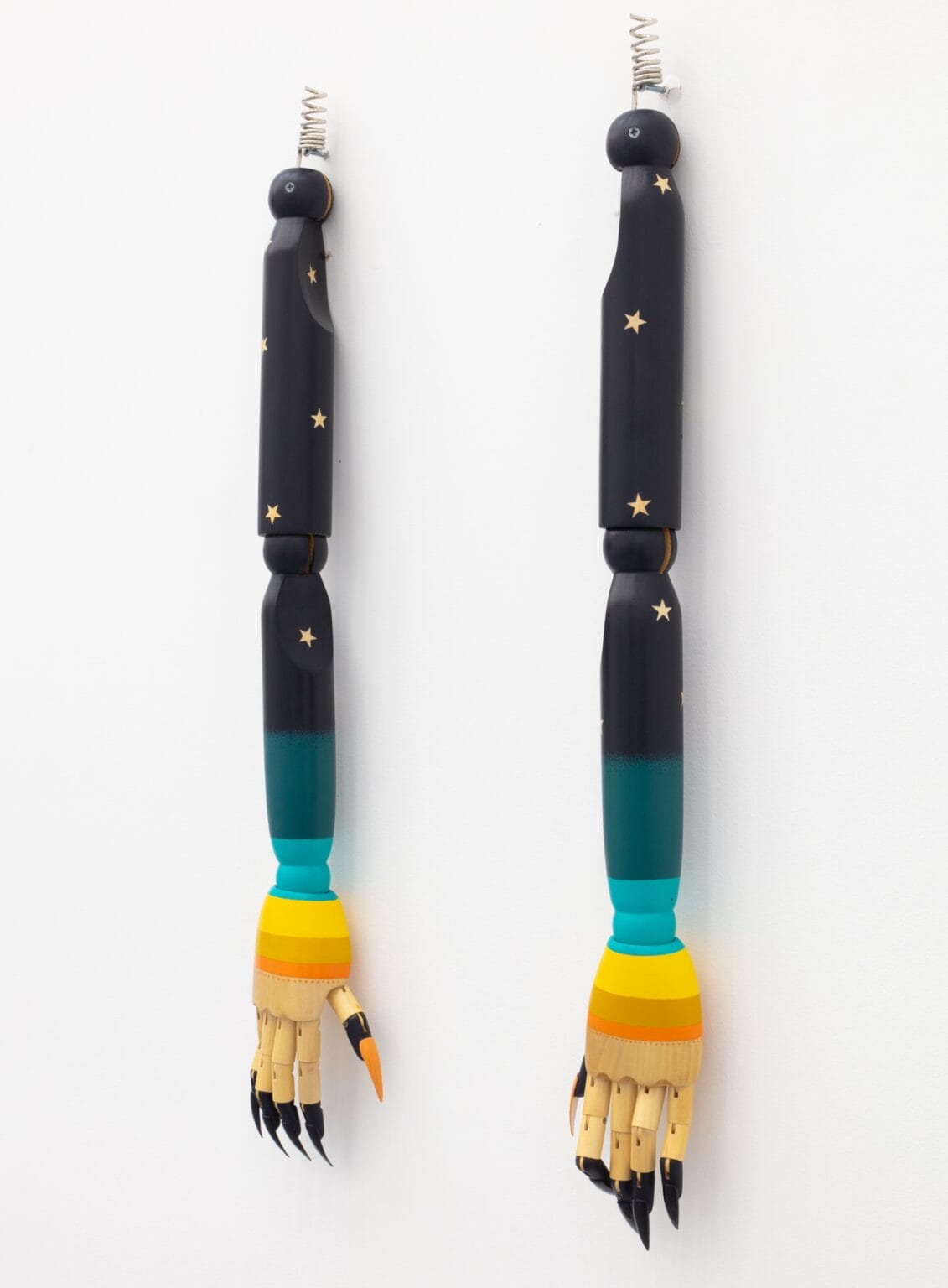
Titled Los brazos de Morfeo (The Arms of Morpheus), these dangling limbs seem to have drifted in from a divine dream. Painted with cosmic patterns and tipped with fiercely glamorous nails, they embody the themes of metamorphosis and the performative body that are central to Irasema’s work. The combination of the anatomical form with the fantastical, starry finish and sharp acrylics creates a surreal tension. Are they reaching out to create or to cast a spell? This cosmetic sculpture suggests the two actions might just be one and the same.
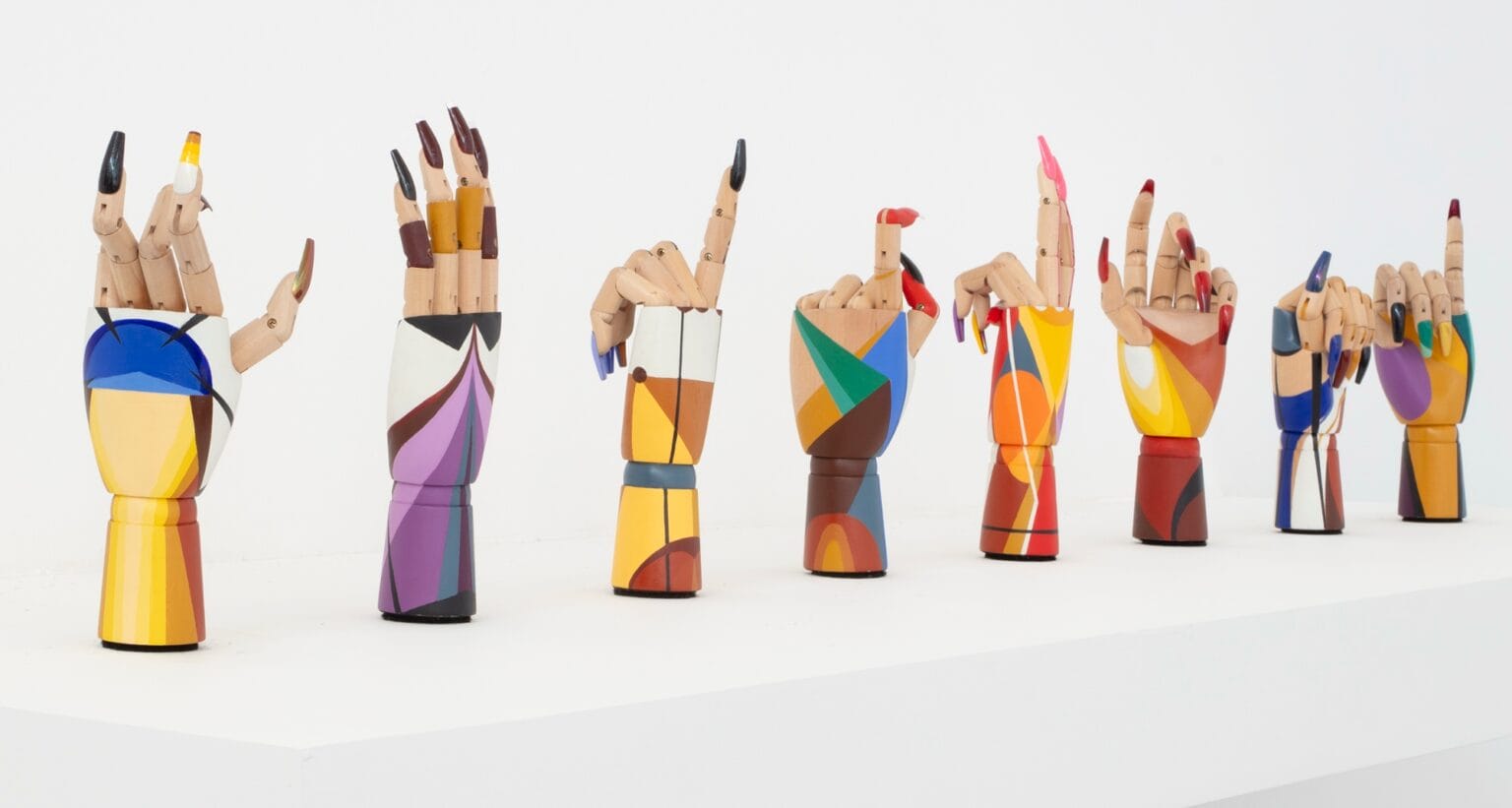
This vibrant lineup of disembodied hands is a masterclass in gesture and personality. Irasema uses bold, geometric color-blocking and dramatic acrylic nails to turn these anatomical models into characters, each seemingly frozen mid-sentence in a silent, glamorous dialogue. By applying beauty products directly onto these forms, she effectively creates eyeshadow paintings in three dimensions. The work celebrates the expressive power of hands, a tool for both creating art and applying makeup, and challenges us to see the artistry in both.
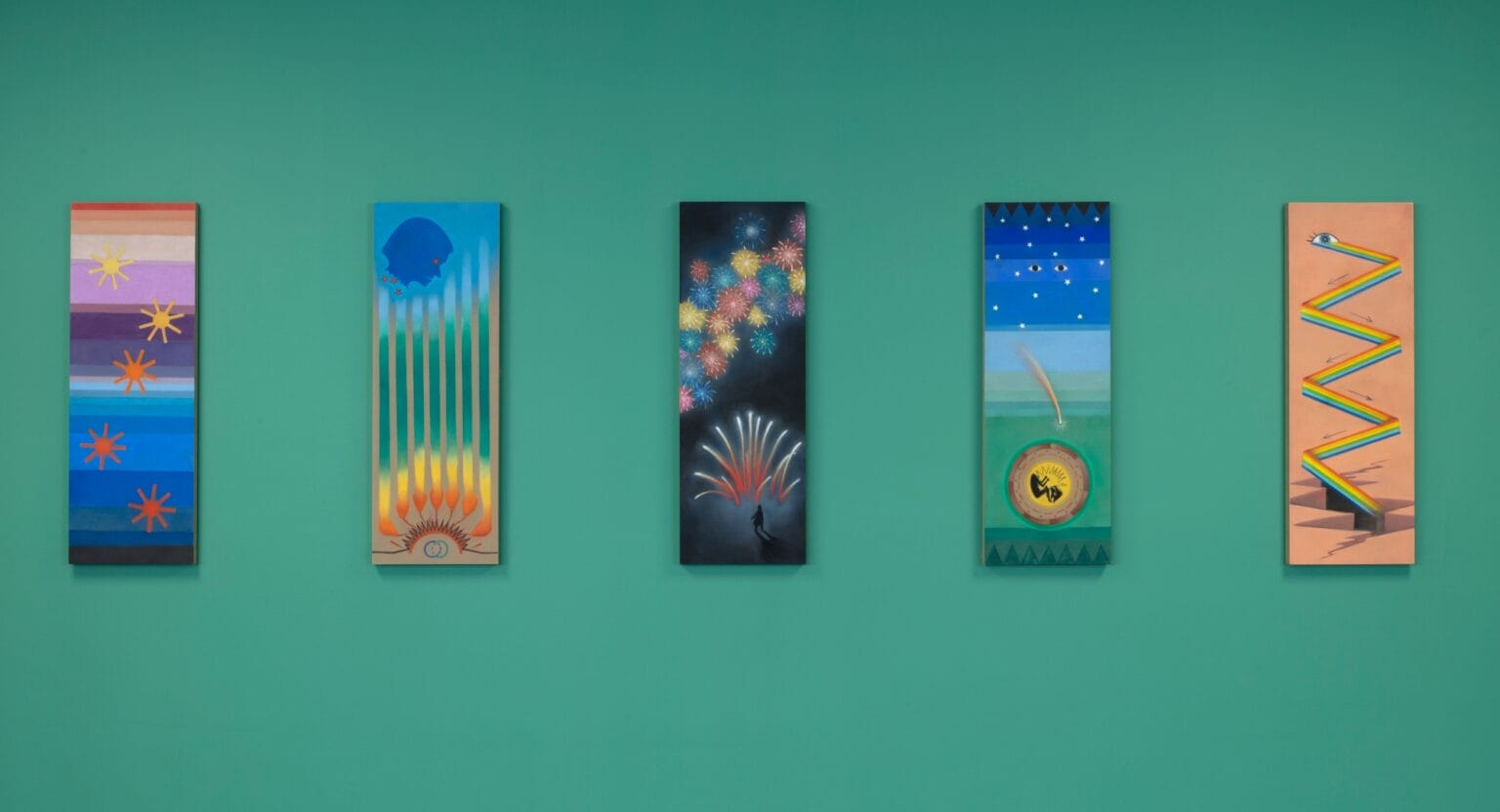
Standing like mystical totems, these panels from the "Cosmic Painting" series showcase Irasema’s unique visual language. Using unconventional art materials like eyeshadow and blush, she crafts narratives filled with celestial symbols, watchful eyes, and abstract bursts of color. Each panel is a universe unto itself, telling one of the "intimate or hidden stories" her work seeks to uncover. It's a clever and poignant use of makeup-based artwork, turning the fragile, dusty medium of a cosmetic palette into something enduring and profound.
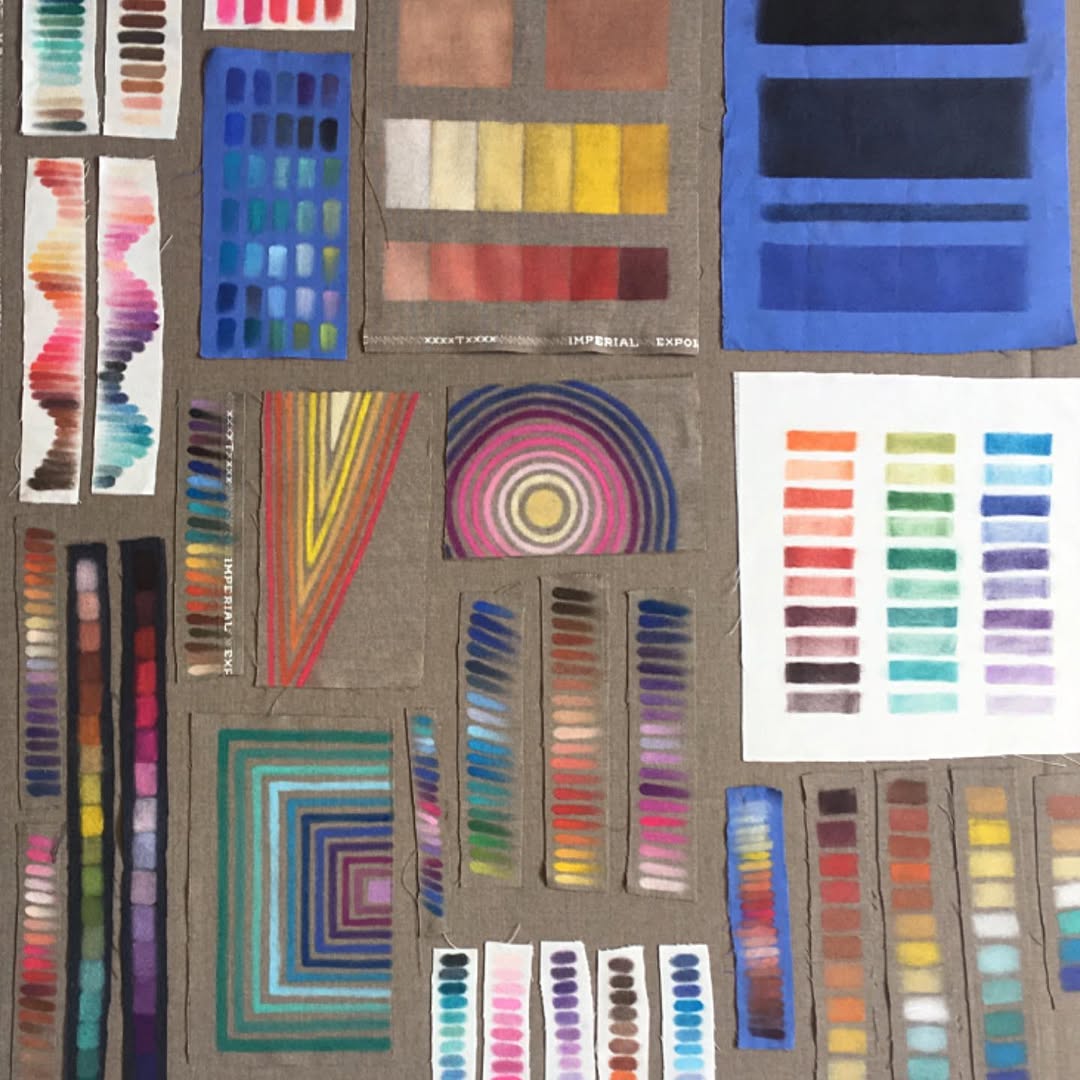
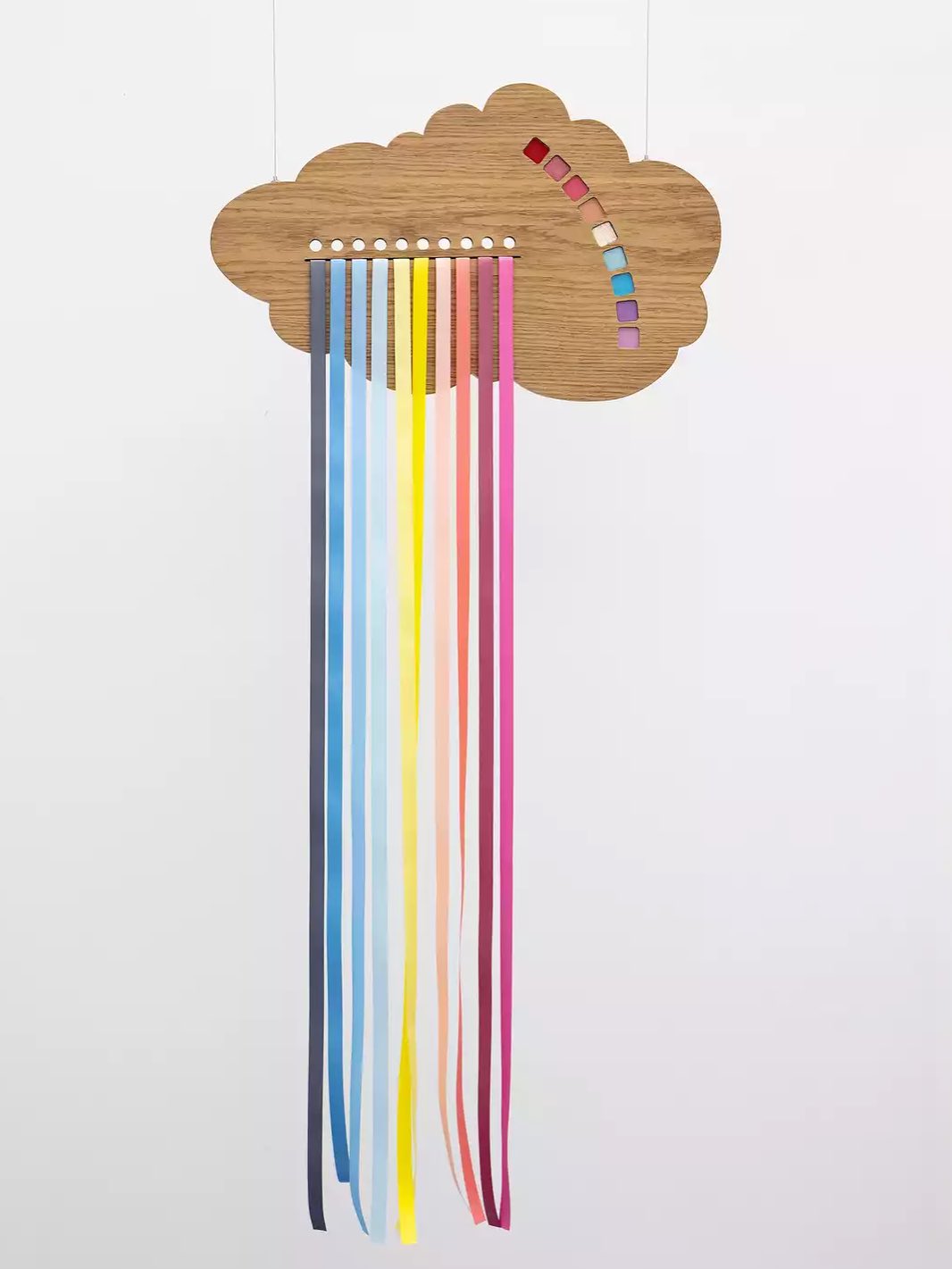
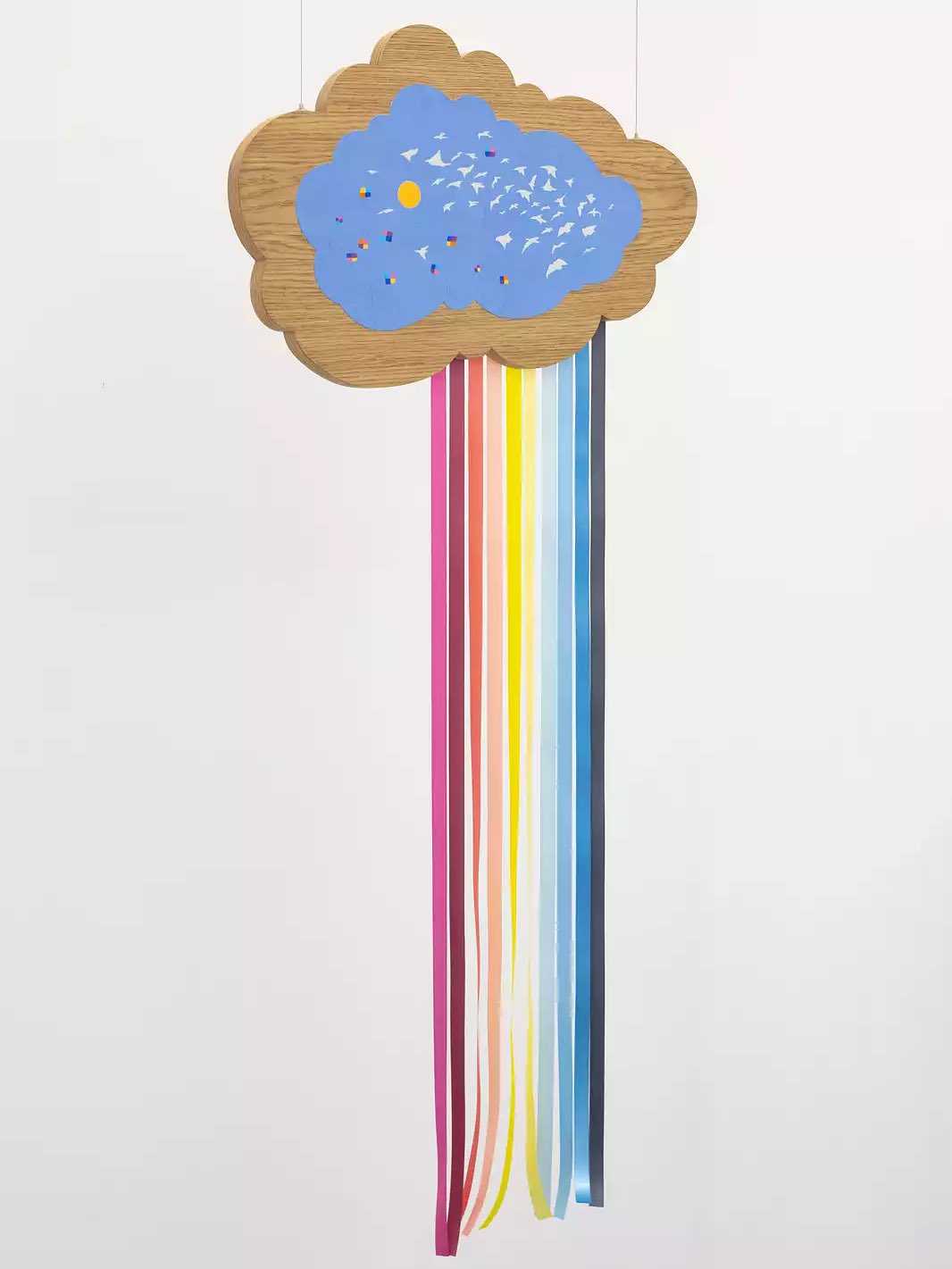
At the heart of this practice is a critique of inherited hierarchies. Western art history has often treated feminized forms of adornment, makeup, beauty rituals, fashion, decoration, as shallow or secondary, especially when compared with the supposedly serious language of painting and sculpture. Irasema dismantles that distinction. By using cosmetics as painterly substance, she pulls intimate, everyday, coded-as-feminine materials into direct conversation with the canon. The result is not simply a correction to that history, but a more destabilizing move: she reveals that painting’s claims to permanence, authority, and refinement have always been ideological as much as formal.
This tension is especially vivid in the works associated with Pintura Cósmica (Cosmic Painting), Irasema’s 2024 solo exhibition at Proyectos Monclova in Mexico City. The project began in 2018 as a conceptual play between the words “cosmic” and “cosmetic,” and evolved into a broader reflection on color theory, artistic creation, and the cultural weight of ornament. The exhibition was framed as a kind of contemporary cabinet of curiosities, inviting viewers into a microcosm where painting, objecthood, and classification blur into one another. That curatorial framing matters, because cabinets of curiosities were early systems for organizing knowledge before the modern museum. Irasema reactivates that history, but replaces certainty and hierarchy with unstable, seductive, unruly forms.
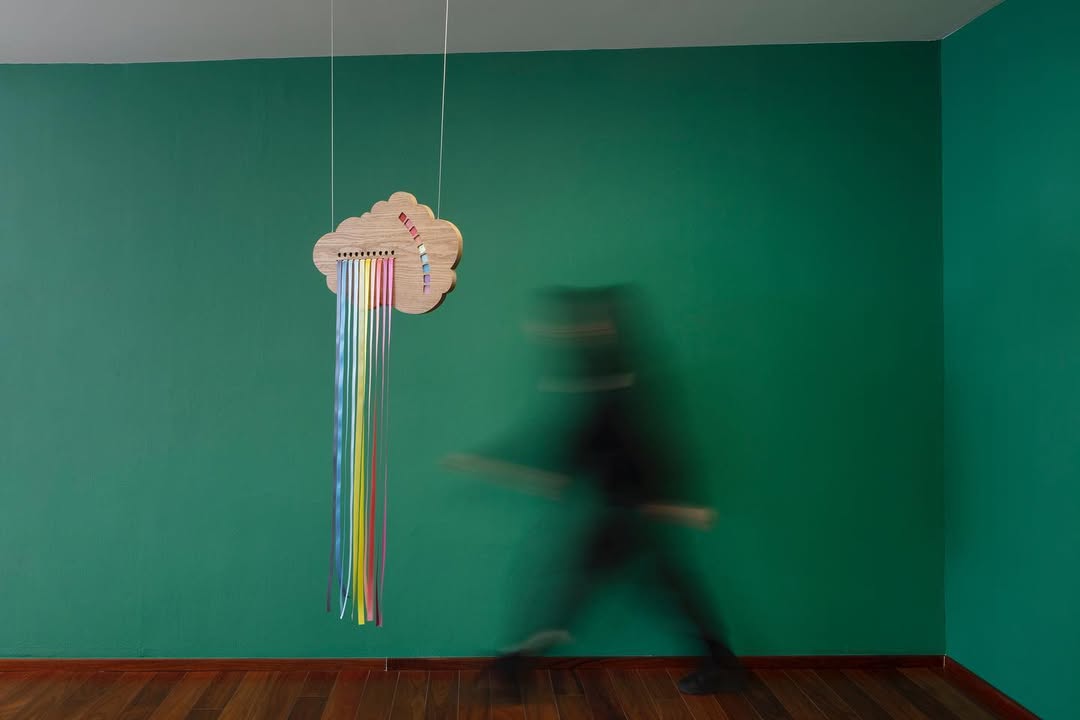
Biographically, Irasema’s formation helps explain the density of her visual language. Born in Mexico City in 1987, she studied at FAD-UNAM and later at La Esmeralda, and has also worked in curatorial and museographic contexts. Her work has appeared in projects and exhibitions across Mexico and beyond, and recent institutional presentations include Los sueños de la pintura producen monstruos at the Sala de Arte Público Siqueiros, where she used cosmetic painting to critically engage the technical and conceptual legacy of Mexican muralism, and a 2025 intervention at the Museo de Arte Carrillo Gil reflecting on the museum’s place in the urban and artistic landscape.
For a contemporary audience, especially one attentive to material culture and the politics of images, Irasema’s art feels unusually alive. It does not simply “elevate” makeup into fine art, which would still preserve the hierarchy she is questioning. Instead, it lets painting be contaminated, refreshed, and reimagined by objects associated with intimacy, glamour, labor, class, and social performance. That is what gives the work its force. It is beautiful, certainly, but never innocent. It understands beauty as a structure, a ritual, a language, and a battleground.
Circe Irasema’s practice reminds us that painting is not exhausted. It can still mutate. It can still absorb discarded vocabularies. It can still surprise us by emerging from a powder compact, a fake nail, a mannequin hand, or a wooden star that seems to hold both ornament and cosmos in the same breath.