Kozo makes art that behaves the way memory actually does, not in neat periods or categories but in collisions, with Renaissance faces carrying the pressure of comics, graffiti, tattoos, and childhood obsession until the whole thing feels uncomfortably familiar, like someone turned the inside of a creative mind into marble, ink, and paper.
Unscarred marble does not prepare you for Kozo. We explore Kozo art, Eden Kozokaro’s Brooklyn-based fine art practice, where classical sculpture, micro realism tattoo culture, Renaissance painting, Greek mythology, comic-book imagery, and pop culture nostalgia collide in tattooed marble, mixed-media works, and lithographs with tattoo ink on paper. For collectors, tattoo art lovers, and contemporary art audiences searching for Kozo artist biography, Nostalgia series, Skin Deep series, and Butterfly Dreamscape, this deep look follows how a globally recognized tattoo artist transforms stone, paper, and canvas into emotionally charged sites of memory, disruption, and reinvention.
When Marble Starts Remembering Childhood
Some artists borrow from art history. Kozo seems to provoke it.
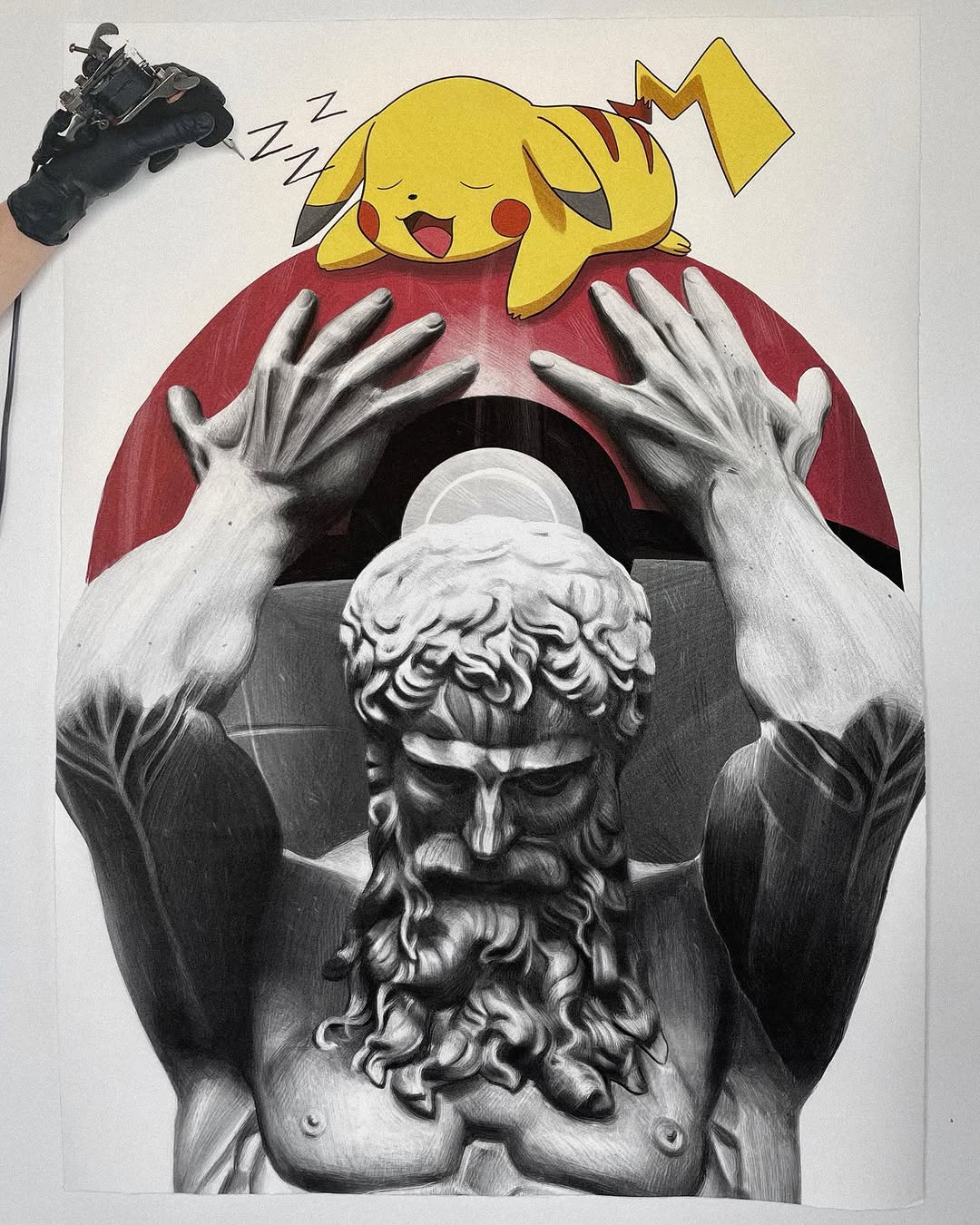
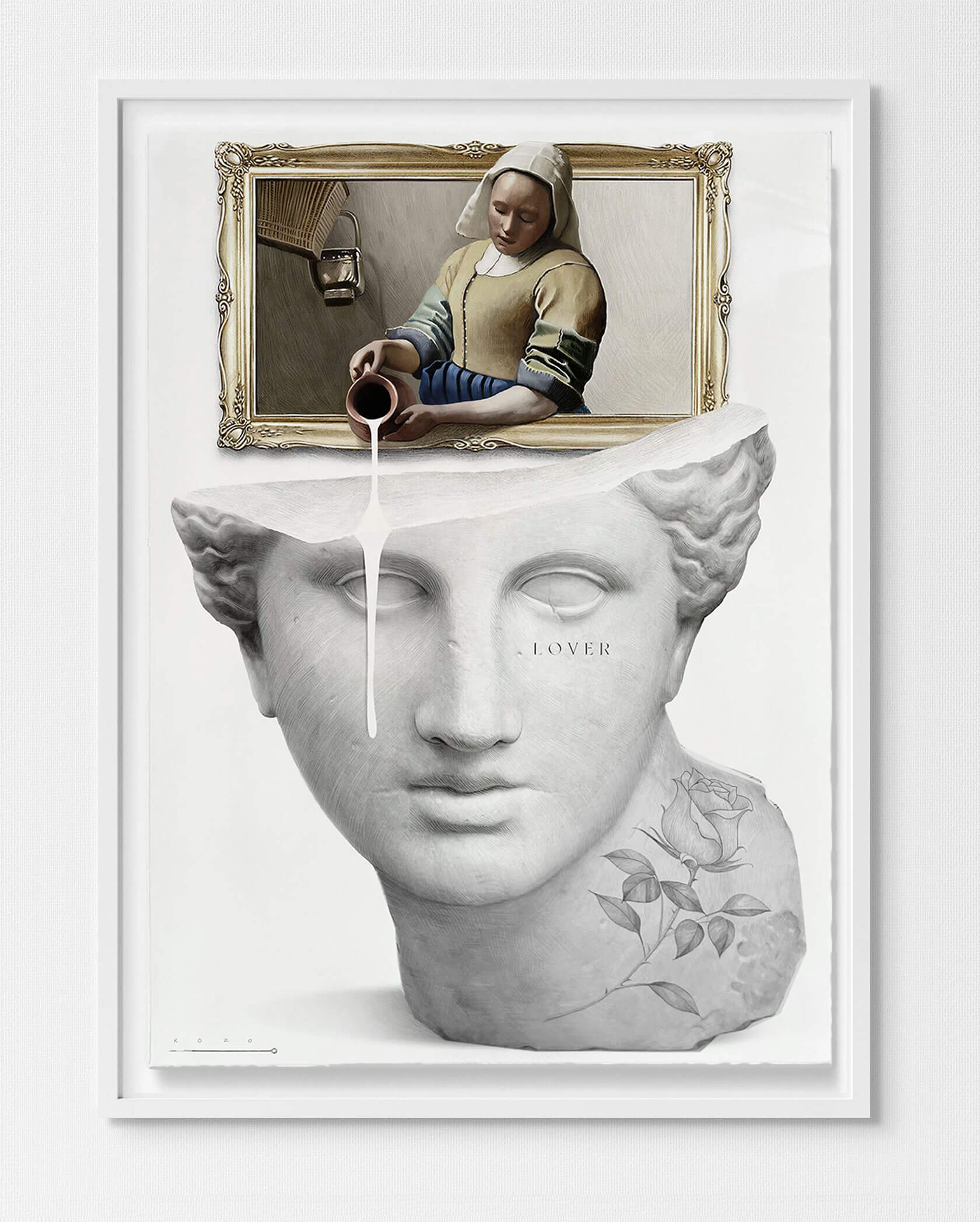
In his work, the polished authority of classical faces meets the unruly pulse of modern memory. Gods crack. statues are interrupted. Ideal beauty gets tagged, pierced, webbed, punched through, or quietly haunted by characters most of us first met in childhood. The result is not a gimmick and not a mashup in the shallow sense. It feels closer to an argument between permanence and desire, between the museum and the bedroom wall, between what culture tells us to revere and what we actually carry with us.
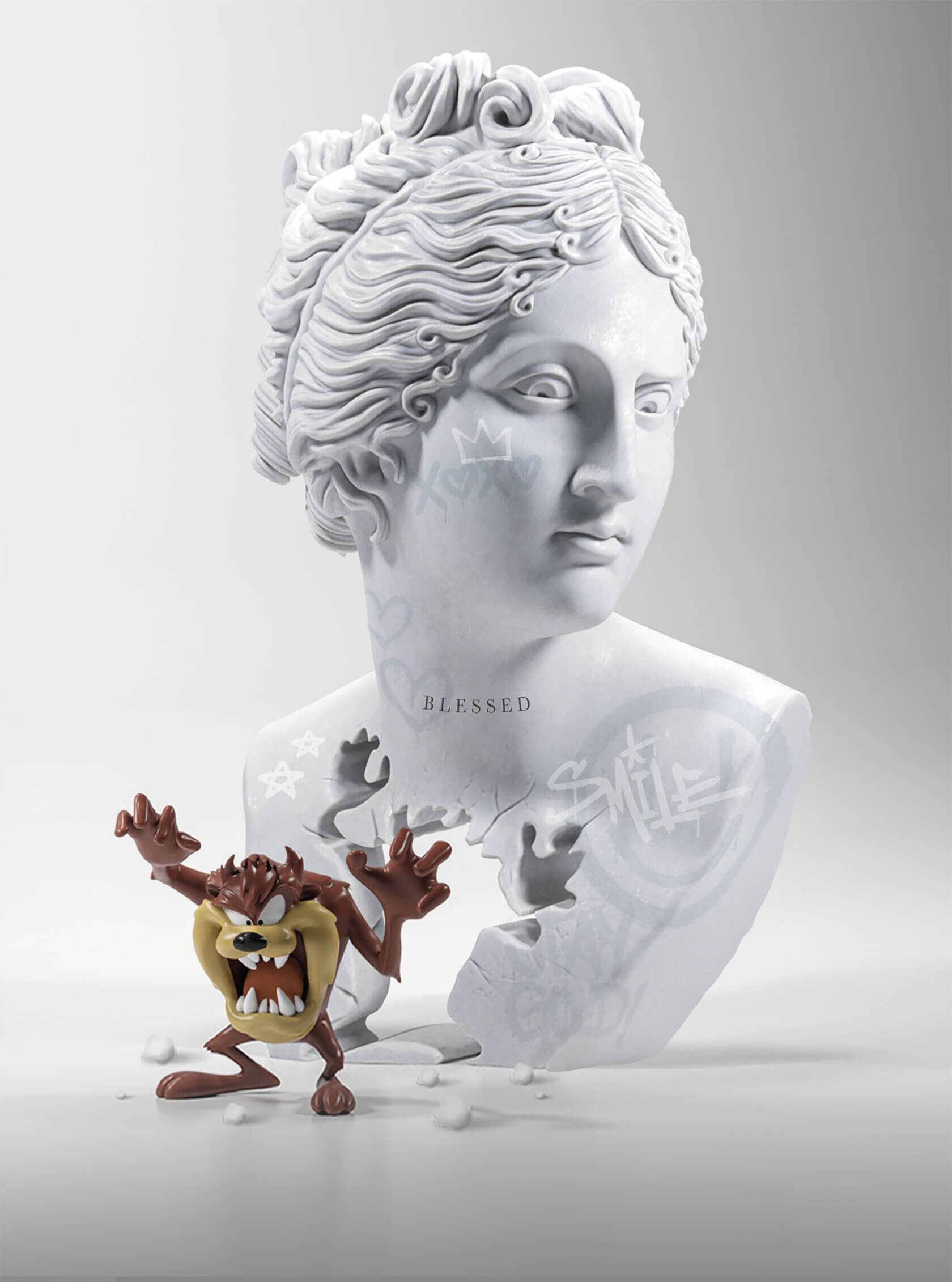
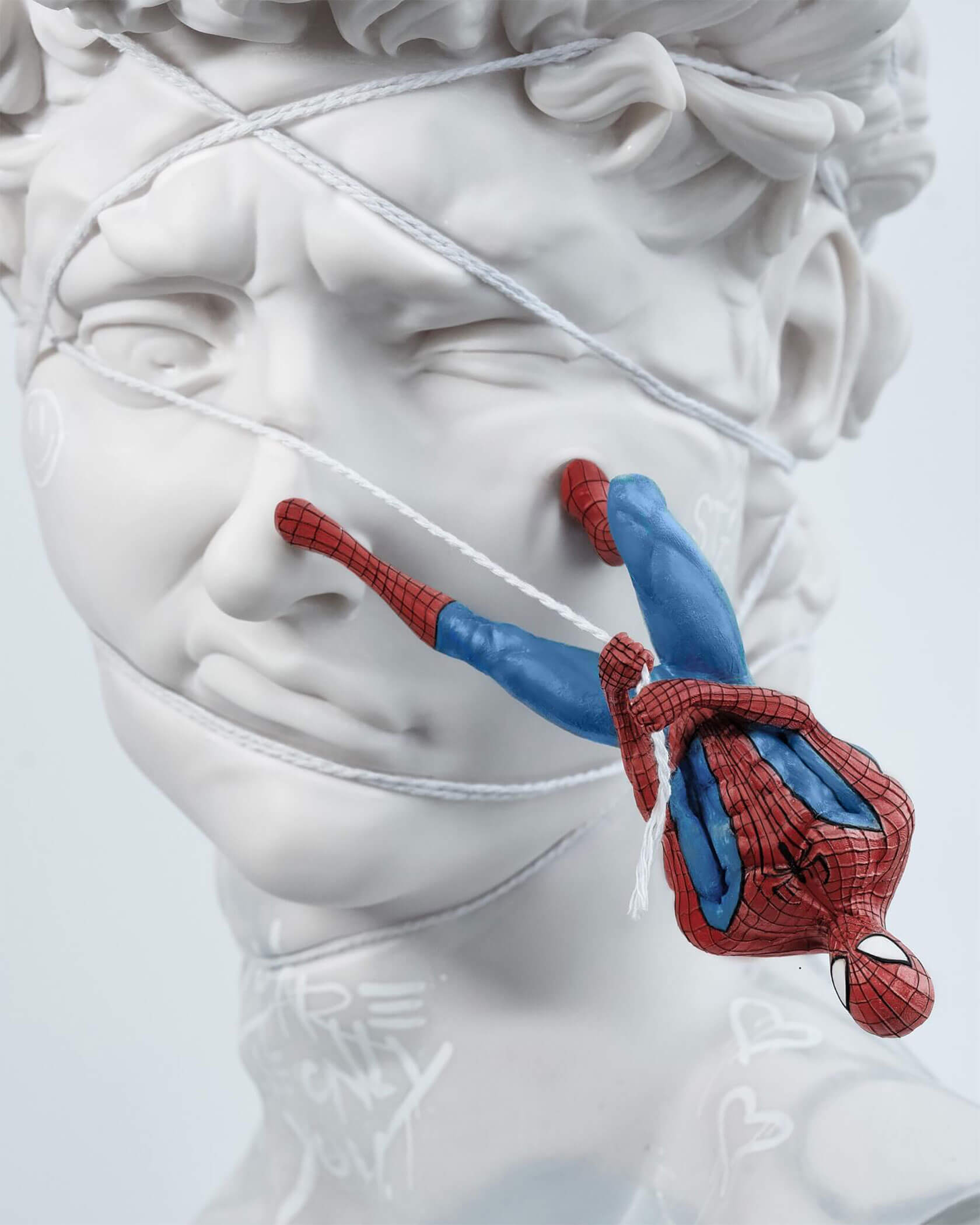
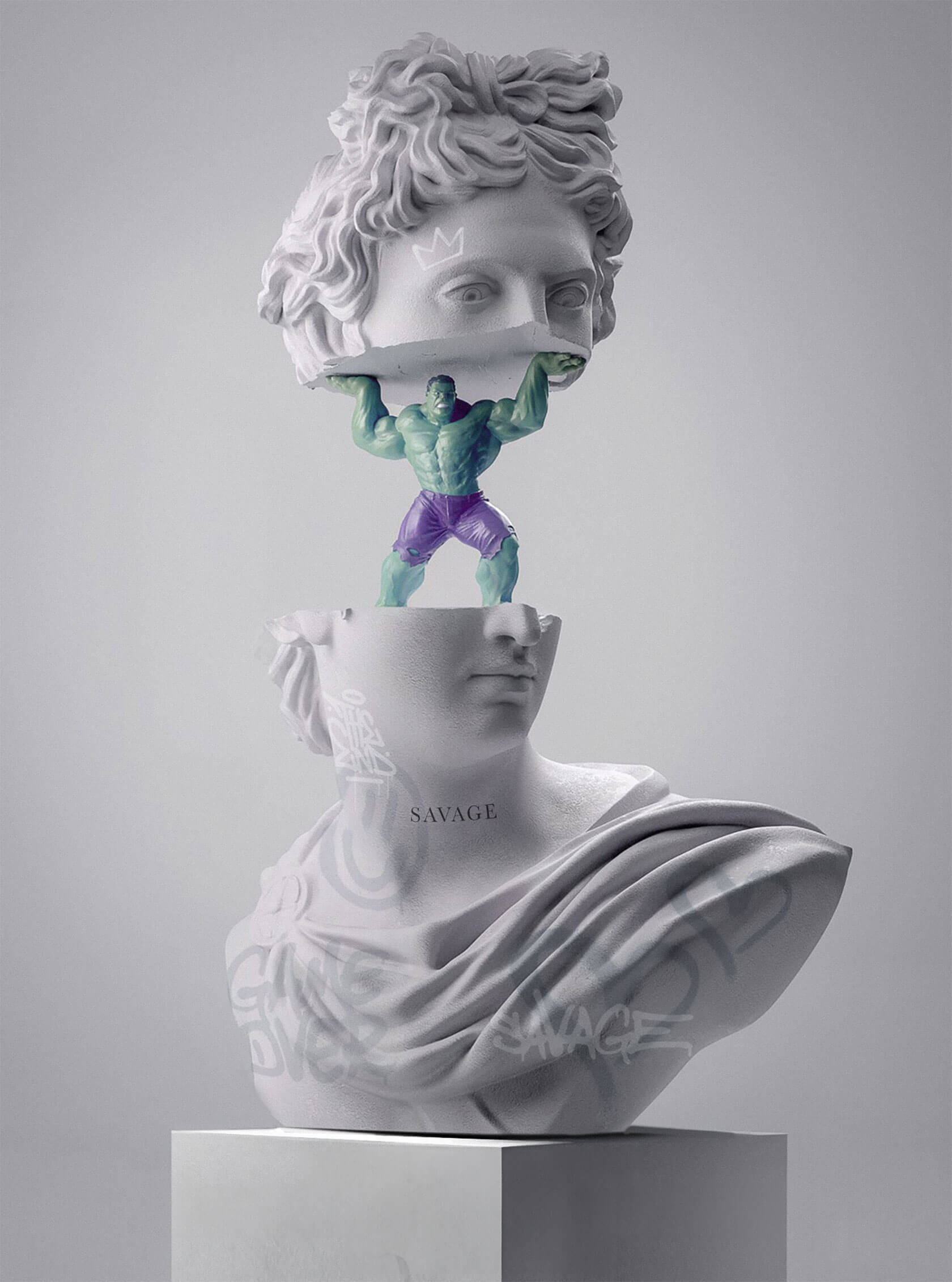
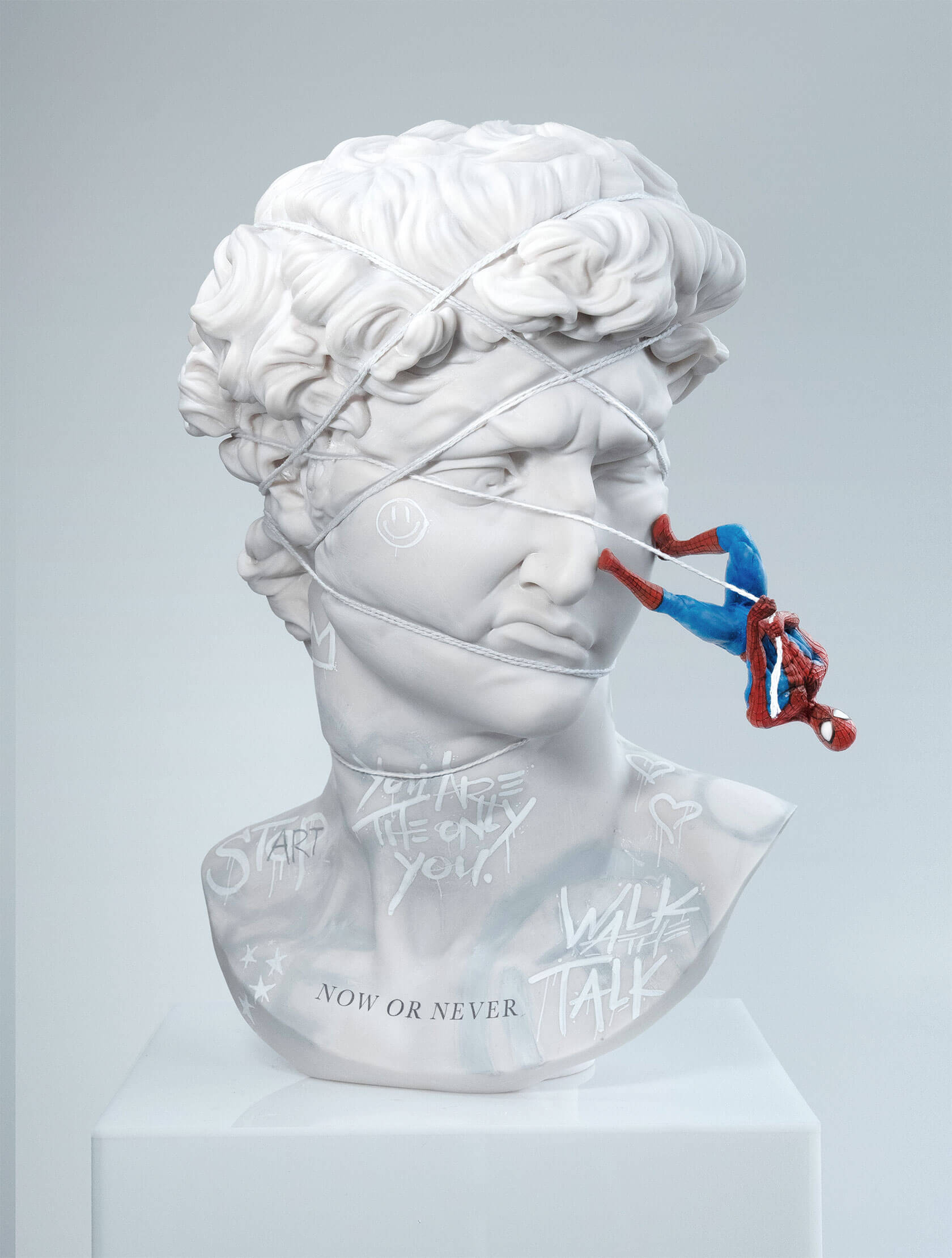
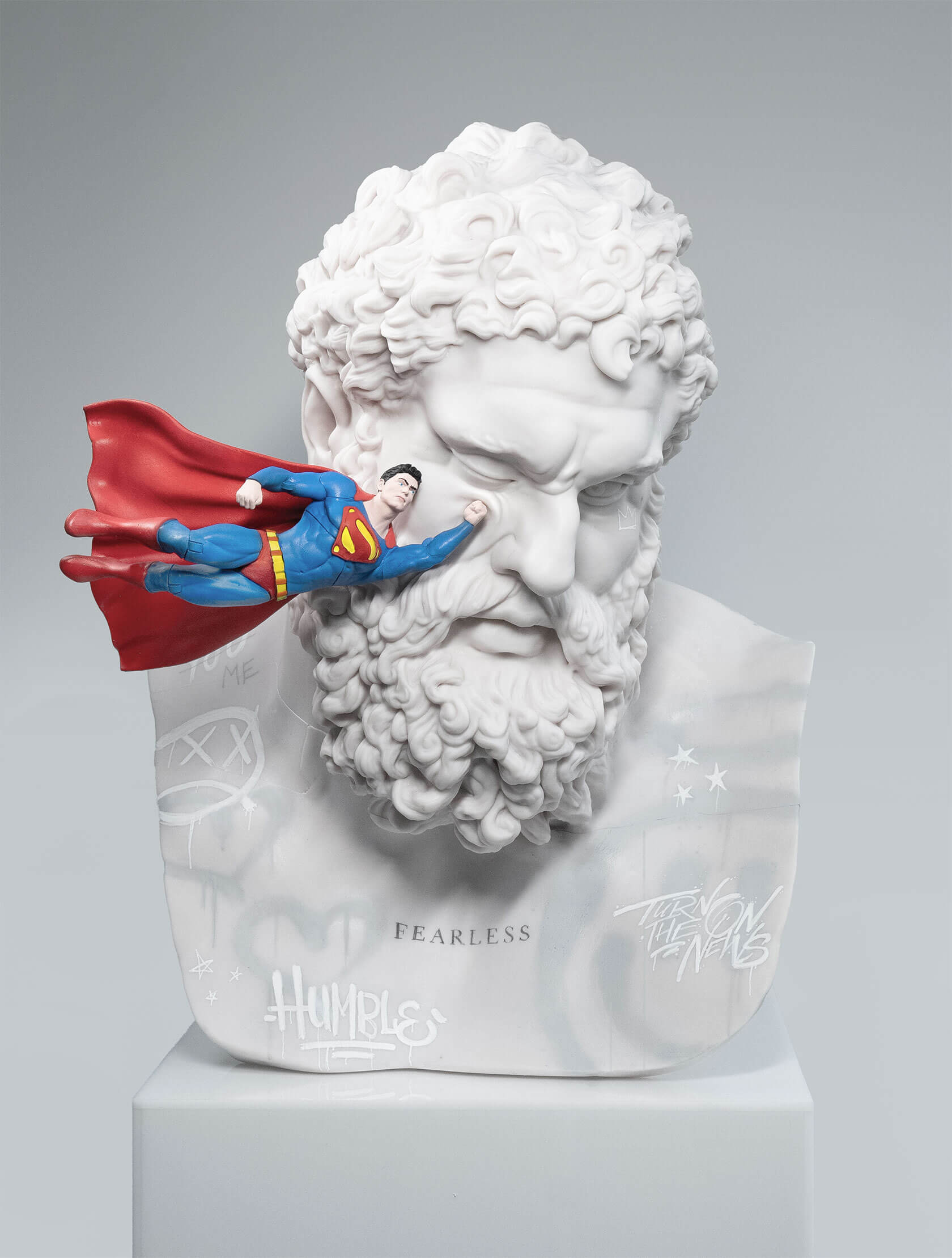
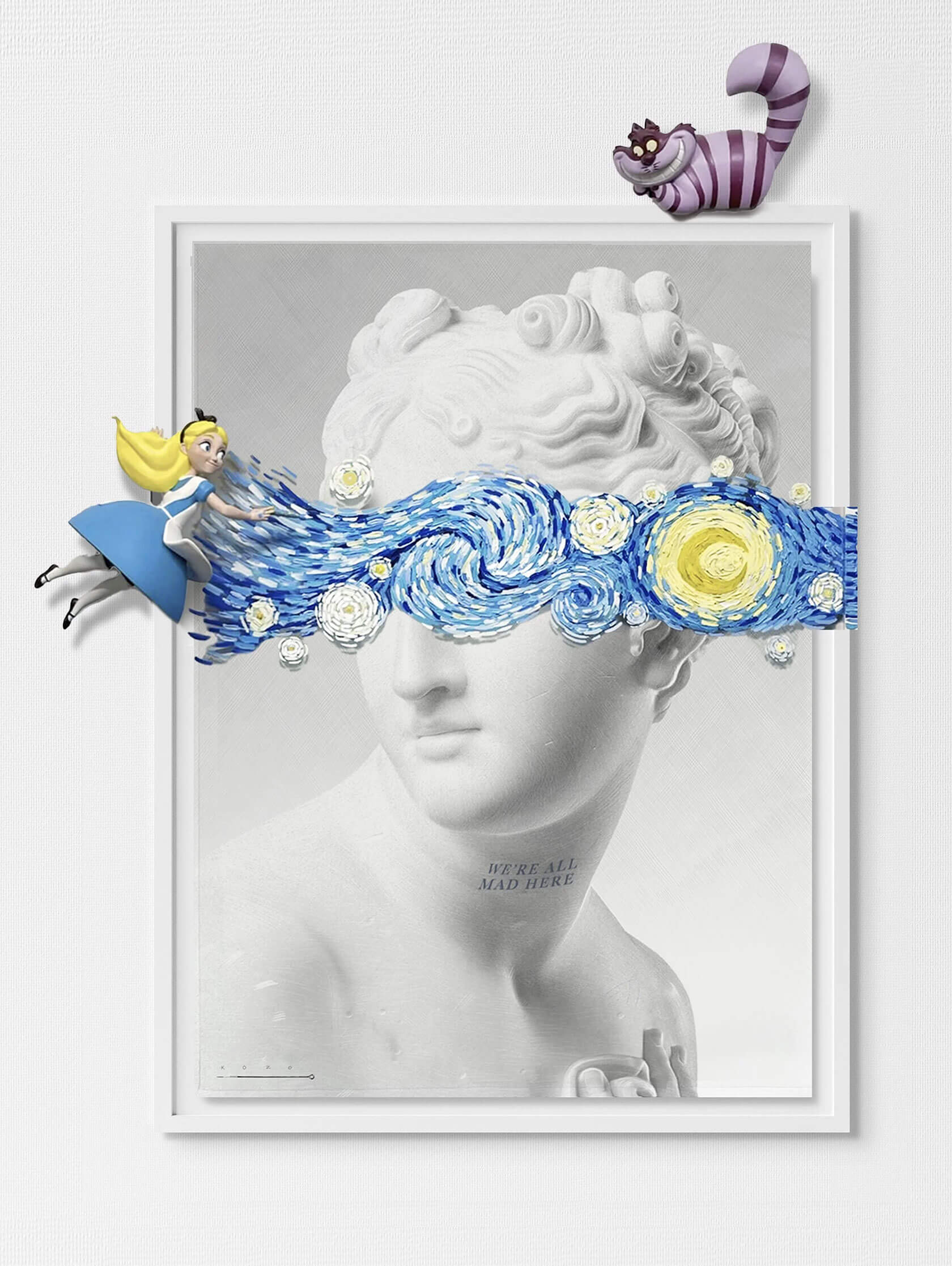
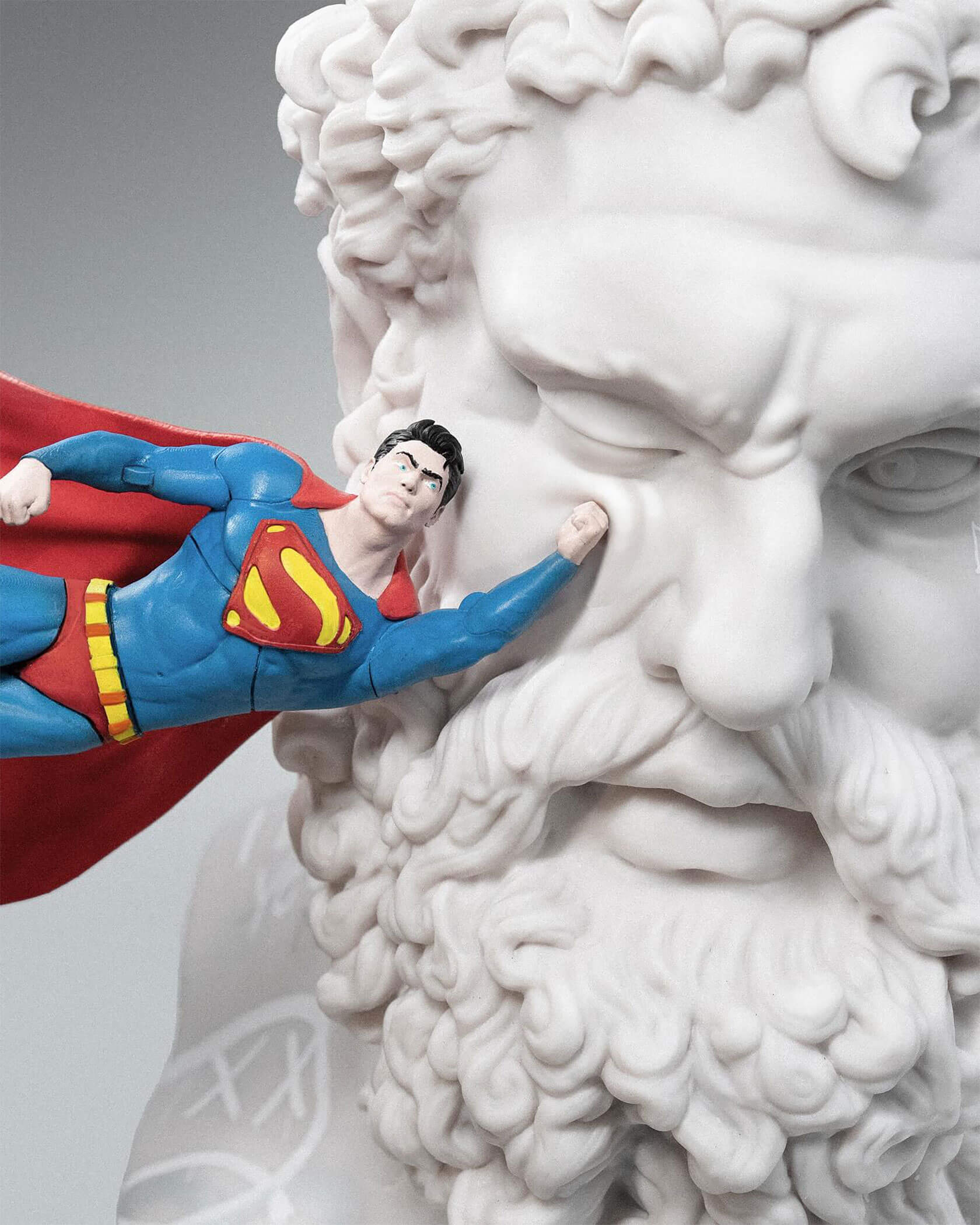
That tension is what makes Kozo’s work so difficult to dismiss. His images are instantly legible, yet they resist quick consumption. A marble head can suggest antiquity, prestige, and durability, only to be invaded by Superman, Spider-Man, Alice, or scribbled phrases that behave like diary fragments and street marks at once. The effect is visceral. You recognize the references immediately, then realize the real subject is memory itself, how it attaches to surfaces, damages ideals, and leaves beauty more complicated than it was before.
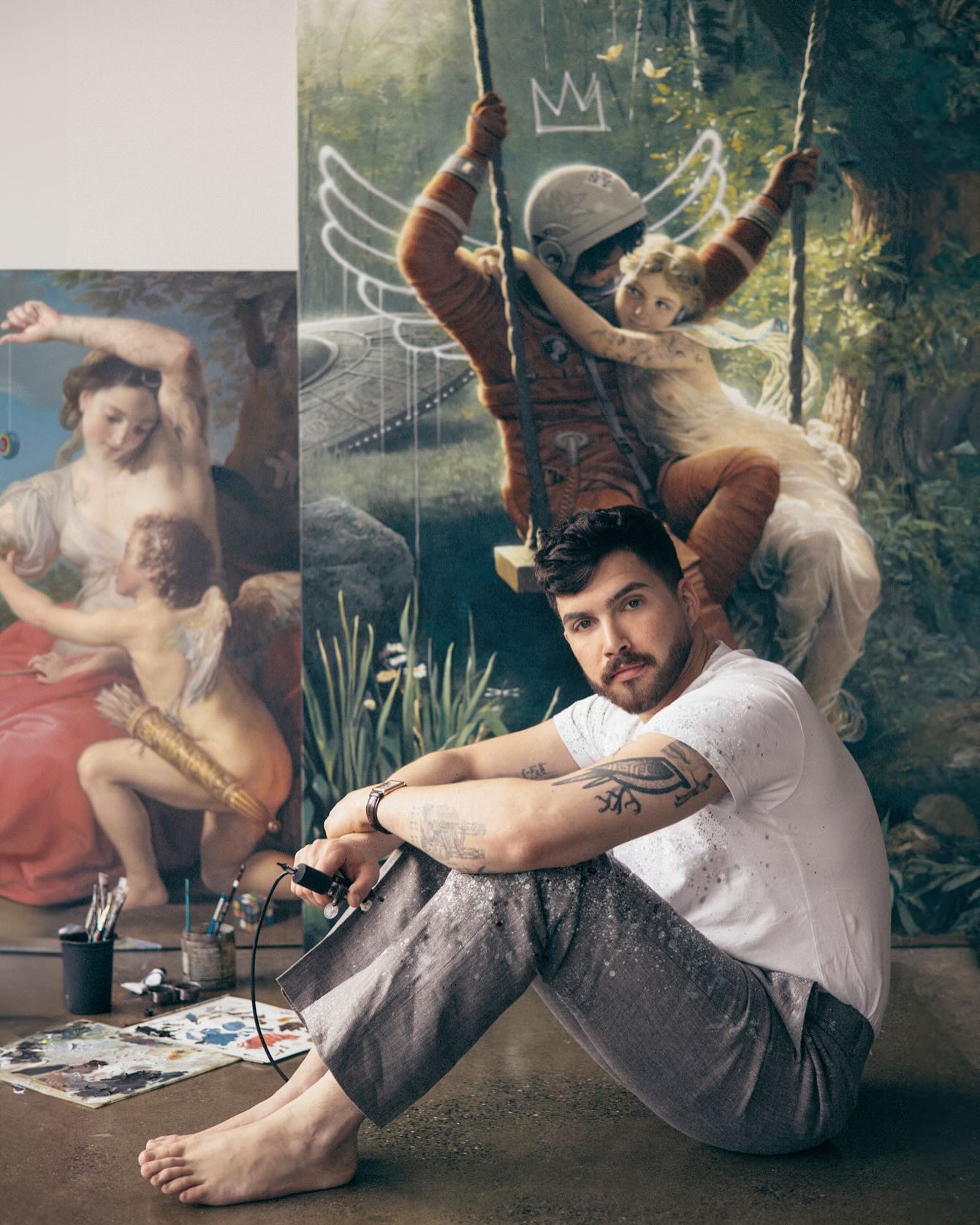
Kozo, or Eden Kozokaro, and the Making of a Cross-Medium Vision
Kozo, whose full name is Eden Kozokaro, was born in Israel in 1996 and is now based in Brooklyn, New York. His visual language did not appear by accident. During his teens, he studied drawing, sculpture, painting, comic-book art with Israeli cartoonist Uri Fink, and classical art history and traditional methods. That range matters because his mature work still carries all of it. You can see the discipline of atelier-style observation, the narrative compression of comics, the theatrical charge of old master composition, and the immediacy of tattoo design operating in the same image.
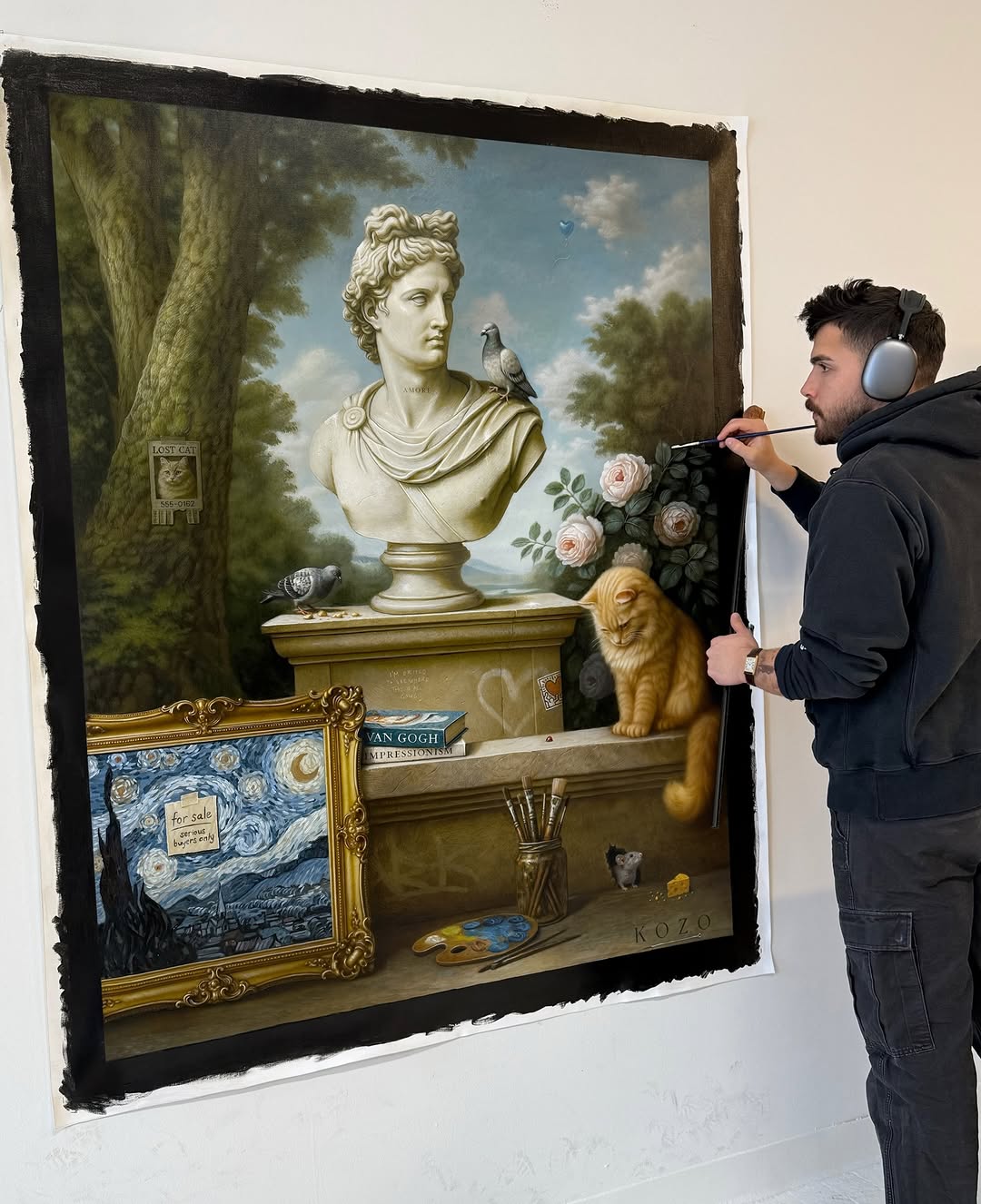
He began tattooing at seventeen after buying a tattoo machine on eBay, initially working on friends from a bedroom setup. That origin story is telling. Kozo did not enter image-making through institutional distance. He entered through skin, intimacy, risk, and permanence. Tattooing taught him that an image is never only visual. It is physical, psychological, and biographical. It belongs to someone. It travels through pain. It gathers meaning over time.
Skin, Stone, Paper: One Language, Three Surfaces
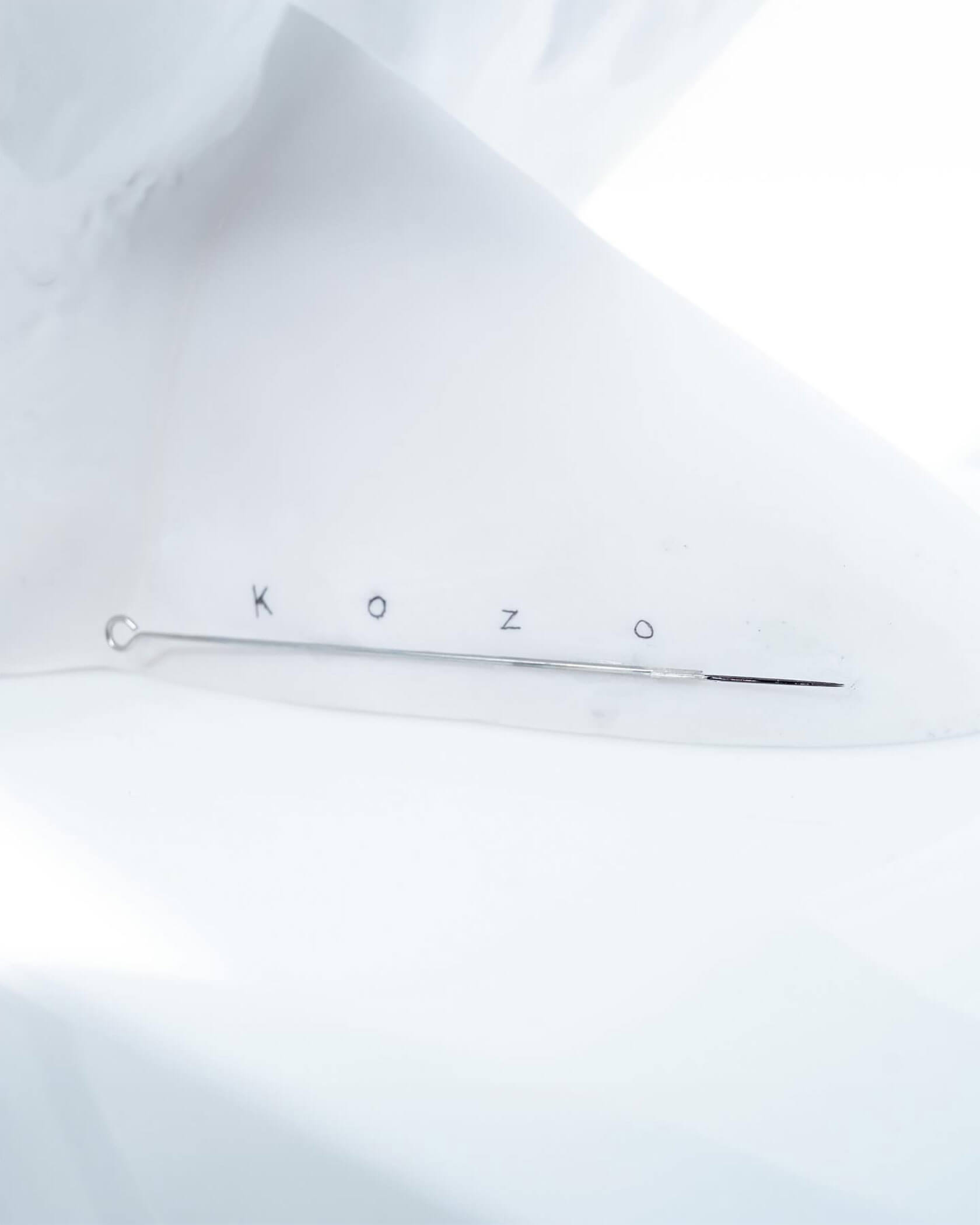
What makes Kozo compelling in contemporary art is not simply that he is a famous tattoo artist making gallery work. It is the way he treats marble, canvas, and paper as extensions of the same emotional vocabulary. On his fine-art website, each work is described as carrying a signature intervention made with a coil tattoo machine, with the tattoo needle integrated into the piece itself. That detail is more than branding. It turns the object into evidence of process. The tool that marks skin remains present, almost like a relic, inside the finished work.
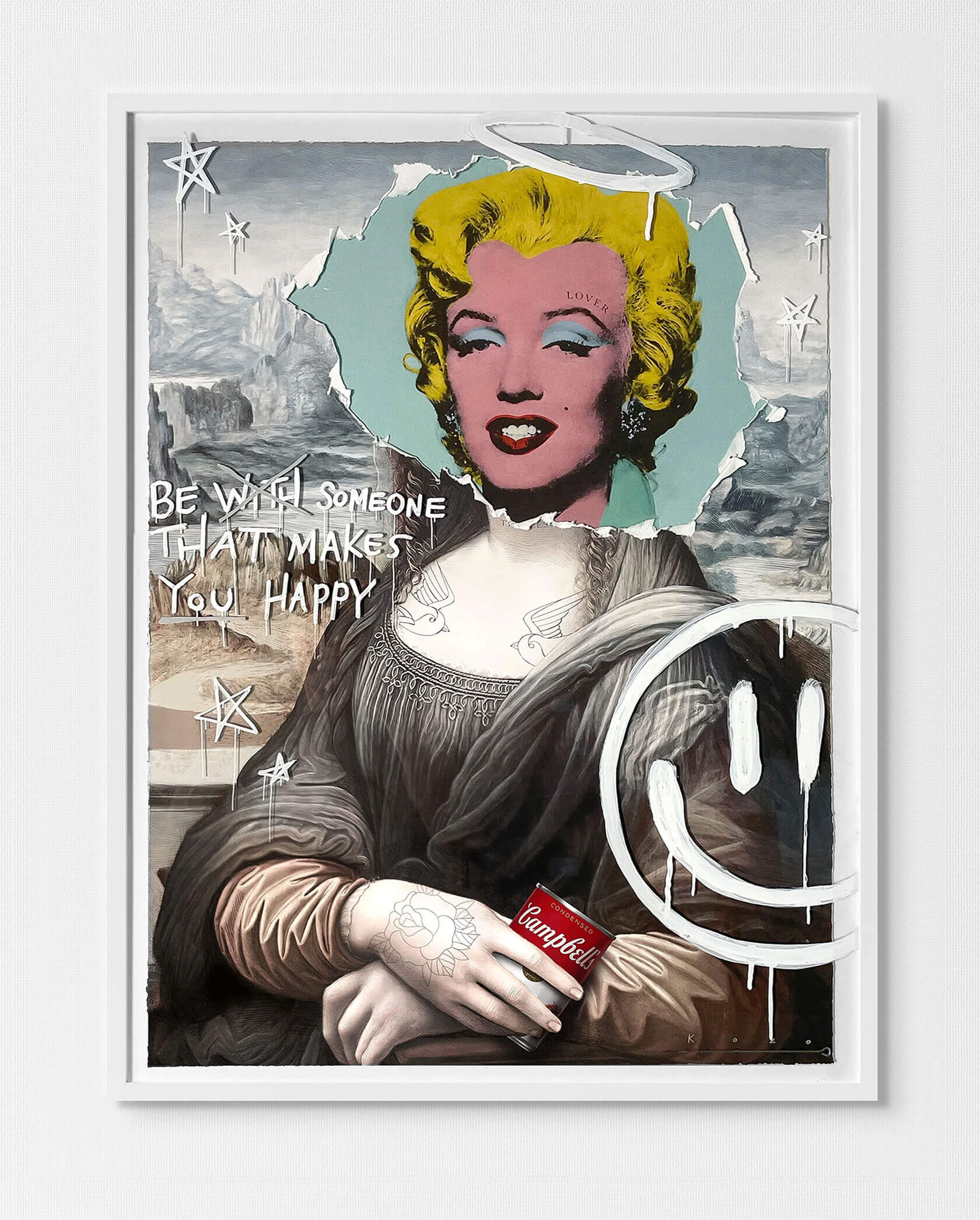
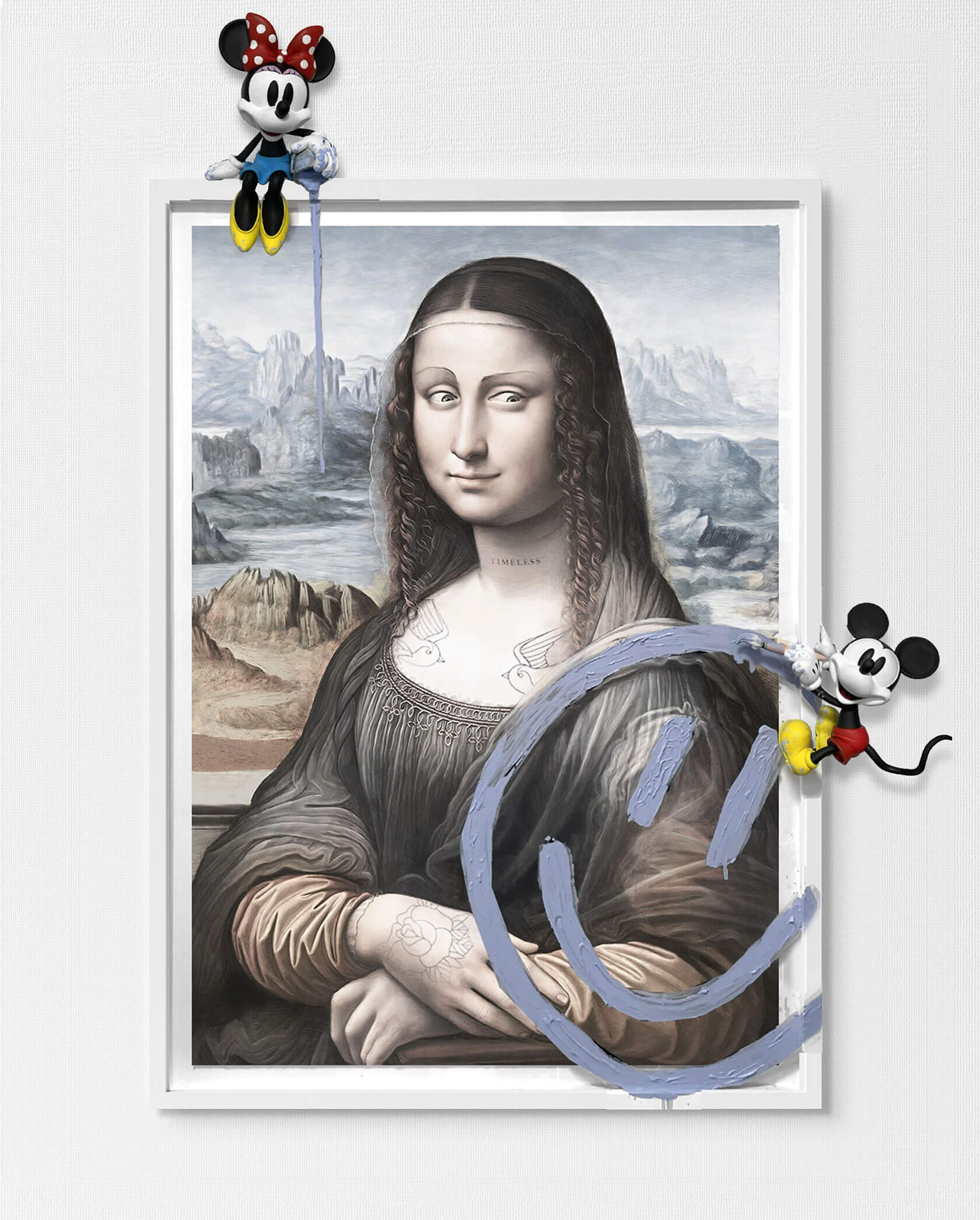
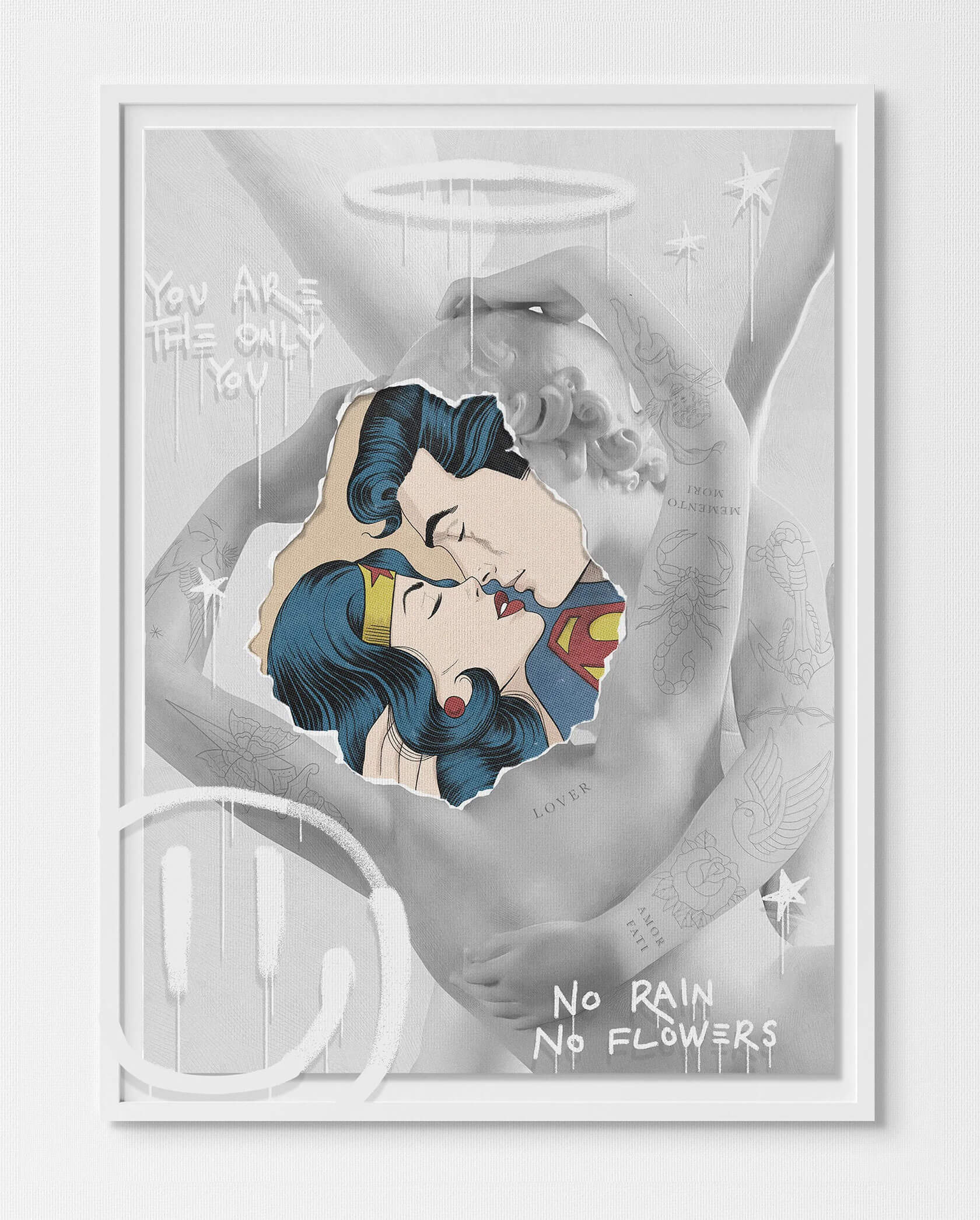
This is one of the strongest conceptual bridges in his practice. Classical art has long been associated with permanence, refinement, and distance. Tattooing is often associated with intimacy, subculture, and the body in flux. Kozo fuses them without flattening either one. Instead, he lets their differences stay active. Stone still reads as stone. Ink still feels invasive. Paper still preserves the delicacy of line. But all three surfaces become carriers of memory, inscription, and rupture.
Nostalgia as Impact, Not Sentiment
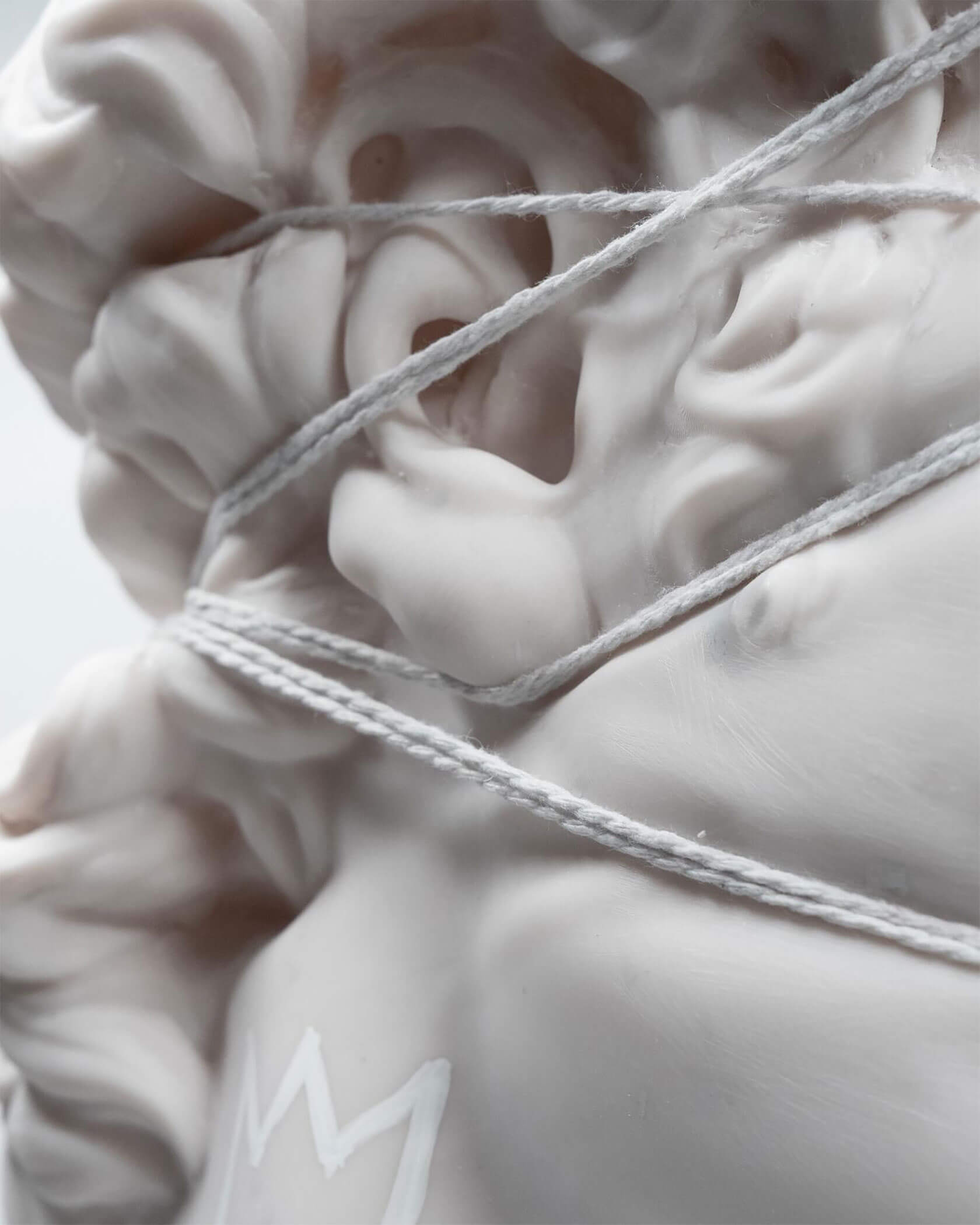
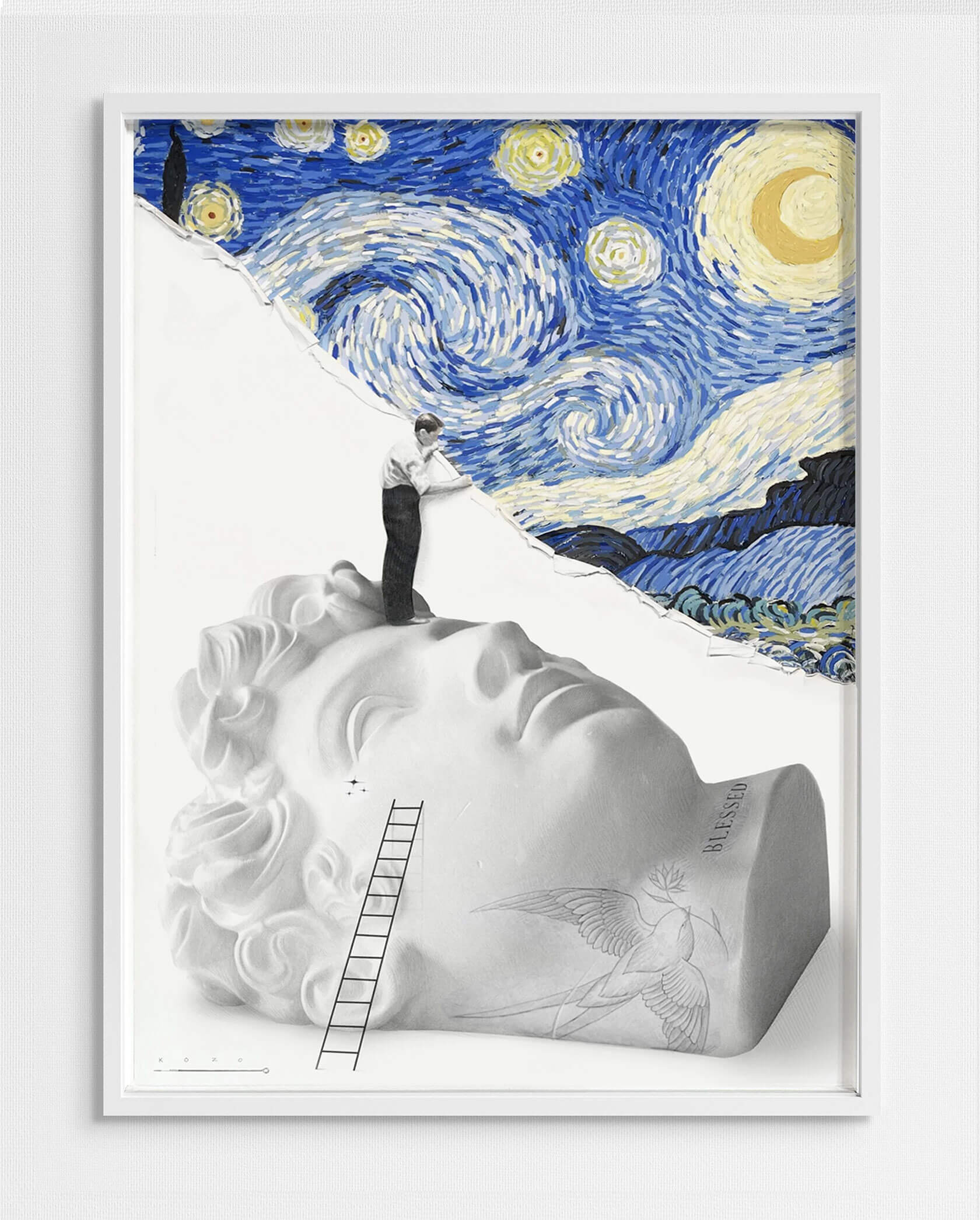
Kozo’s Nostalgia series may be his clearest statement on the emotional mechanics of pop culture memory. Rather than presenting childhood icons as comforting symbols, he stages them as disruptive forces inside classical art. Superman punches through a marble god. Spider-Man tangles a sculpted head in threadlike webs. Alice spills dreamlike fragments, with hints of Van Gogh, across the eyes of a statue. Elsewhere, toys, Marvel references, and comic-book energy enter into confrontation with the gravitas of Greek and Renaissance forms.
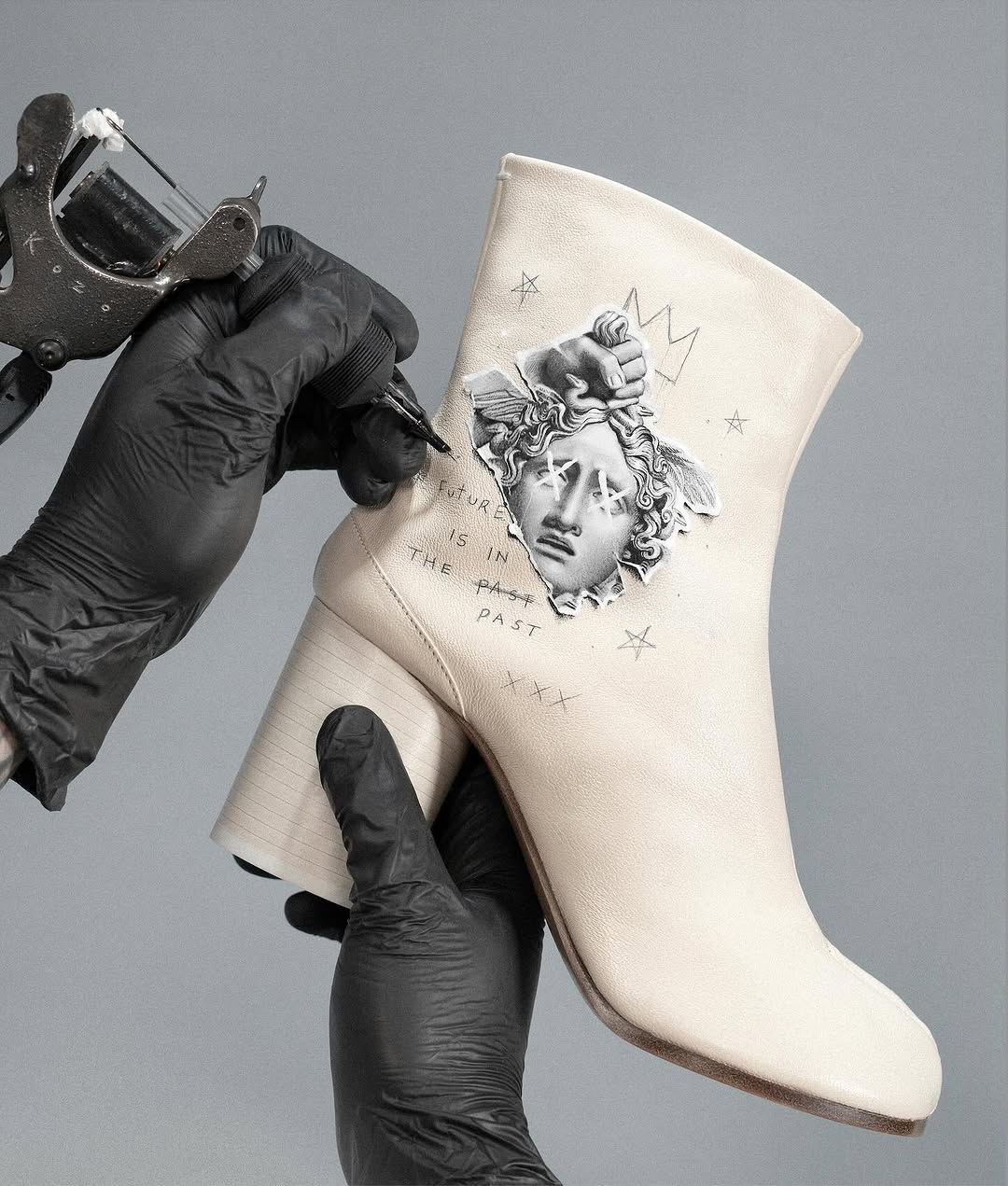
The brilliance of this series lies in the fact that nostalgia is not treated as softness. It arrives with force. Memory breaks things open. The child within the adult viewer does not gently revisit the museum. It storms it.
Skin Deep and the Archive of the Body
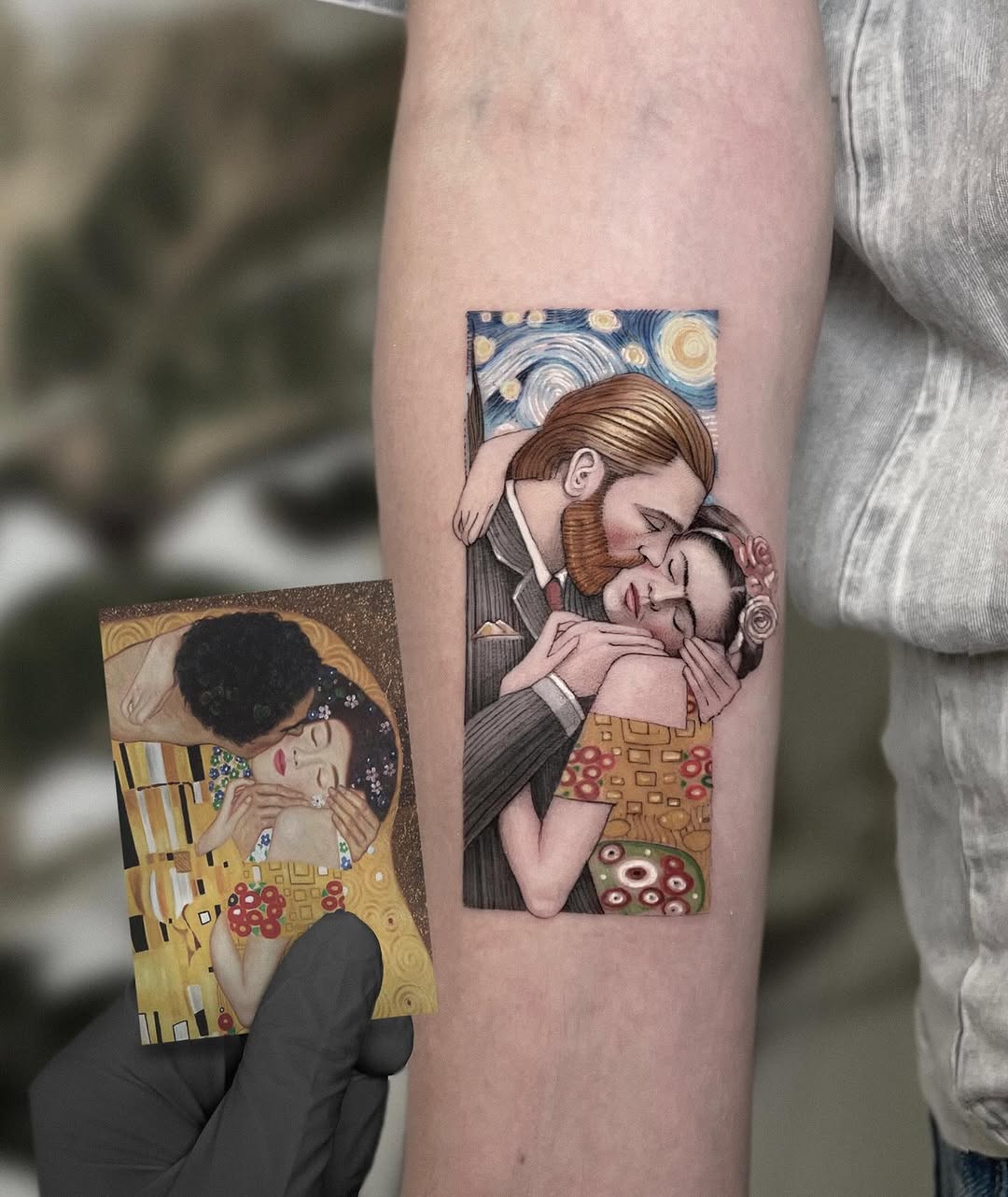
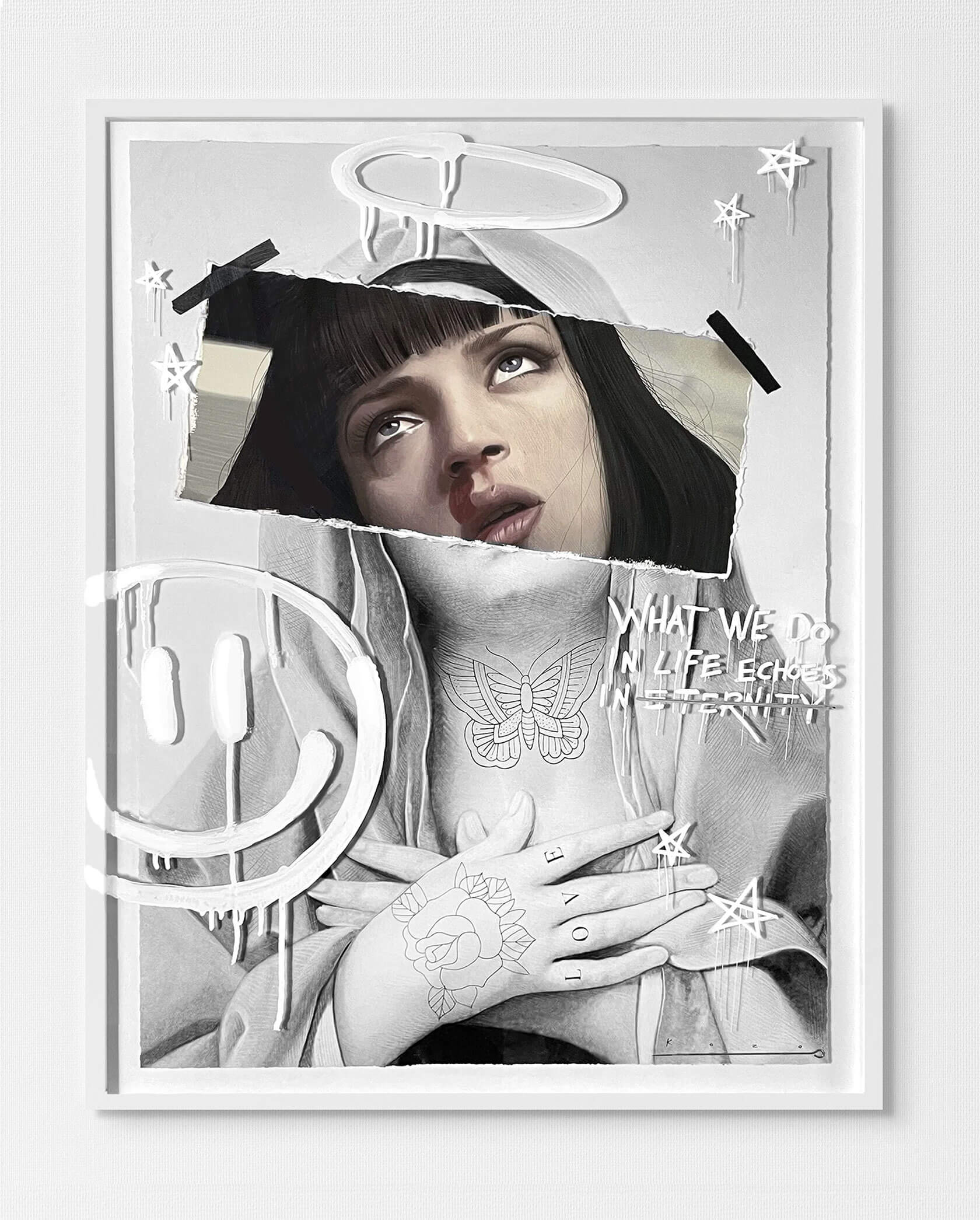
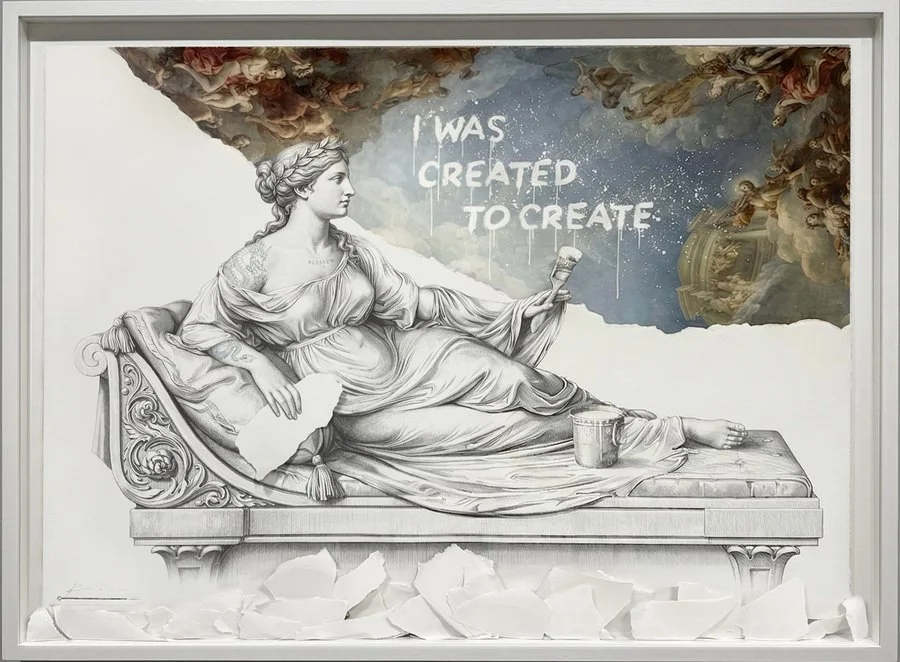
If Nostalgia dramatizes collision, Skin Deep feels more intimate. This series revisits imagery first realized on bodies, translating tattoo designs into works on paper while preserving linework, placement logic, and symbolic weight. It is less about impact and more about retention. What happens when an image leaves skin but keeps the charge of having once belonged there?
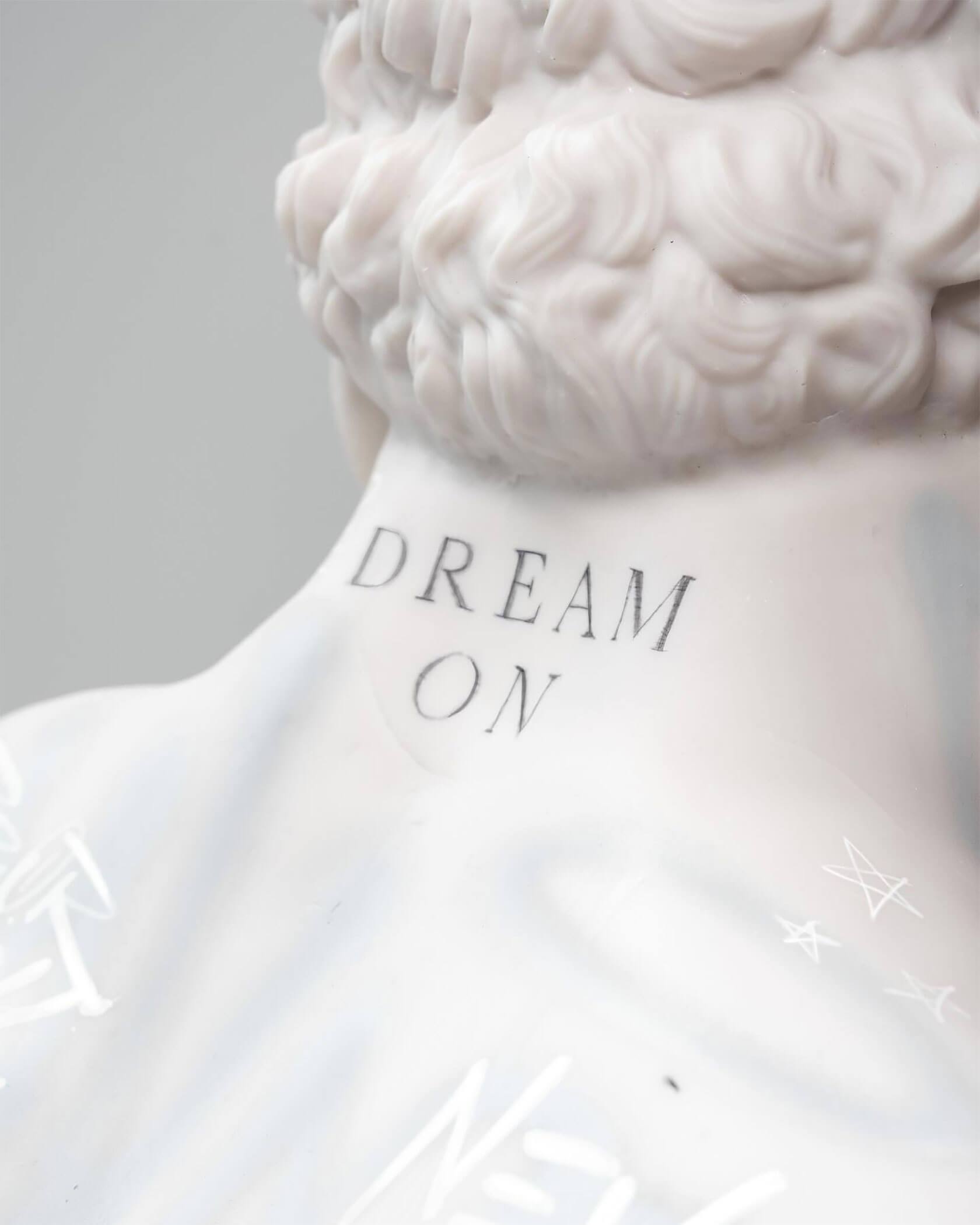
For viewers interested in contemporary drawing, figurative art, and tattoo aesthetics, Skin Deep offers a compelling model of translation across mediums. It reveals how tattoo language can function beyond the body while still carrying the gravity of embodiment. The page becomes a kind of phantom skin, a place where intimacy is preserved rather than diluted.
Butterfly Dreamscape and the Lure of Fragile Beauty
A third body of work, Butterfly Dreamscape, expands Kozo’s visual world in a more lyrical direction. The series combines classical heroic figures with tattoo ink, butterfly taxidermy, and silk flowers, extending the same dialogue between antiquity and the contemporary moment. Here the collision is not only between high art and pop culture, but between permanence and fragility.
Classical Art, Pop Culture, and the Tattooed Intervention
Kozo’s influences help explain the richness of this visual mix. Materials from the artist and galleries point to inspirations that include Rembrandt, Vincent van Gogh, Jacques-Louis David, Korean contemporary artists, comic-book imagery, and broader pop culture.
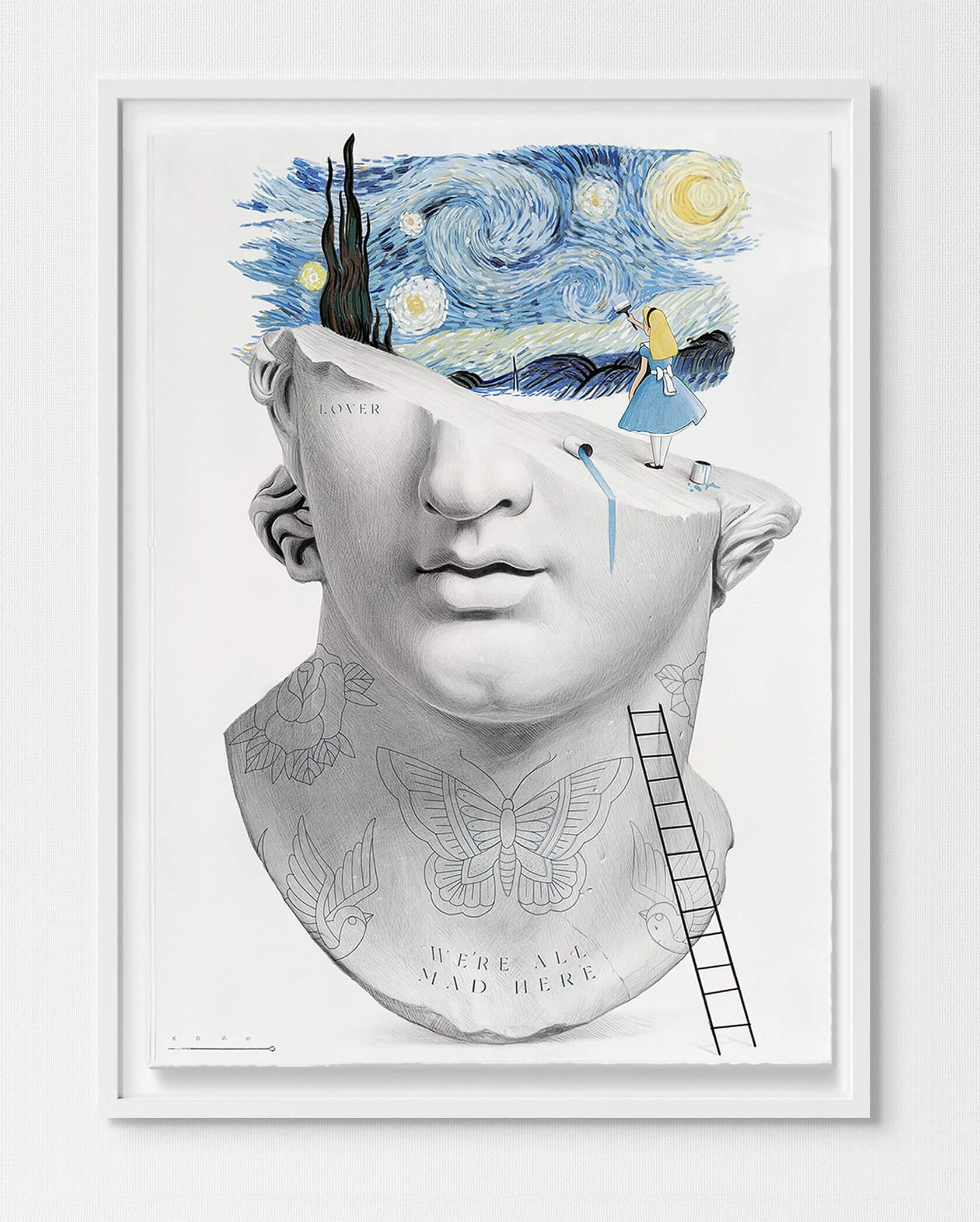
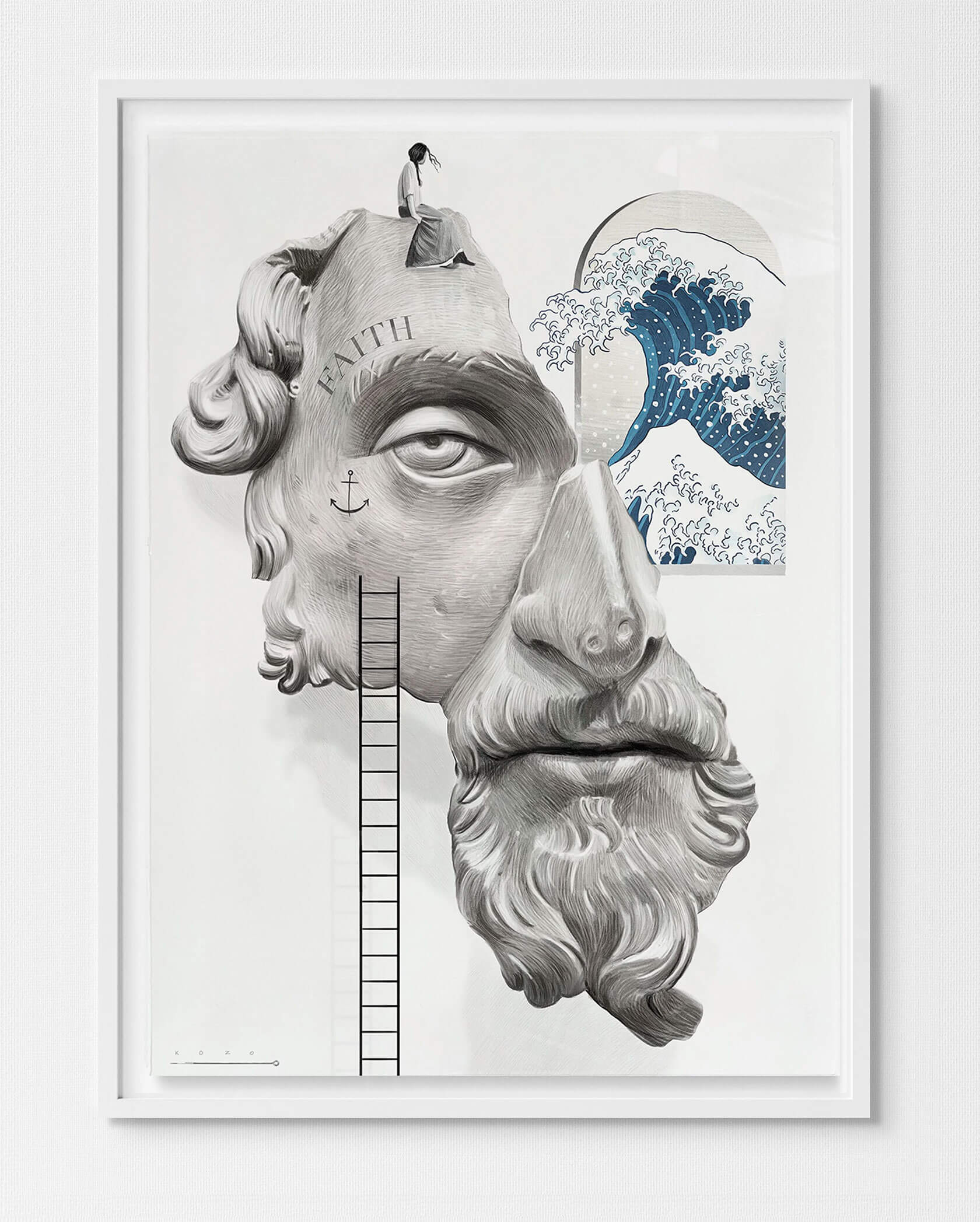
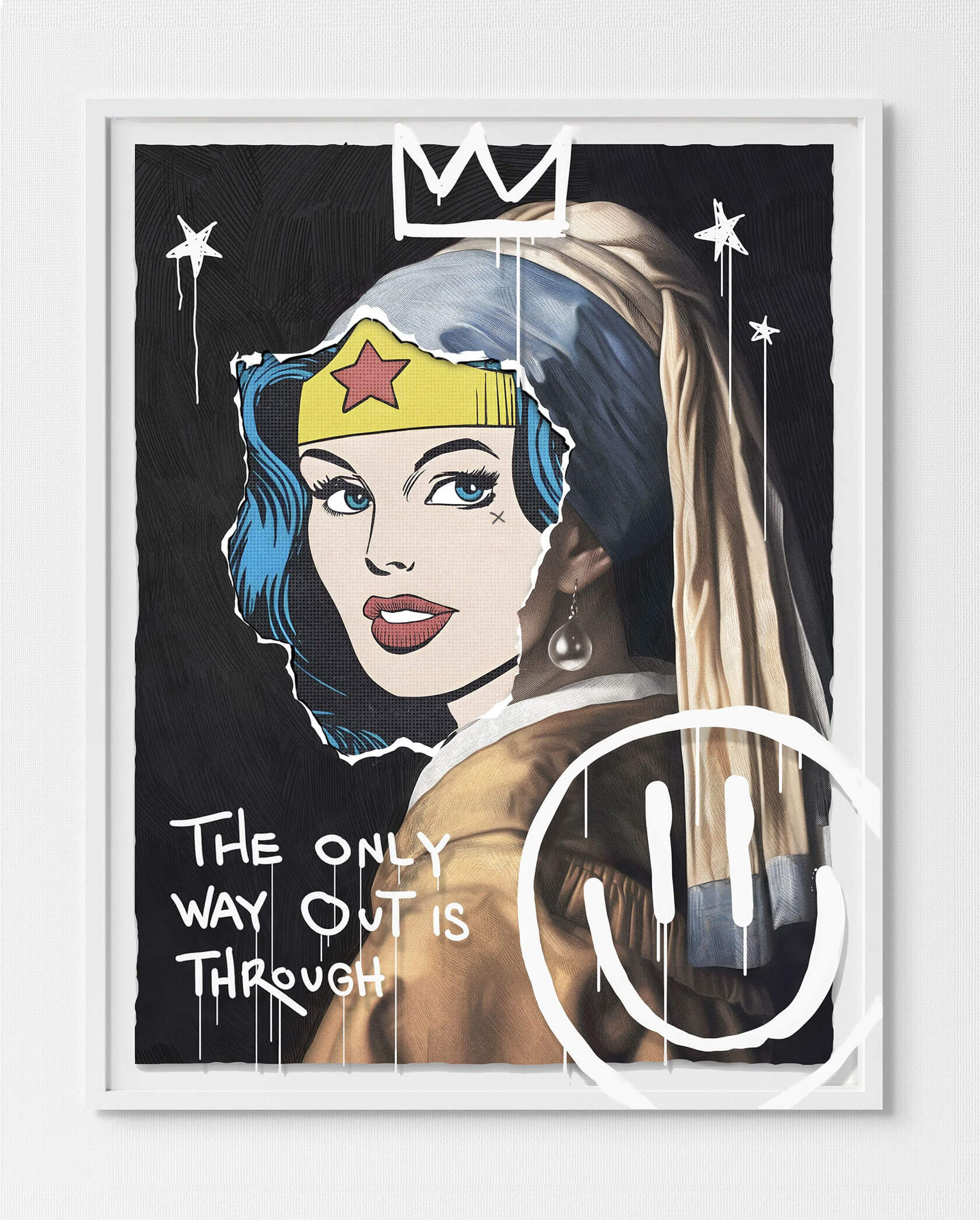
Graffiti-like marks and short handwritten phrases draw the work closer to tattoo flash, street language, and sketchbook thought. They also introduce another register, the voice of the present, impatient with purity.
Standout Works and the Poetry of Their Titles
The titles associated with Kozo’s practice deserve attention because they often sharpen the emotional reading of the imagery. Tear Through Time suggests rupture across eras, perfectly matching his habit of forcing childhood imagery into dialogue with antique form.
From Tattoo Studio to Gallery Walls
Kozo’s rise in the fine-art world has been swift but not superficial. His inaugural solo exhibition with DTR Modern Galleries took place at the National Arts Club in New York in 2024, followed by a second presentation at DTR Boston in 2025.
DTR Modern identifies itself as Kozo’s first fine-art representation, with gallery locations in New York City, Boston, Palm Beach, and Washington, D.C. His work was also included in the gallery’s Art Miami 2025 presentation.
Why Kozo’s Work Lands So Hard Right Now
There is a reason Kozo’s art feels timely. We live in an era in which cultural hierarchies are constantly being renegotiated. The line between museum culture and mass culture has not disappeared, but it has become more porous, more unstable, and more emotionally charged.
At the same time, Kozo’s work avoids the flat irony that often weakens crossover aesthetics. He does not mock classical beauty, and he does not trivialize pop culture. He allows each to expose the vulnerability of the other.
The Lasting Mark
What lingers after looking at Kozo’s work is not only the cleverness of the collision, but the tenderness hidden inside it.
In Nostalgia, memory arrives like impact. In Skin Deep, the body becomes a record. In Butterfly Dreamscape, fragility drifts across heroic form. Across sculpture, painting, drawing, and print, Eden Kozokaro has built a practice where classical art and pop culture do not cancel each other out.