Monumental Settlements by Filip Hodas: dystopian digital art, reimagined landmarks, futuristic illustration, Houdini procedural architecture, cultural heritage in speculative collapse. This striking series by Prague-based digital artist Filip Hodas transforms the Sphinx, Big Ben, the Statue of Liberty, Petra’s Treasury, and pyramids into improvised vertical settlements, blending hyper-detailed 3D art, pop culture decay, sci-fi worldbuilding, and haunting social commentary for art lovers drawn to visionary contemporary illustration.
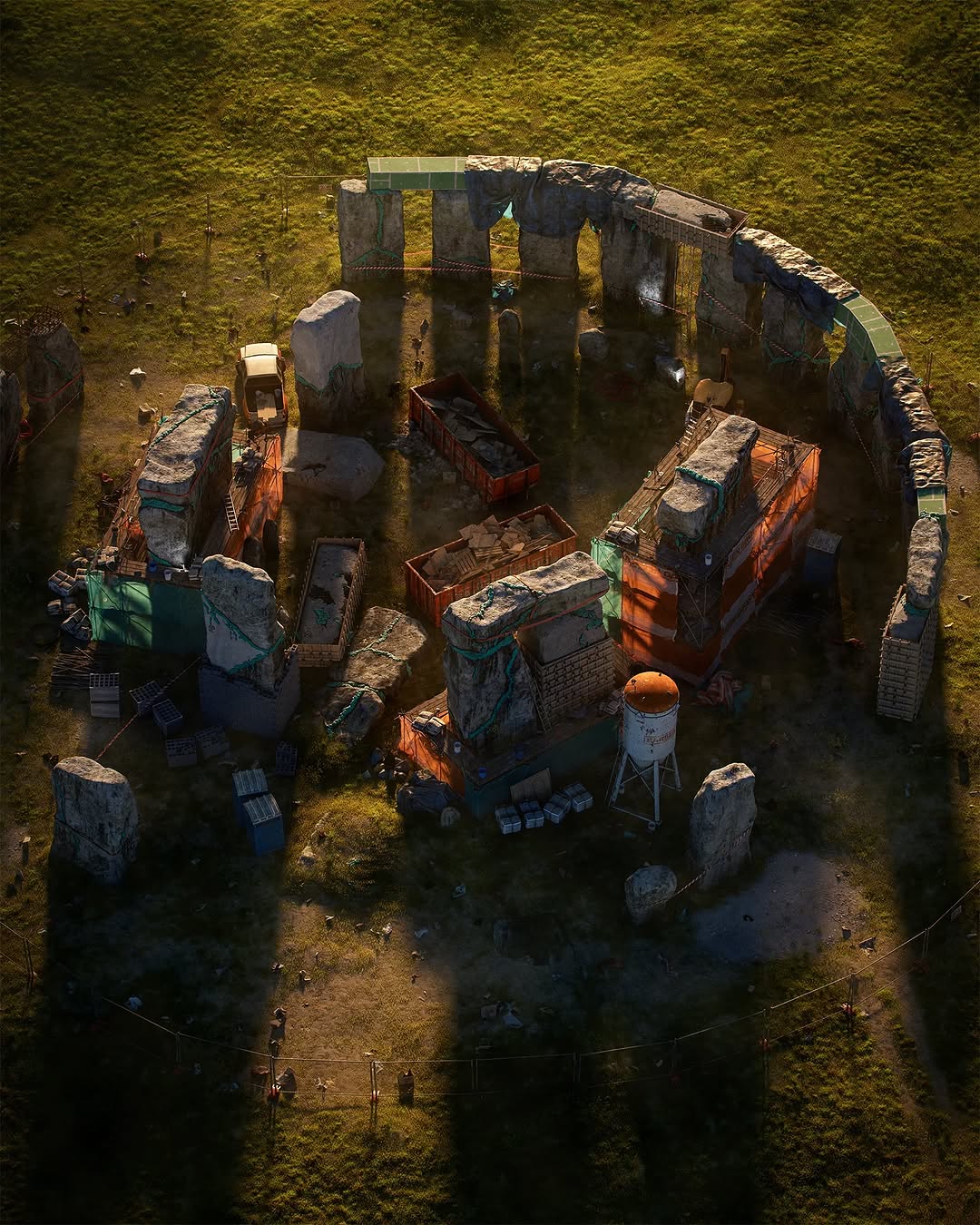
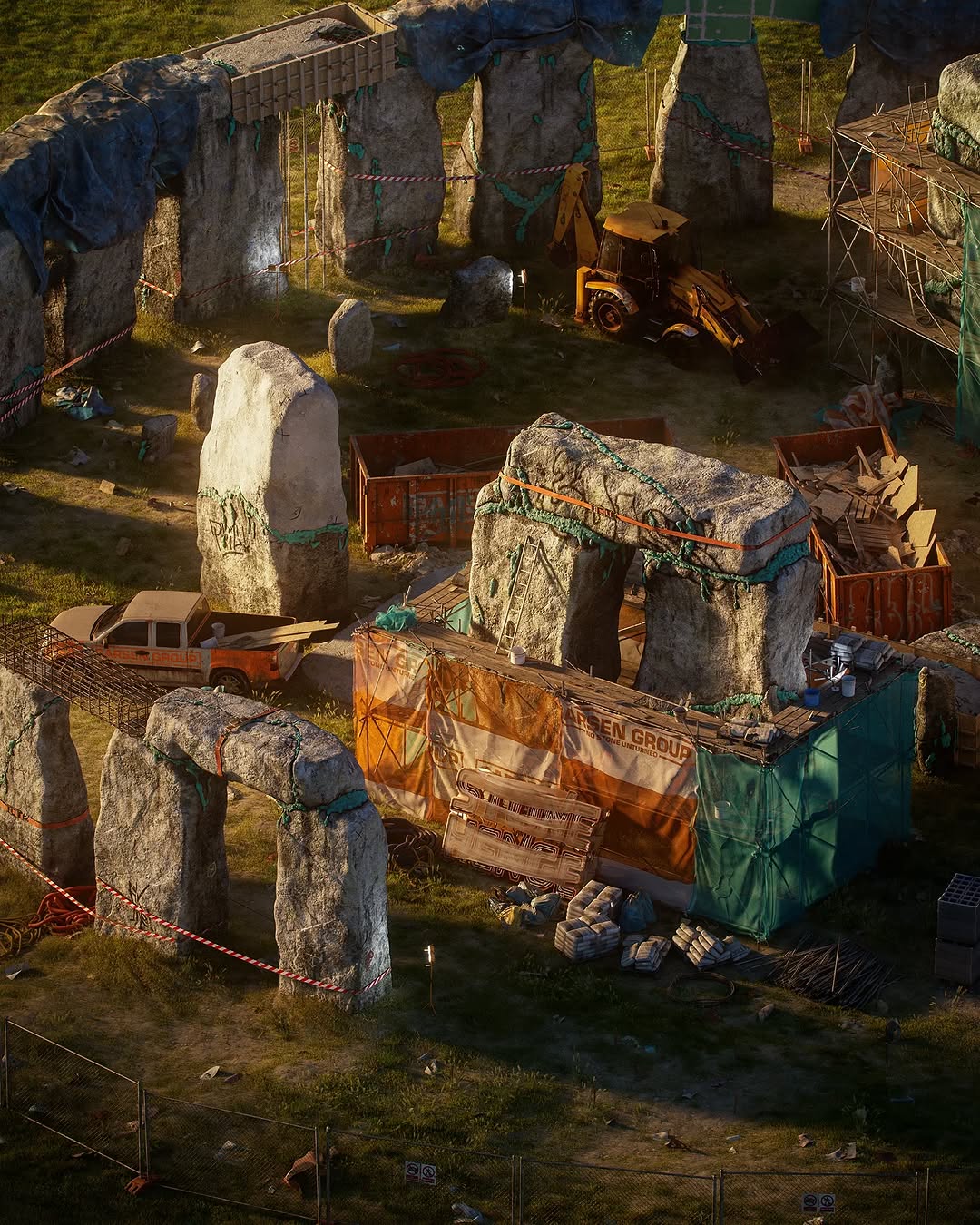
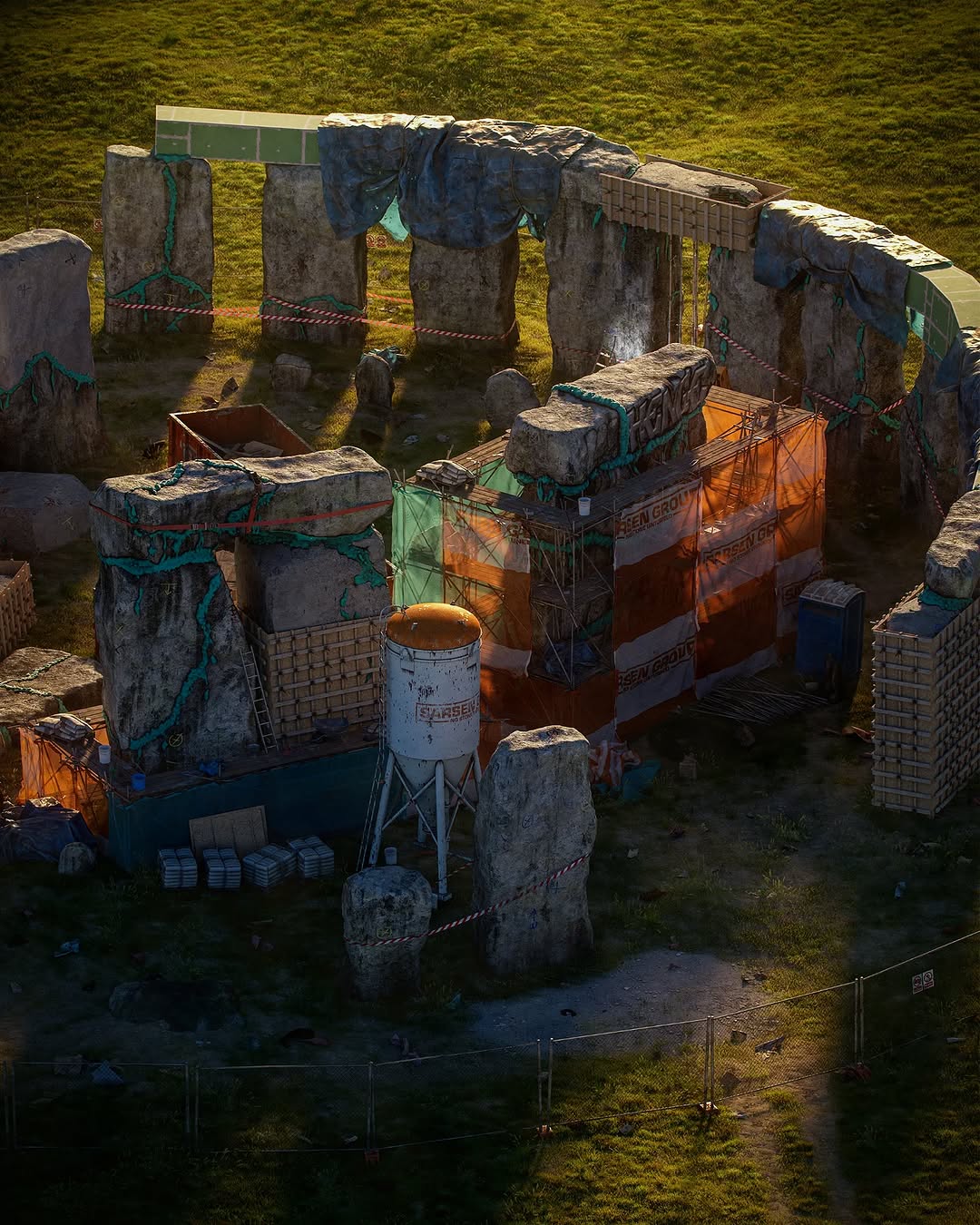
When monuments stop being symbols and start becoming shelters
Some artworks arrive like polished objects. Others arrive like warnings dressed as beauty. Monumental Living, the unforgettable series by Czech digital artist Filip Hodas, belongs to the second category. Its images do not simply depict famous landmarks. They disturb them, inhabit them, and quietly force us to imagine what happens when civilization runs out of space, patience, and reverence all at once.
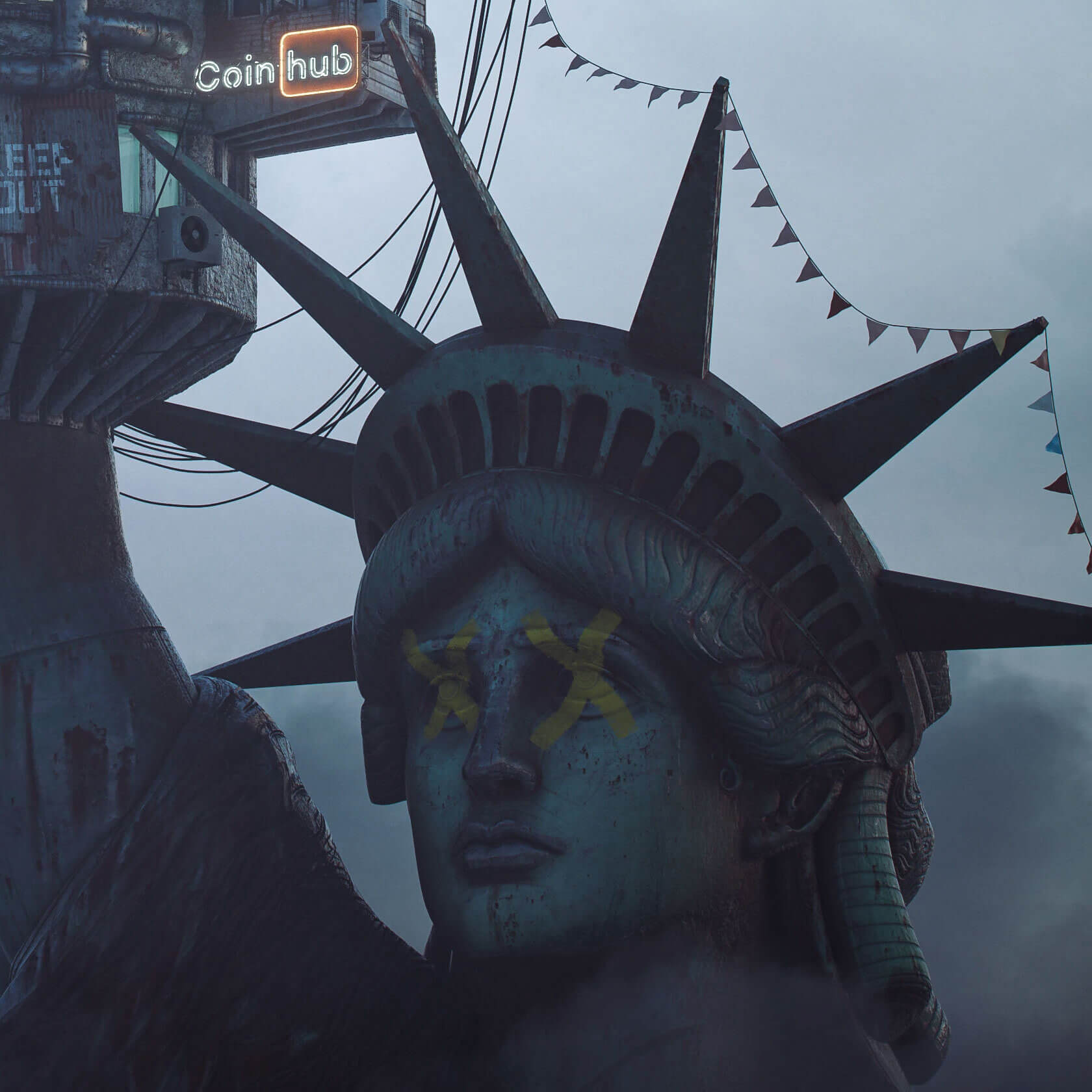
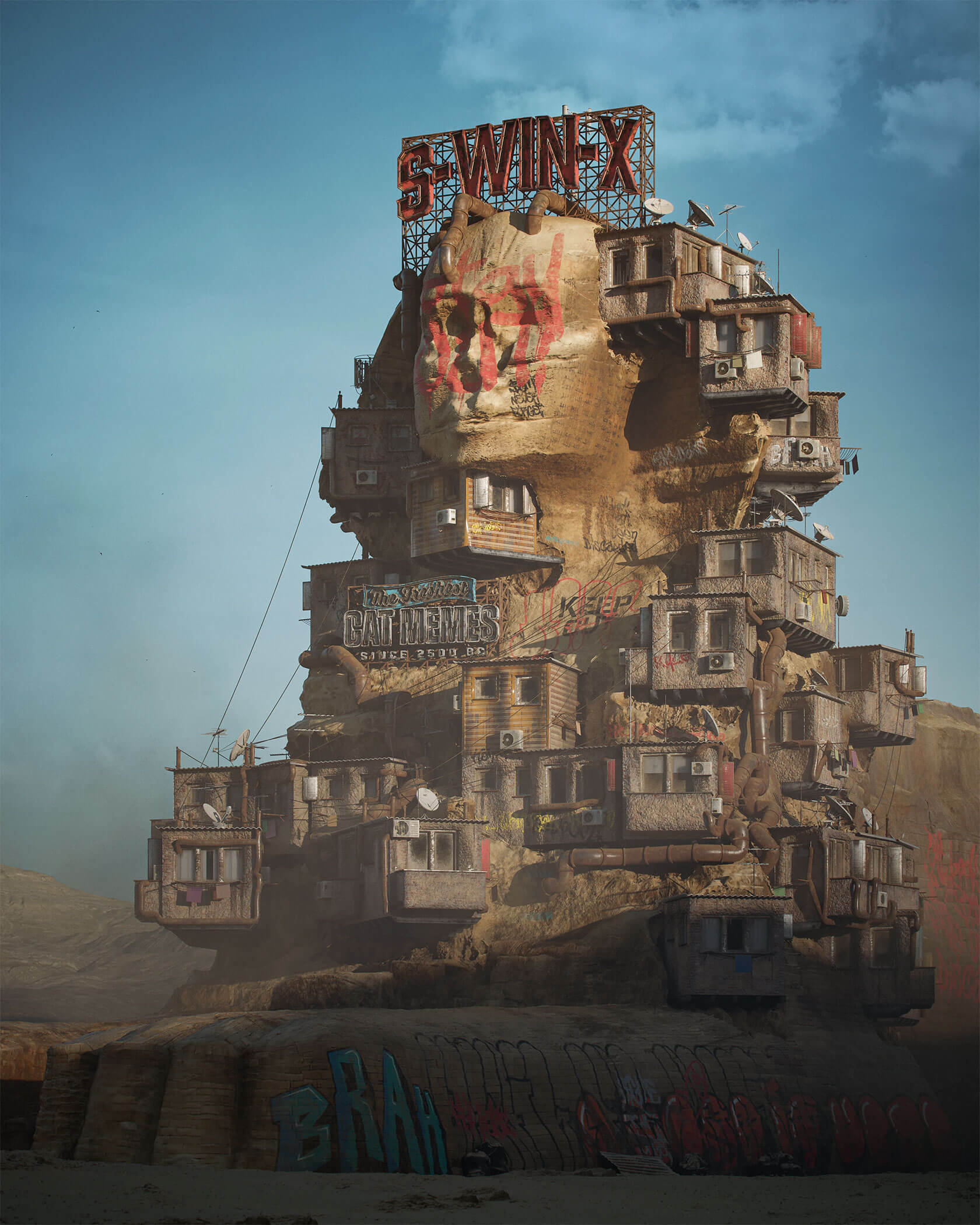
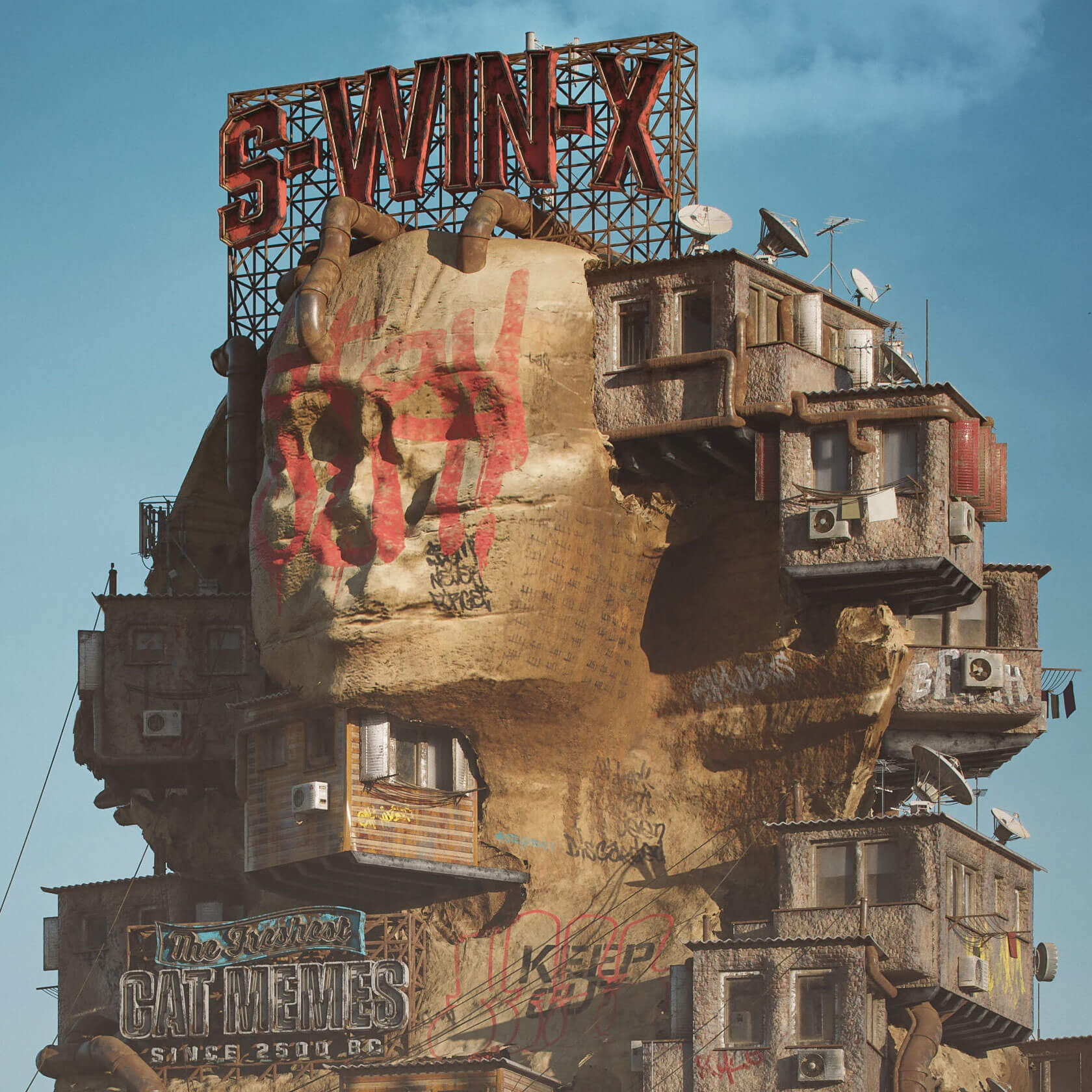
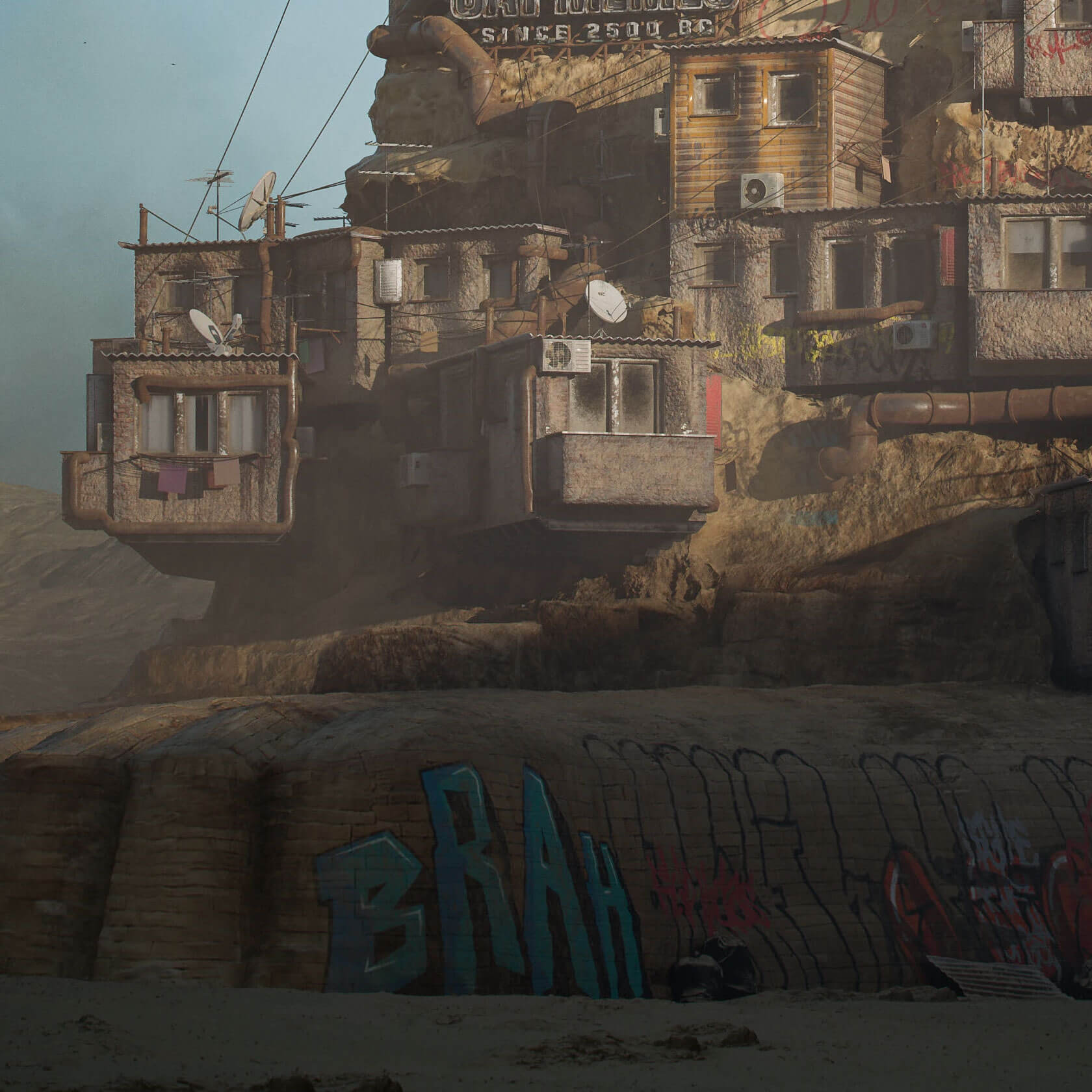
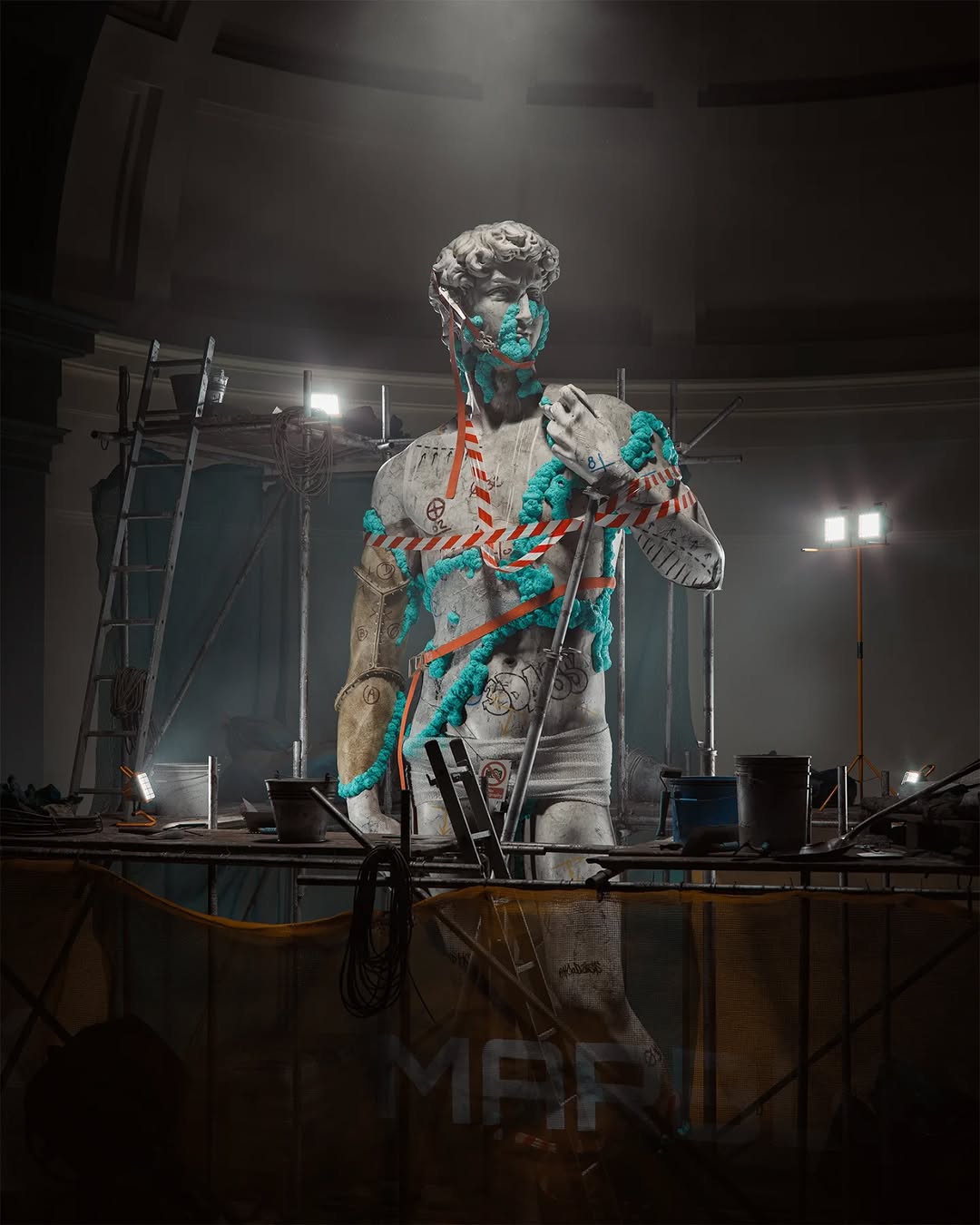
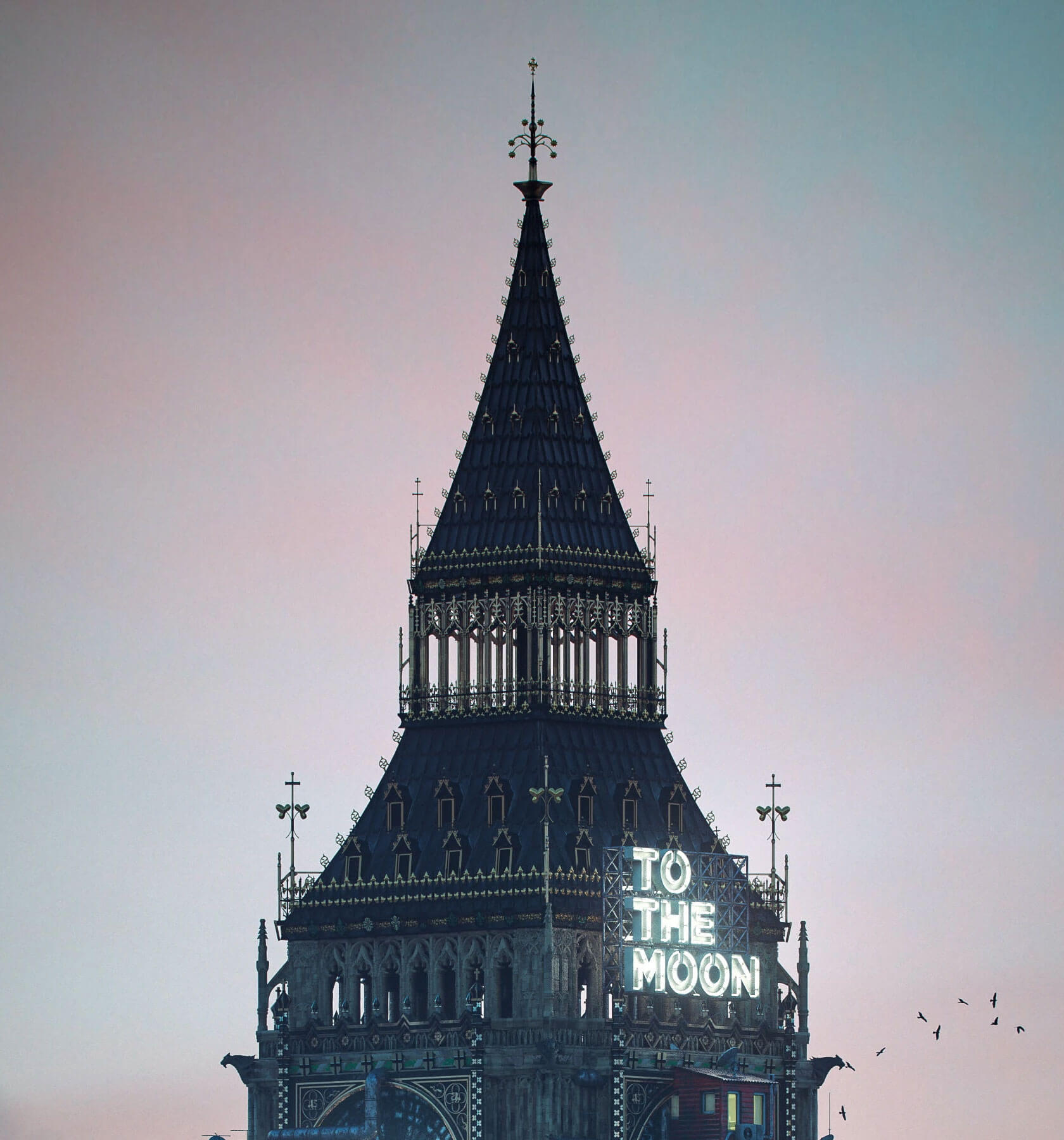
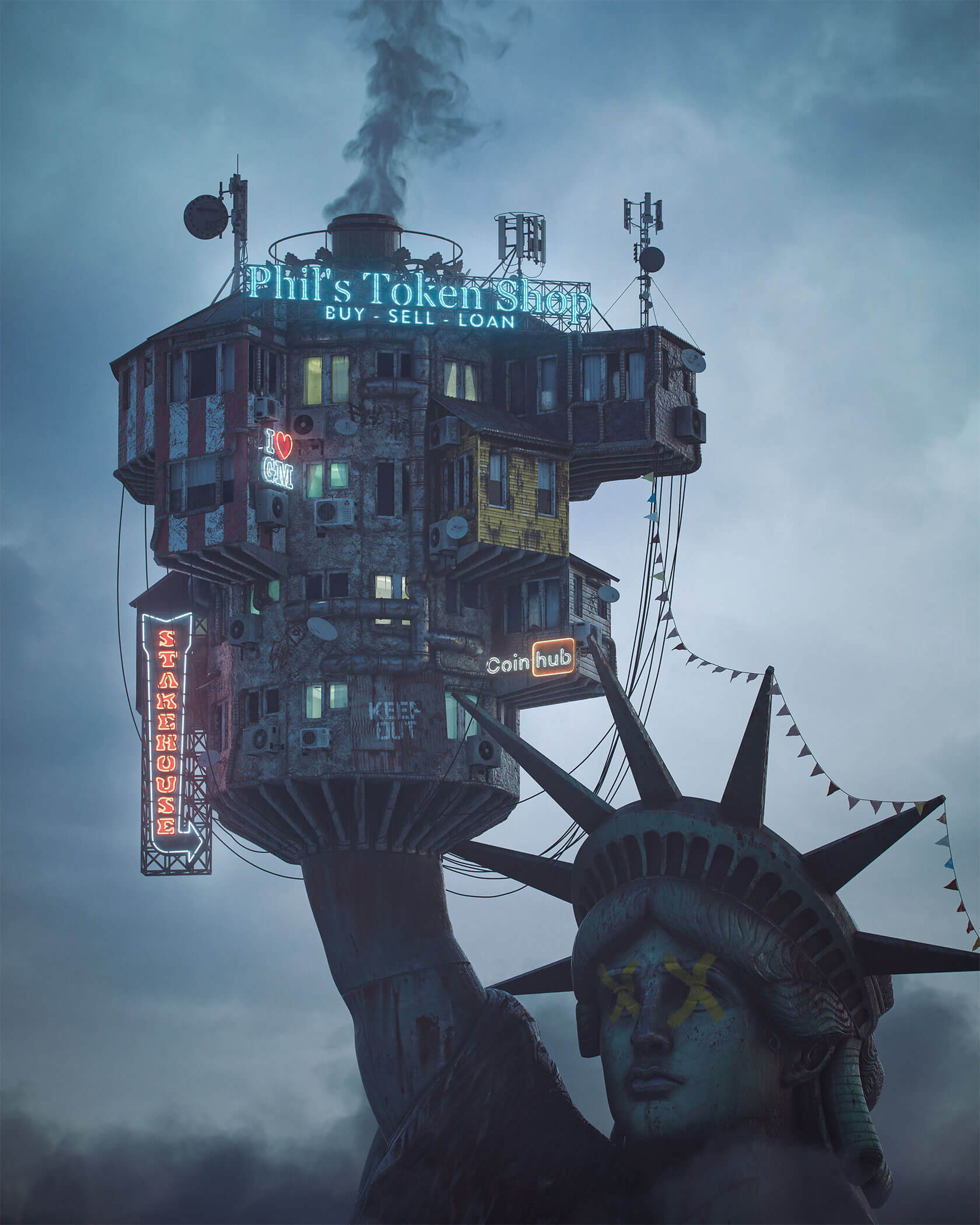
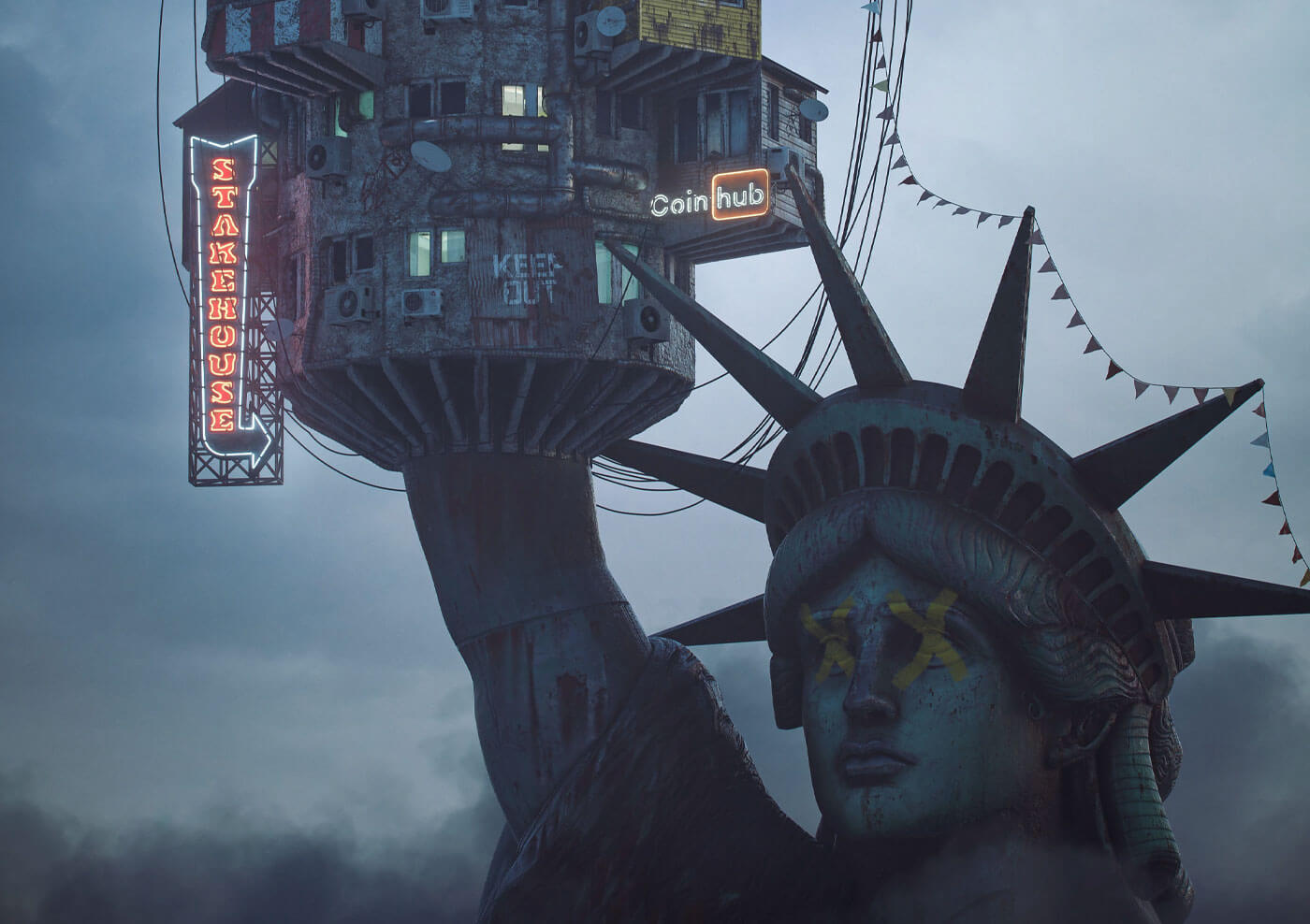
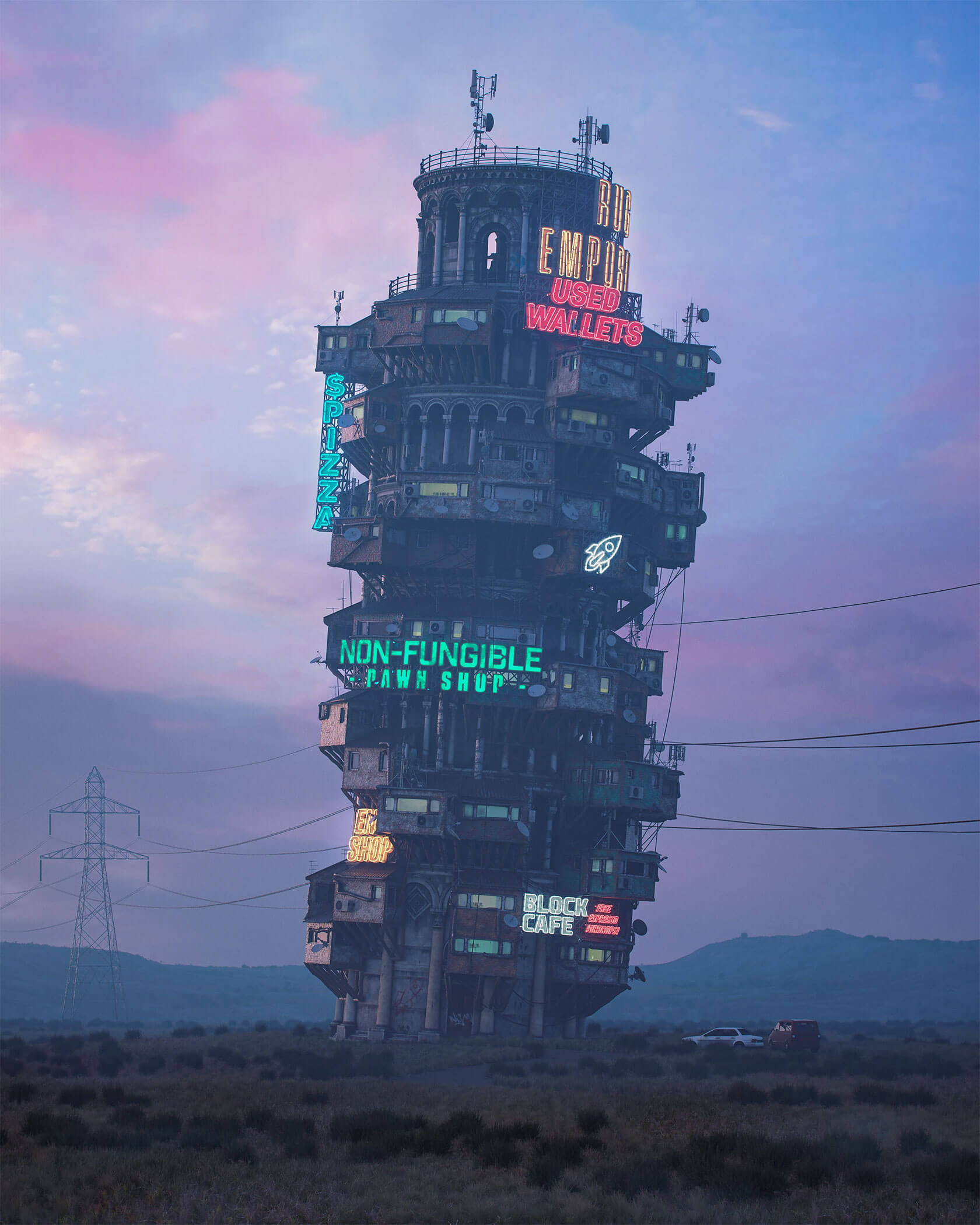
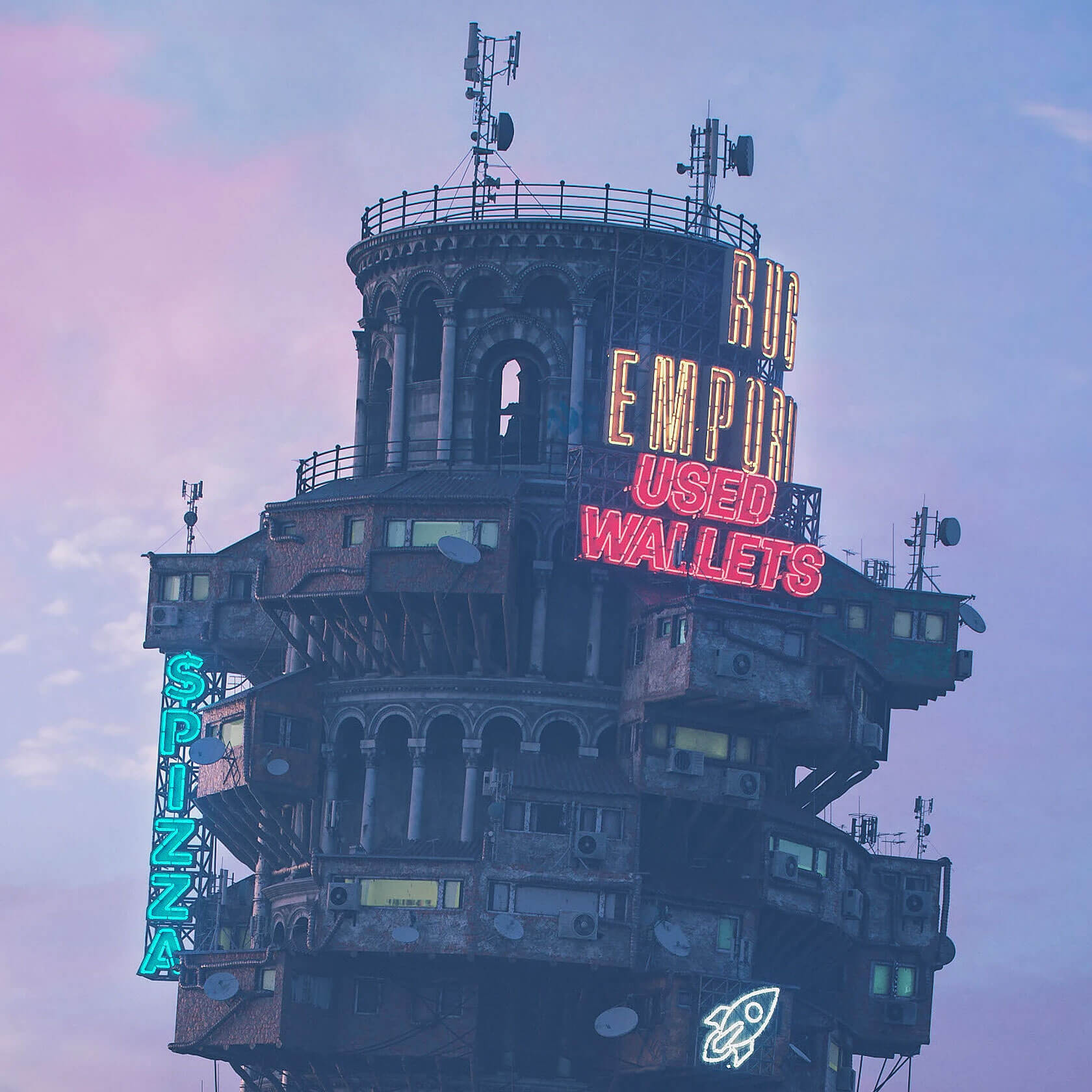
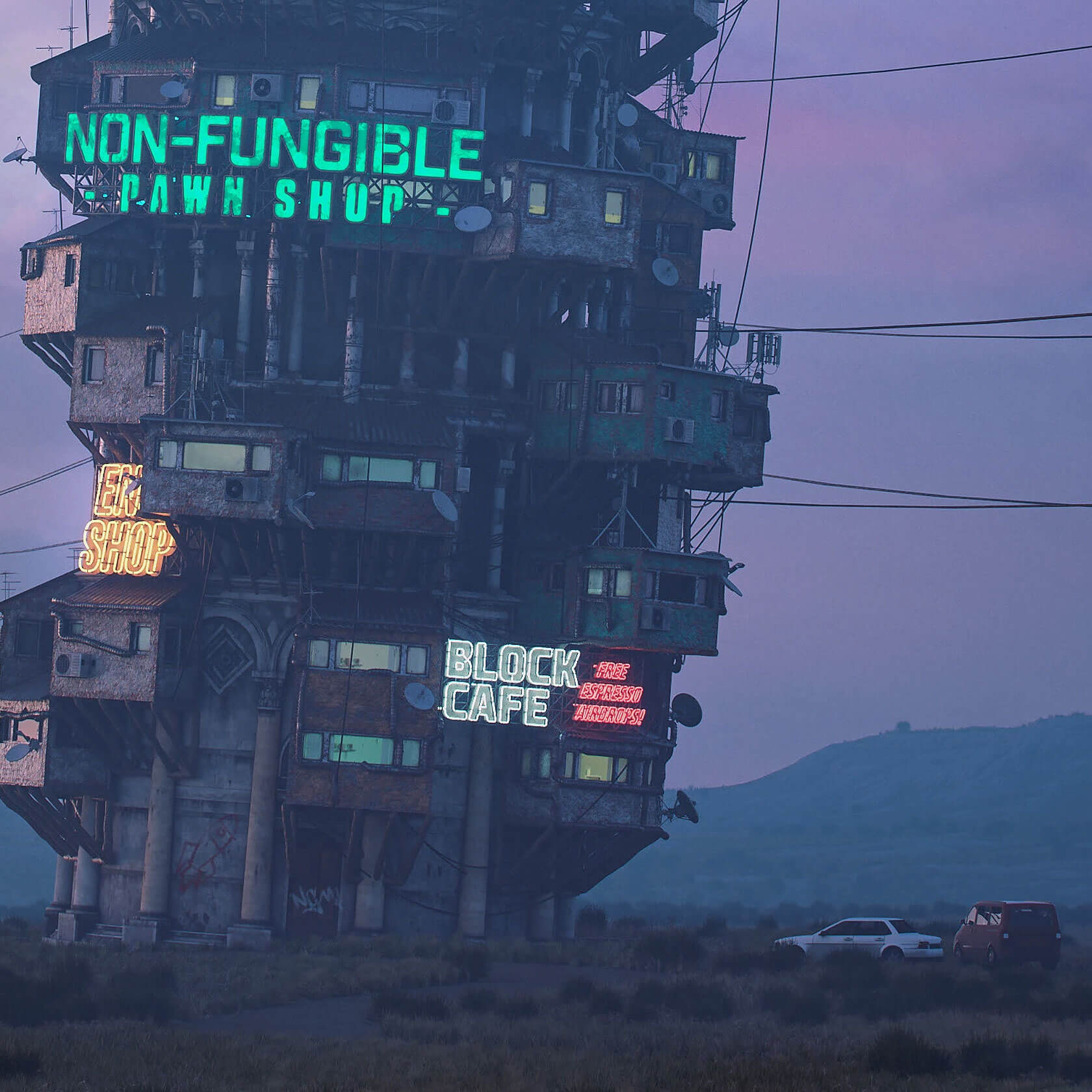
In Hodas’s world, the monuments humanity once lifted up as proof of greatness no longer stand apart from daily survival. They are occupied, layered, burdened, improvised. The Great Sphinx, Big Ben, the Statue of Liberty, Petra’s Treasury, and pyramid forms become dense, favela-like structures covered in stacked dwellings, exposed infrastructure, and glowing crypto signage. The result is visually thrilling, but the deeper force of the series lies in its emotional contradiction. These places remain iconic, yet they feel exhausted. They still carry history, but history is now wearing satellite dishes, cables, patched balconies, and neon advertisements.
For anyone drawn to dystopian digital art, surreal 3D illustration, and conceptual worldbuilding, this series hits a rare nerve. It is technically dazzling, yes, but also psychologically precise. It turns collective memory into architecture under pressure.
Filip Hodas and the art of uneasy futures
Born in 1992 and based in Prague, Filip Hodas has built an international reputation through hyper-detailed digital images that blur reality and fiction with unusual elegance. His practice returns again and again to themes that resonate strongly with contemporary art audiences: pop culture, internet culture, consumerism, futurism, decay, and a distinctly melancholic form of dystopia.
A crucial chapter in his development began in 2015, when he launched a daily render project that continued for more than 400 days. That sustained discipline helped him refine his 3D workflow and expand his audience, but it also sharpened the qualities that make his work immediately recognizable today. Hodas has a gift for creating scenes that feel almost plausible at first glance, before revealing a subtle wrongness or surreal mutation. In an earlier artist interview, he described his visual language as an attempt to combine realistic environments with something bizarre, surreal, or only slightly altered. That description feels especially useful when looking at Monumental Living, where the shift from heritage site to improvised settlement is both absurd and disturbingly believable.
Before this series, many viewers came to know Hodas through Pop Culture Dystopia, widely considered his best-known body of work, in which familiar entertainment and consumer icons appear as abandoned relics in post-apocalyptic landscapes. He later expanded his reach with Cartoon Fossils, a clever pseudo-museum project presenting recognizable animated characters as excavated skulls labeled with mock-scientific authority. Seen in this larger context, Monumental Living is not a sudden detour. It is part of a continuous artistic inquiry into memory, ruin, preservation, and the afterlife of cultural symbols.
On his own site, the series appears within a broader personal sequence of major projects, following Pop Culture Dystopia, Cartoon Fossils, and Hypebeast Heritage, and preceding Lost Data. That placement matters. It shows that Hodas is not merely producing isolated eye-catching images. He is building a long-form visual conversation about what societies choose to worship, discard, market, and rebuild.
A future where heritage loses the battle for space
The conceptual engine of Monumental Living is devastatingly simple: what if the global need for shelter became so urgent that even the world’s most treasured landmarks were absorbed into informal housing systems?
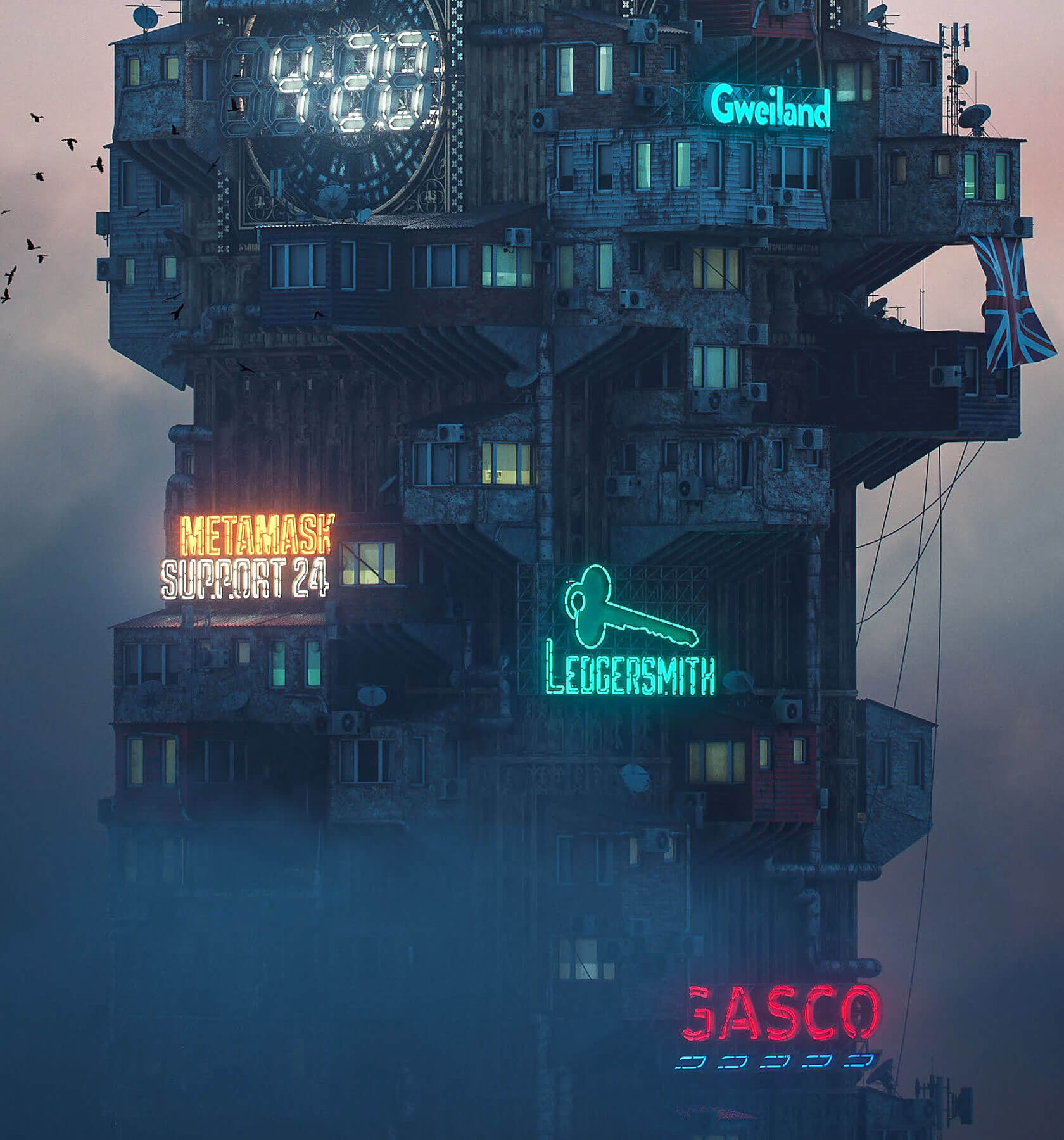
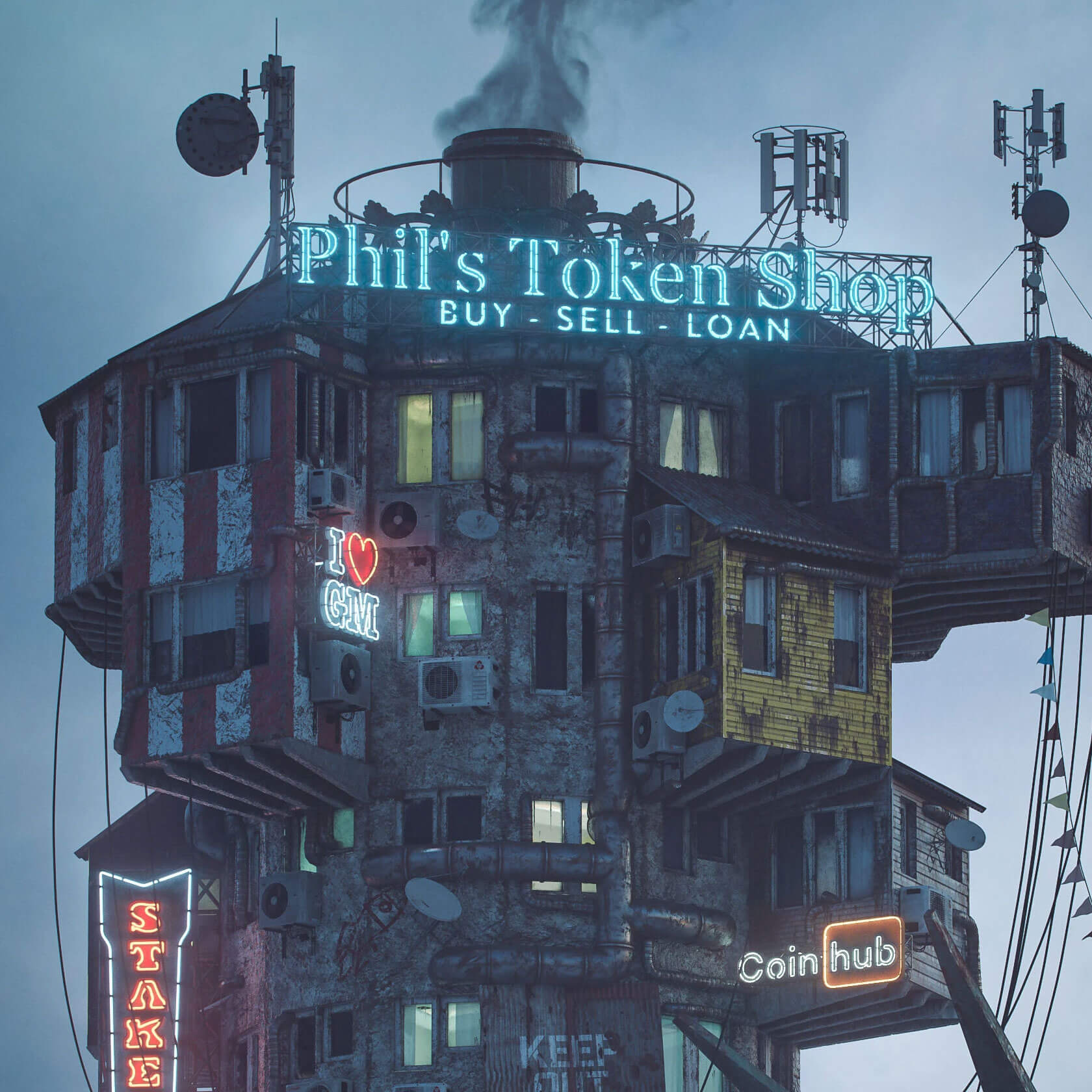
Hodas imagines exactly that. The monuments are no longer protected as sacred or historical spaces. Instead, they are folded into everyday necessity. Their surfaces are overtaken by dense architectural growth, with improvised rooms, jutting terraces, ladders, cables, tanks, patched additions, and signage crowding their original forms. Neon cryptocurrency ads flicker over ancient stone and civic symbolism, creating a collision between timeless heritage and hyper-current digital economies.
This is where the series becomes more than visual spectacle. It speaks to urban overcrowding, housing precarity, heritage under pressure, and the strange coexistence of technological acceleration with social instability. The monuments remain globally legible, which is why the transformation lands so hard. We know these structures. We know what they are supposed to represent. Hodas weaponizes that familiarity and asks us to witness their repurposing not through violent destruction, but through need.
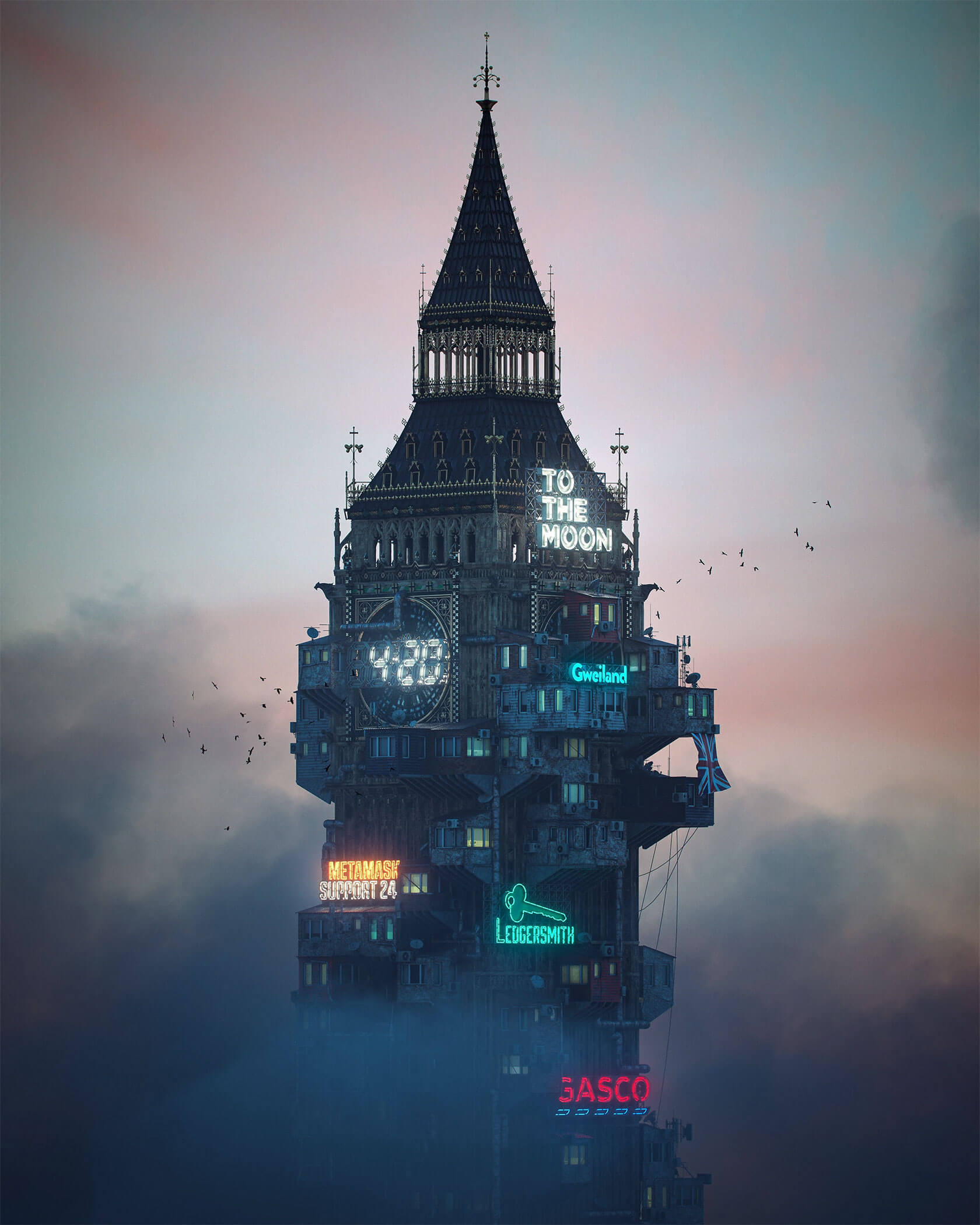
That choice is important. The images do not present apocalypse as one dramatic explosion. They present it as accumulation. A balcony added here. A corridor there. Another wall, another pipe, another lightbox, another rooftop extension. The world is not ending in flames. It is being annexed piece by piece.
The visual power of contradiction
What makes Monumental Living especially compelling for art lovers is its command of contradiction. Hodas does not flatten monuments into debris. He preserves their grandeur while contaminating it with signs of improvisation and survival. This tension creates a richer visual and emotional field than straightforward ruin imagery.
The Sphinx, for instance, carries associations of permanence, enigma, and ancient authority. Once overrun with tightly packed structures and contemporary visual noise, it starts to feel less like a guardian of history and more like a vertical neighborhood pressed into impossible service. Big Ben, a monument tied to statehood, order, and timekeeping, becomes chaotic, almost vulnerable. The Statue of Liberty, long linked to ideals of freedom and welcome, is transformed into a densely inhabited shell, forcing a darker reading of migration, citizenship, and aspiration. Petra’s Treasury, carved into stone and normally framed as archaeological wonder, becomes an occupied façade whose romance is interrupted by practical human need.
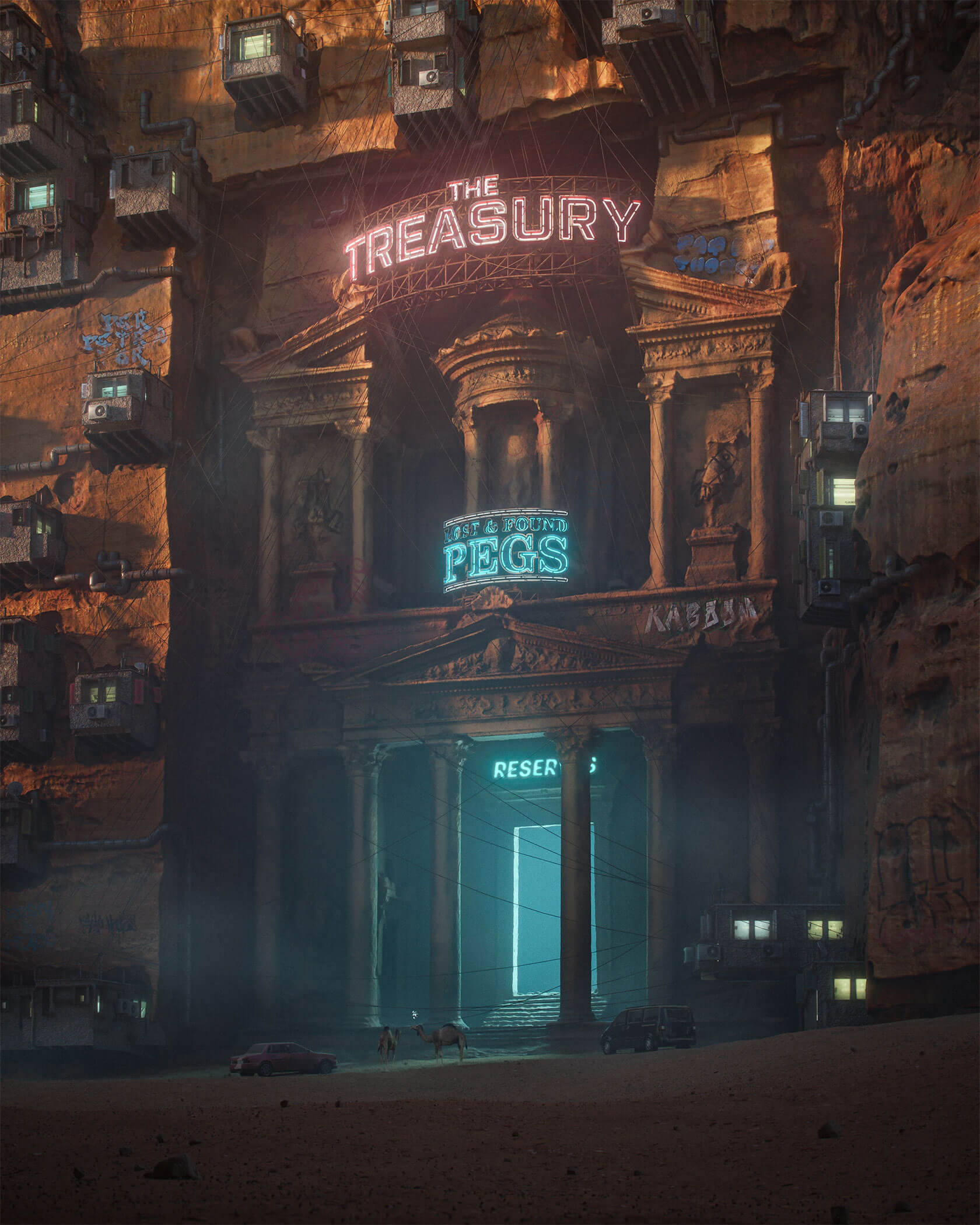
This friction between symbolism and utility is the heartbeat of the series. Hodas invites viewers to consider what remains of cultural meaning once architecture is consumed by survival. Do these sites lose their aura, or does their aura become more tragic because they are still recognizable beneath the weight of use?
For those interested in contemporary digital illustration, speculative architecture, and environmental storytelling, these are precisely the kinds of questions that make an artwork linger far beyond the first impression.
Hyper-detailed 3D art with a sharper social pulse
Filip Hodas is often praised for his technical precision, and rightly so. His images are packed with material detail, convincing lighting, rich surface variation, and a cinematic sense of atmosphere. Yet in Monumental Living, technical polish serves a bigger purpose. Every added structure contributes to a social logic.
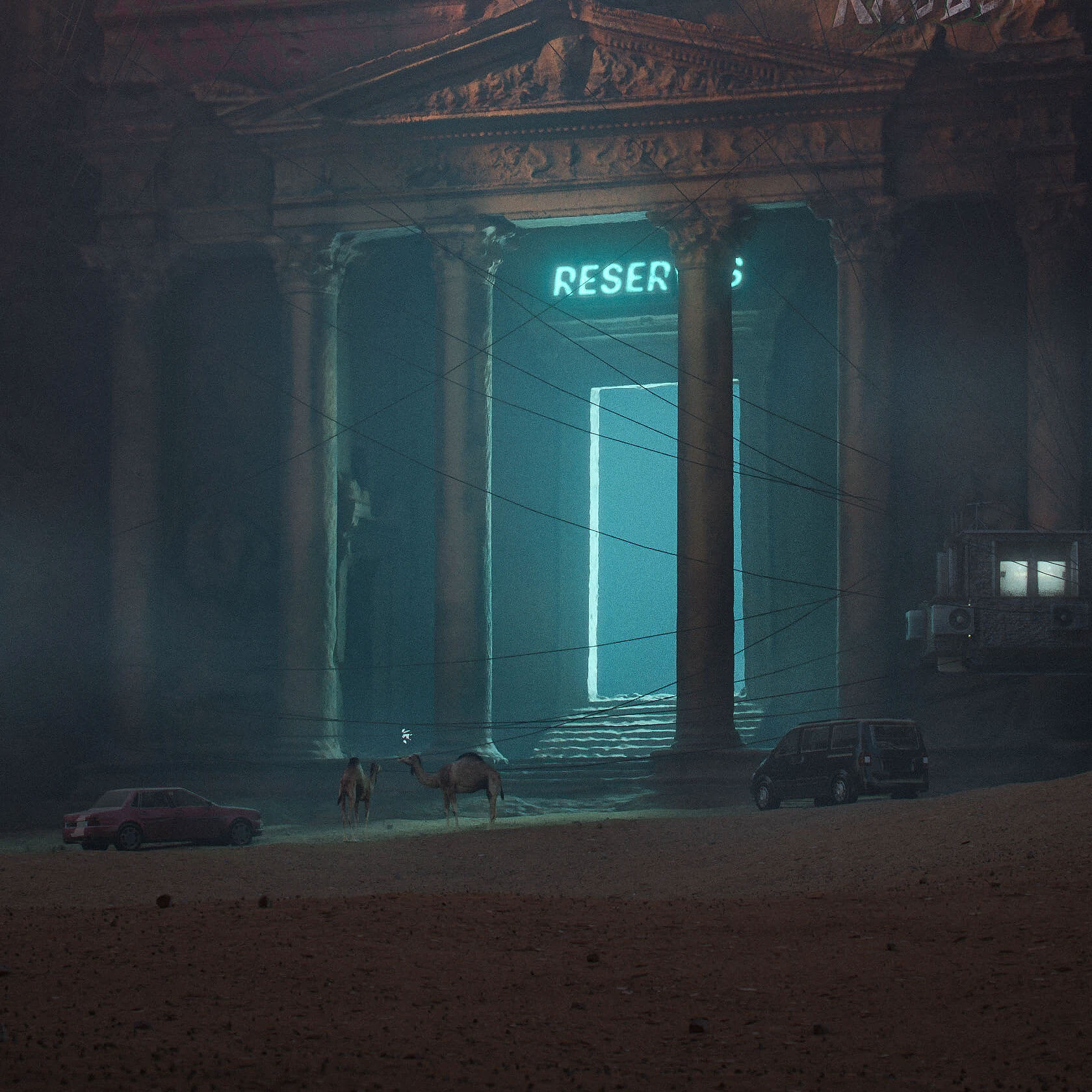
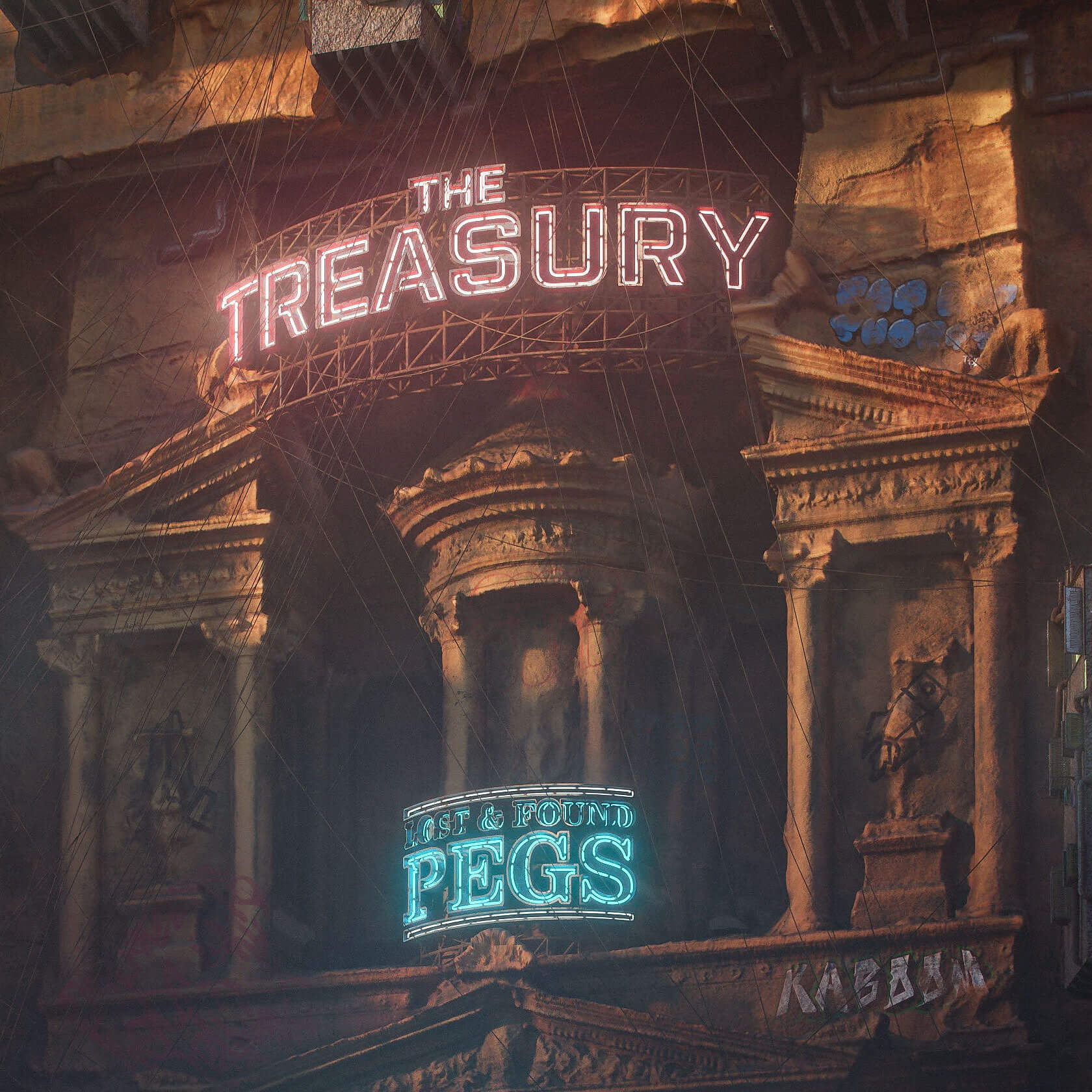
You can feel the pressure of density in the way homes stack against one another. You can sense economic improvisation in the patched construction and ad hoc extensions. You can read digital capitalism in the neon crypto billboards, whose visual language injects irony into every scene. This is not generic “future city” design. It is a thoughtful study in how layered environments tell stories about class, value, collapse, and adaptation.
The project is historically situated around 2021 to 2022, according to its dating on Behance, even though it was later presented in a 2025 editorial context. That timing is revealing. These were years marked globally by heightened conversations around housing affordability, unstable urban life, digital speculation, and the disorienting speed of online economic culture. The crypto signage in the work feels particularly rooted in that moment, turning speculative finance into a kind of visual graffiti across civilization’s most revered surfaces.
A technical turning point shaped by Houdini
Hodas himself has described Monumental Living as a major technical milestone. During its creation, he pushed deeper into procedural building generation using Houdini, the industry-favored software known for complex systems, simulations, and scalable environment design. For this series, that leap mattered immensely.
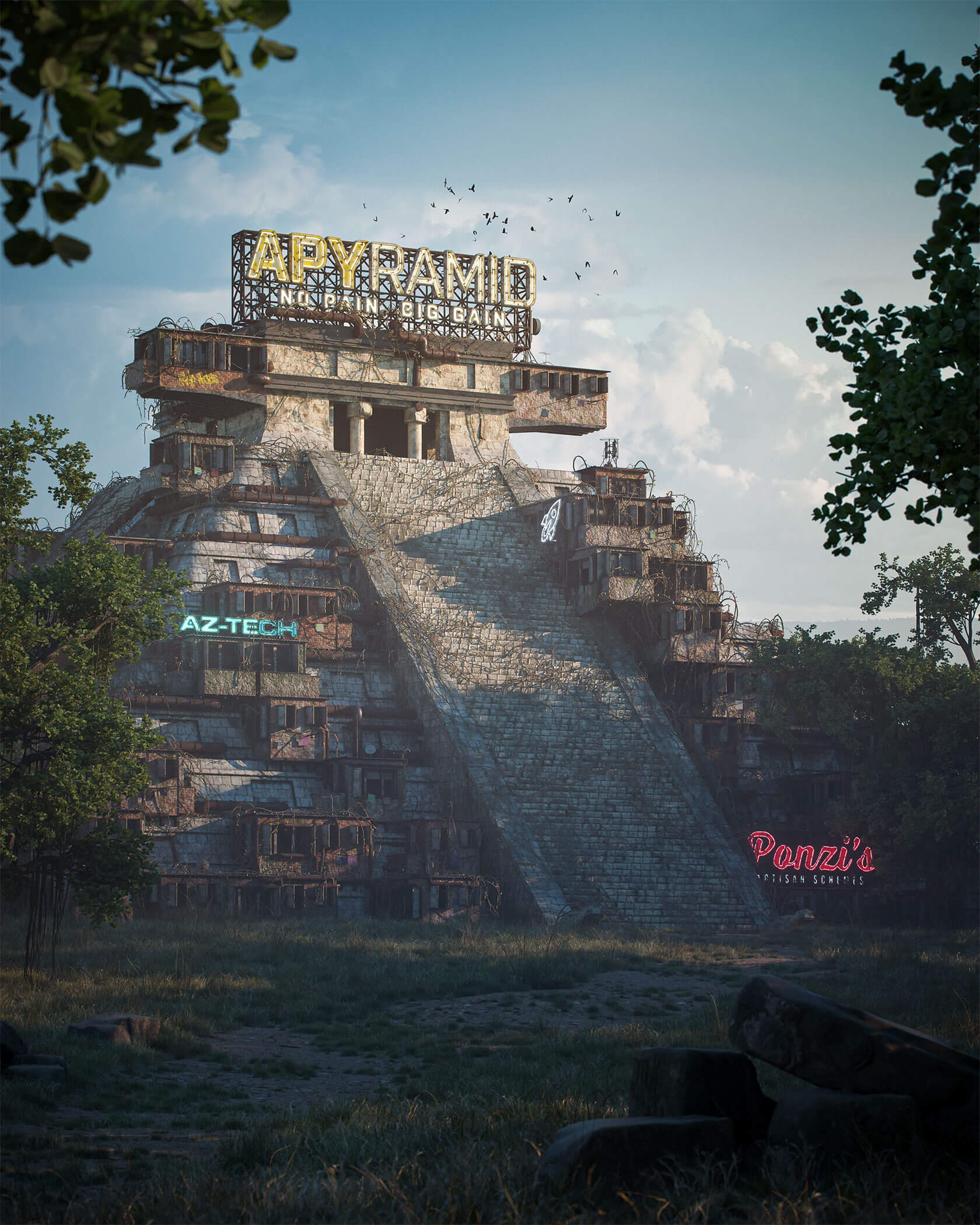
The architecture in these images is not merely decorative clutter. It has density, rhythm, and believable variation. Procedural methods allowed Hodas to generate the intricate, layered urban growth that defines each composition while preserving enough control to maintain a strong aesthetic identity. The result feels organic without becoming visually chaotic.
This technical evolution stands out even more when placed against his already broad digital pipeline. Across his project history, Hodas has worked with tools including Cinema 4D, Octane Render, ZBrush, Substance Painter, Substance Designer, RizomUV, Houdini, Photoshop, and Illustrator. In other words, the Houdini breakthrough did not emerge from inexperience. It came from an artist with a mature hybrid workflow choosing to expand his language in order to meet the demands of a new idea.
For readers interested in 3D art process, digital environment design, or procedural architecture in contemporary illustration, this is one of the most exciting aspects of the project. The concept required a new structural intelligence, and Hodas rose to it.
Why creative audiences respond so strongly to this series
There is a reason work like this travels so well among illustrators, designers, digital artists, concept art fans, and visually literate audiences. Monumental Living rewards both immediate and slow looking.
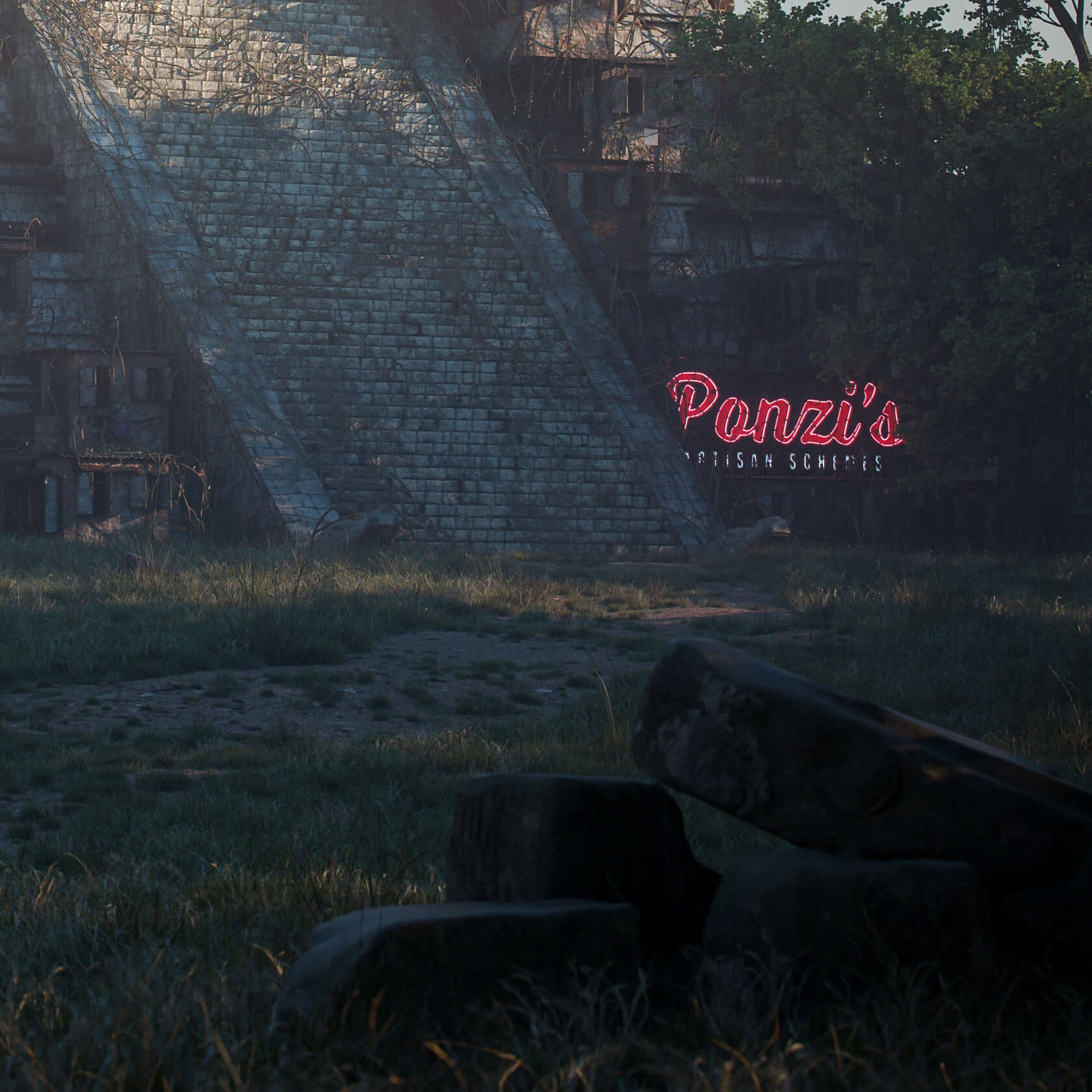
At first encounter, the images stun through scale and invention. On closer inspection, they reveal a dense choreography of choices: where dwellings cluster, how signage interrupts stone, how each landmark’s original identity survives inside the architectural invasion, how color accents guide the eye, how wear and materiality preserve realism even in speculative scenes.
But there is another reason the work resonates. It reflects a distinctly contemporary emotional climate. Many viewers today live with a sense that cultural ideals are still visible, yet increasingly difficult to inhabit honestly. Institutions remain standing, but they feel crowded by commerce, instability, and crisis. Hodas translates that diffuse feeling into image form. He does not lecture. He visualizes.
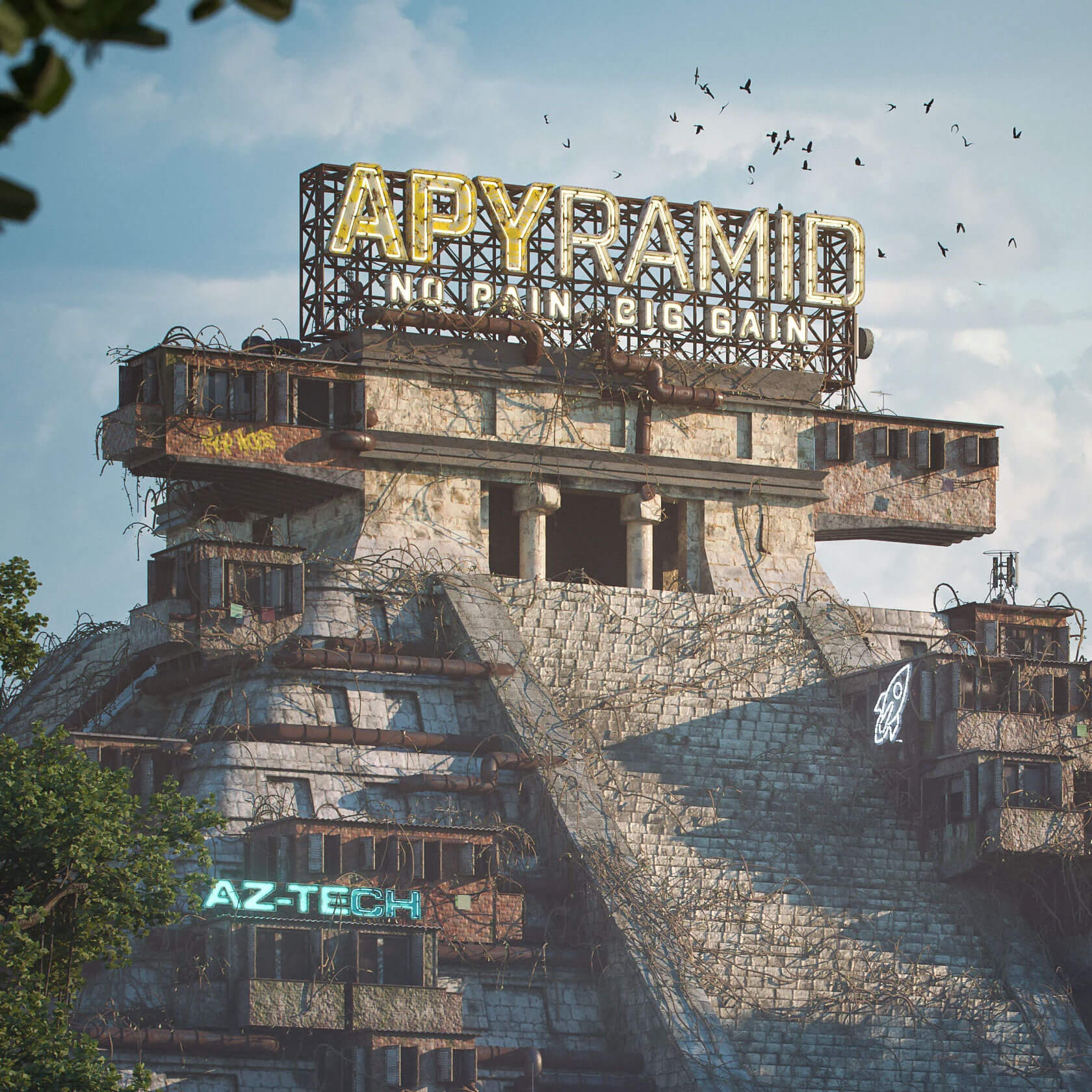
That ability to merge futuristic illustration with emotional readability is central to his appeal. It is also one reason his audience has grown so significantly across platforms. His Behance presence has attracted hundreds of thousands of project views, tens of thousands of appreciations, and a substantial following, alongside repeated recognition in categories such as digital art, 3D art, Photoshop, After Effects, and Adobe’s Substance ecosystem. Monumental Living itself has continued to draw sustained attention there, showing that the series has real staying power beyond an initial release cycle.
From freelance reinvention to international recognition
Part of what makes Hodas’s trajectory so compelling is how closely it reflects the evolution of digital art itself over the past decade. Earlier in his career, he worked in gig-poster design and agency environments before shifting decisively into 3D around 2015. By early 2016, he had returned to freelancing with a primary focus on 3D work, helping establish the path that would define his artistic identity.
Since then, his work has moved through both independent and commercial spheres with unusual fluidity. His images have been shown in galleries in Paris, featured at Tate Modern during an Instagram-linked event in London, and displayed publicly in major urban sites such as Times Square and Oxford Street. His commercial collaborations span an impressive roster of international brands and institutions, including Adidas, Apple, Samsung, Adobe, Google, BBC, Coca-Cola, IBM, MIT Press, Penguin Random House, WIRED, and the Wall Street Journal, among many others. He has also collaborated with music and performance figures including Jean-Michel Jarre and Anyma.
Far from diluting his artistic voice, this range seems to have sharpened it. Hodas occupies a rare position in contemporary visual culture: he is able to speak to mass audiences without simplifying his ideas, and he can operate commercially while maintaining a distinctly authored, concept-driven aesthetic.
That credibility was underscored further in March 2023, when his work Never-ending Cycle was included in Sotheby’s Natively Digital: Oddly Satisfying sale as Lot 29, presented as a 2023 ERC-721 NFT in an edition of 1/1 with an estimate in the range of EUR 30,000 to 35,000. For digital artists, such recognition signals not just market visibility, but institutional acknowledgment of the medium’s cultural seriousness.
Monumental Living as speculative archaeology of the present
One of the most fascinating ways to read this series is as a form of speculative archaeology. Hodas has long been interested in the afterlives of cultural forms, whether through fossilized cartoon skulls, abandoned pop icons, or monument-scale architectures altered by future conditions. In Monumental Living, he approaches famous landmarks almost as if he were excavating tomorrow’s ruins in advance.
The irony is sharp. These monuments were originally created to resist time, to preserve power, belief, memory, or identity in enduring material form. Hodas imagines them surviving, but not intact. They endure by becoming useful in a way their creators never intended. Their prestige does not save them from adaptation. If anything, their size and symbolic visibility make them vulnerable to appropriation.
This reading connects the project to broader themes in post-apocalyptic art, digital dystopia, and architectural imagination. Rather than showing the total disappearance of heritage, Hodas shows its transformation into a support structure for life under pressure. That makes the work less about extinction than about compromised continuity. Civilization persists, but in altered, crowded, unstable forms.
The strange beauty of cultural collapse
What lingers most after viewing Monumental Living is not just the cleverness of the concept or the sophistication of the rendering. It is the strange beauty of the emotional space Hodas creates. These scenes are crowded, precarious, and unsettling, yet they are also luminous and mesmerizing. You may recoil from the implications while admiring the texture of every surface and the elegance of every composition.
That tension is the mark of mature dystopian art. It does not only predict disaster. It seduces the eye long enough for the mind to catch up. Hodas understands that deeply. His images are too carefully built to be simple warnings, and too emotionally loaded to be pure spectacle. They ask what happens when human need collides with cultural memory, when global icons become infrastructure, and when survival writes itself over history one extension at a time.
For art lovers, collectors, illustrators, and anyone interested in the future of digital art, 3D worldbuilding, and conceptual illustration, Monumental Living stands as one of Filip Hodas’s most resonant achievements. It captures the anxieties of our era without losing visual pleasure, and it expands the vocabulary of dystopian art by grounding fantasy in architectural logic and emotional truth.
In a crowded field of futuristic imagery, that is no small feat. Hodas does not merely show us famous landmarks transformed. He shows us what it feels like when the monuments inside collective memory are no longer safe from the needs of the living.