The meeting could have been an email, but the chair is a dinosaur. Work feels different when the furniture has a personality.
A series of dinosaur-shaped office chairs, designed by MCSDINO, reimagines workplace seating as a sculptural object. Modeled after a Brachiosaurus, the chair functions as both furniture and visual intervention within the office environment. Its exaggerated form transforms a standard cubicle into a space of humor and disruption.
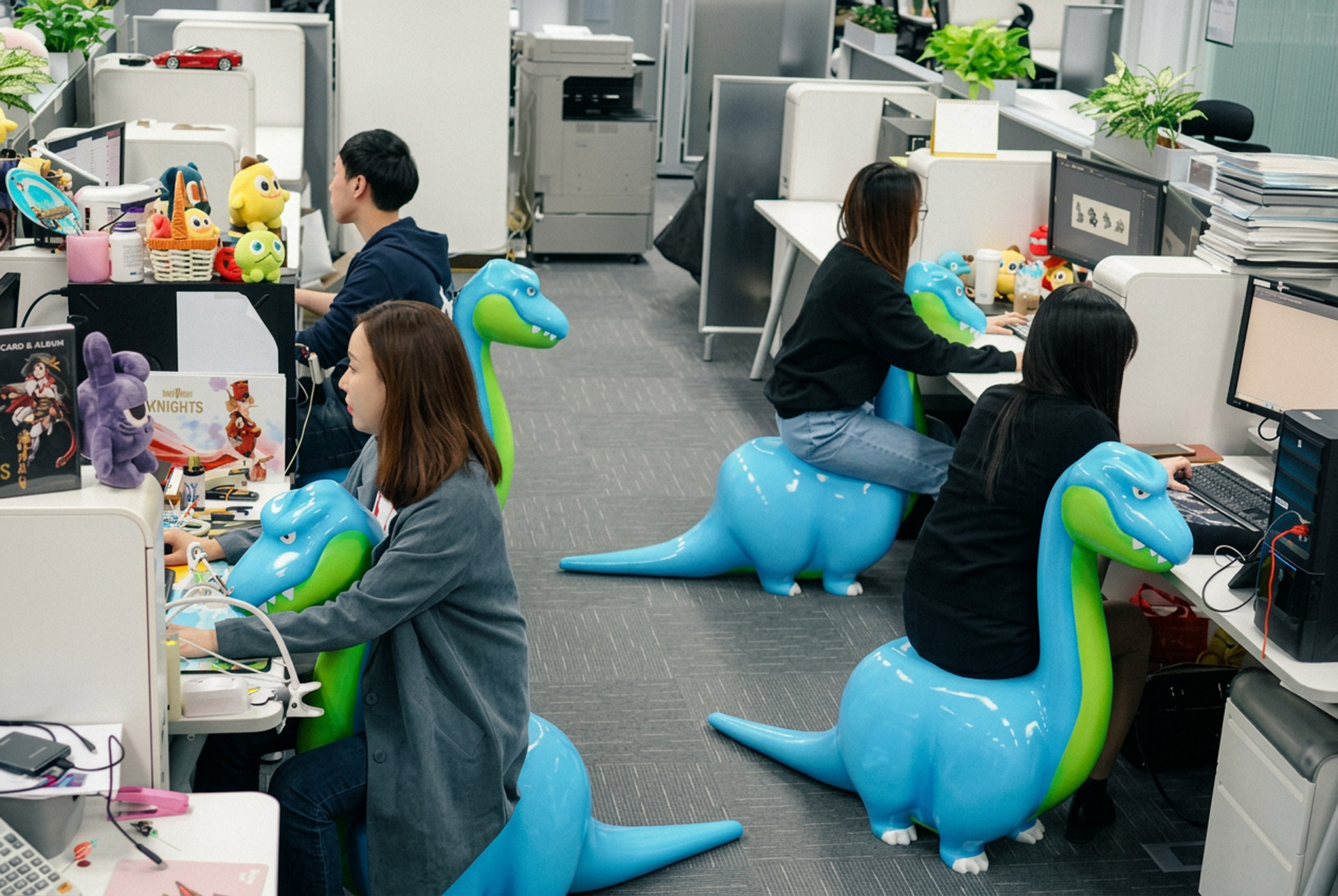
The chair is constructed from durable resin FRP (fiber-reinforced plastic), designed for both indoor and outdoor use. It measures approximately 39 x 17 x 39 inches, weighs 28.6 lbs, and supports up to 300 lbs. Available in blue, pink, yellow, and green, it can also be customized with company logos or specific color schemes.
Unlike traditional ergonomic chairs, the object invites multiple modes of sitting. Users can straddle it forward, sit upright, or lean back against the elongated neck, using it as an improvised backrest. This ambiguity between sculpture and utility challenges conventional expectations of workplace design.
Work becomes predictable when everything around you behaves, so introduce something that doesn’t.
The dinosaur chair operates as more than novelty furniture. It reflects a shift in how workspaces are imagined, particularly in creative industries where identity, mood, and visual culture play a role in productivity. By inserting a childlike, almost surreal object into a corporate setting, it questions the visual language of professionalism.
It also taps into nostalgia and pop-cultural symbolism. Dinosaurs, often associated with extinction and deep time, are repurposed here as tools of daily labor, collapsing timelines and expectations in a single gesture.
When every cubicle says “behave,” a blue dinosaur chair says “remember you have an imagination.”
While not designed as a primary ergonomic solution, the chair functions effectively as a secondary seat, collaborative object, or visual centerpiece. Its presence can alter the atmosphere of a workspace, encouraging interaction, conversation, and a break from routine visual monotony.
For companies, customization options allow it to act as both branding tool and cultural signal, suggesting openness to experimentation and non-traditional design thinking.